


Career and Technical Education (CTE) is in the midst of a transformation. No longer confined to the “vocational ed” model of the past, today’s CTE programs prepare students for high-demand careers with cutting-edge tools, dynamic teaching approaches, and spaces that mirror the modern workplace. High-quality design in CTE classrooms has become indispensable, not just for student engagement, but for truly preparing learners for the rigor and demands of tomorrow’s jobs.
The overarching trend in CTE classroom design is the move toward future-ready, student-centered environments. Conferences such as EDspaces provide opportunities for education and industry leaders to come together to discuss how to reshape the design of new learning spaces. Design is no longer simply about making a space functional — it’s about intentionally creating places that empower students, foster belonging, and prepare them for success in a competitive, fast-changing world.
CTE is Growing!
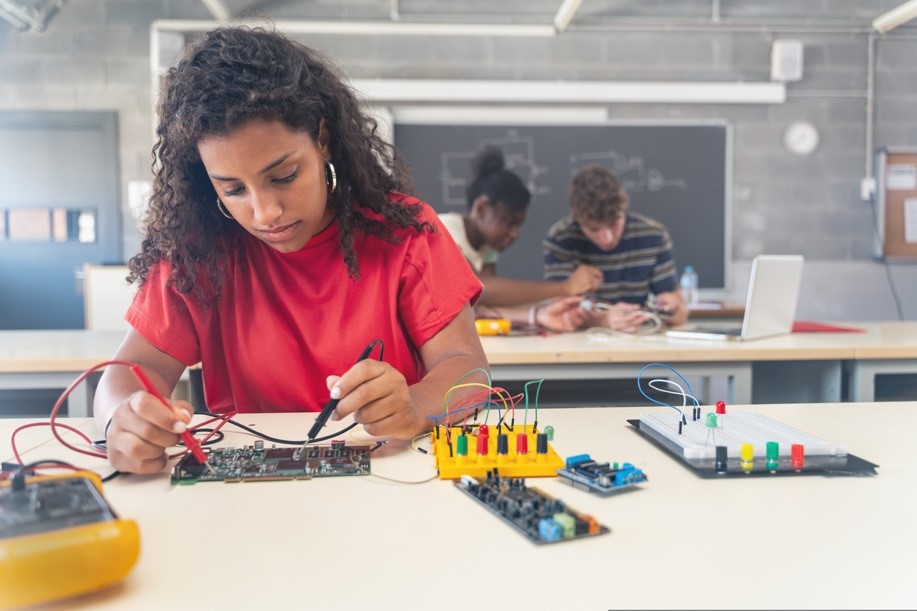
CTE is an increasingly popular option due to a growing demand for skilled workers. Currently about 12.3 million students are enrolled in CTE programs in the US. Careertech.org has compiled a state-by-state list of programs currently operating. New model CTE projects can be found in Park City High School’s new CTE Wing in Park City, Utah, and the Alief Center for Advanced Careers in Houston.
The federal government along with states such as Idaho, Illinois, and Indiana are showing interest in making CTE programs more widely available and providing additional opportunities for students. More employers are also creating skills-based training programs. Skills-based hiring is becoming increasingly common and some employers are rethinking higher education requirements in lieu of skills training.
Learning environments are reflecting the rapid growth in CTE opportunities for students. We are seeing increased demand for intentionally designed spaces that prioritize flexibility, strategic technology integration, authenticity, safety, collaboration, sustainability, universal access, specialization, and wellness.
….when students and teachers can adjust their environment to fit evolving needs, learning is optimized, creativity flourishes, and physical spaces retain long-term relevance.
Design for Flexibility
One of the most pronounced shifts in CTE classroom design is the focus on flexibility. Rigid rows and fixed layouts are being replaced with adaptive, modular spaces. Research shows that learning environments featuring modular furniture and mobile storage units empower instructors to swiftly transform classrooms for different activities — from direct instruction to group projects to hands-on practice. The rationale is straightforward: when students and teachers can adjust their environment to fit evolving needs, learning is optimized, creativity flourishes, and physical spaces retain long-term relevance.
CTE classrooms are being designed to be more relevant and connect to the needs of students and employers. Hands-on learning is central to CTE education and digital options have also expanded opportunities for employer involvement in training and mentoring.
Key features to include in these flexible learning environments include:
- mobile workstations and tables on casters
- adjustable and multi-height surfaces for various tasks
- expansion zones for classes of different sizes
- easily reconfigurable layouts to suit changing curricula
Design for Strategic Technology Integration
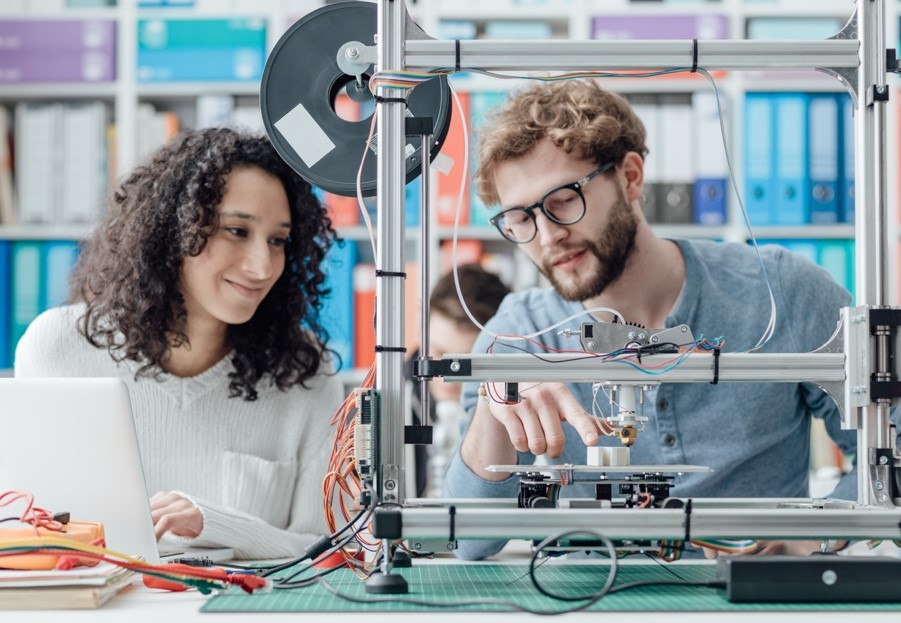
CTE classrooms have become tech-powered hubs. The seamless integration of technology — once an afterthought — is now a central component. Digital displays, smartboards, 3D printers, CAD workstations, and Wi-Fi infrastructure are commonplace in leading-edge CTE spaces. Industry-standard software and tools are woven into daily lessons, ensuring students gain digital literacy and technical proficiency.
Technology integration can include:
- AR/VR stations for immersive simulations (e.g., welding, health sciences, engineering)
- hybrid learning setups, including flexible camera placements for streaming and recording demonstrations
- multi-device stations that enable students to bounce between physical and virtual tasks seamlessly
Opportunities for AI training within CTE programs is accelerating. There is an increasing focus on helping students use AI tools appropriately with an emphasis on higher level skills that can help students navigate complex environments that require problem solving and understanding the limits of Large Language Models.
Modern CTE spaces are designed to support collaborative, project-based learning — the backbone of many technical disciplines.
Design for Authentic Industry-Driven Environments
One of the biggest shifts in CTE design is the move toward spaces that authentically replicate real-world workplaces. Current design best practices emphasize industry relevance: instead of generic classrooms, students train in rooms built out as commercial kitchens, medical exam rooms, fabrication studios, and office workstations. This not only develops technical skills but also soft skills like teamwork, communication, and personal accountability.
Schools increasingly collaborate with industry partners to ensure their facilities incorporate current tools, layouts, and workflow conventions. Such collaboration ensures students’ experiences are closely aligned with what they will encounter in their future careers.
Design for Safety and Durability
CTE classrooms frequently utilize heavy machinery, sharp tools, and specialized equipment, necessitating a rigorous focus on safety and durability. According to expert guidelines, ideal environments have clear sightlines for supervision, appropriate zoning to separate active and passive areas, and strict adherence to safety codes and ergonomic principles. By prioritizing durability, schools safeguard students and future-proof their investments.
Safety and durability features include:
- heavy-duty, chemical-resistant furniture
- reinforced stress points and safety features tailored to each discipline
- easy-to-clean surfaces and visible organization systems for tools and materials, and compliance with OSHA, ADA, and other relevant regulations

Design for Collaboration
Modern CTE spaces are designed to support collaborative, project-based learning — the backbone of many technical disciplines. Open-plan studios, maker spaces, and innovation labs foster teamwork and communication. Writable surfaces, breakout areas, and digital collaboration tools facilitate brainstorming and creative development. These environments encourage peer learning, mirroring the interdisciplinary team setups found in professional settings.
Purpose-built collaboration areas include:
- group seating and large tables for project teams
- shared display capabilities and multimedia access
- acoustic management for focused discussion
Design for Sustainability
Sustainability has emerged as a fundamental trend in CTE facilities. Schools are embracing green features such as energy-efficient lighting, solar panels, water conservation systems, and even adaptive reuse of existing buildings. Often, these eco-friendly features are integrated into the curriculum, teaching students first-hand about sustainable practices and emerging green technologies.
Sustainable design trends include:
- repurposing old warehouses into high-tech CTE hubs
- installing green roofs and energy-efficient HVAC systems
- building with materials that minimize environmental impact

Design for Universal Access
Inclusivity has become a guiding principle in CTE classroom design. Spaces are intentionally crafted to ensure accessibility for learners of all backgrounds and abilities. Features typically include wheelchair ramps, adjustable desks, sensory-friendly environments, and necessary assistive technologies. This focus on accessibility reflects a broader shift toward universal design, ensuring that every student has an equal opportunity to engage in meaningful learning experiences.
Design for Specialization
Scholars and designers alike have identified the value of distinct “zones” within CTE classrooms. Instead of a single undifferentiated area, the most effective classrooms provide specialized spaces for various phases of learning including direct instruction for teacher-led lessons with clear sightlines and technology support, hands-on practice for technical skill development and equipment use, and collaboration, planning, and reflection areas to promote teamwork. By intentionally delineating these zones, schools can support holistic learning, encouraging students to cycle through every stage of skill and knowledge mastery.

Design for Wellness
There is growing recognition that students today have increasing rates of anxiety and stress. There are many ways to design for wellness including using the principles of biophilic design. Biophilic design is an innovative architectural concept that integrates natural elements and patterns into learning environments.
Biophilic design is based in the biophilia hypothesis that humans have an innate love for and natural connection to nature. By bringing nature into our indoor spaces, biophilic design strategies attempt to address this fundamental human need for connection with the natural world, even within technology centered classrooms. By incorporating elements such as natural light, indoor plants, and views of nature into educational spaces, school leaders can create environments that support the health and well-being of their students and teachers.