


The challenge of extreme weather is no longer a future concern — it is a present-day reality profoundly impacting our communities, and most crucially, our schools and children. Weather-related disasters are increasing in both frequency and intensity, posing a long-term disruptive threat to educational trajectories. This escalating problem demands that we view schools not just as places of learning, but as essential safe havens and support systems that are fully prepared for a spectrum of threats including intense storms, wildfire smoke, intense heat, and flooding.
The Escalating Threat
The science is unambiguous: the frequency and intensity of weather-related disasters are on the rise. While the specific type of extreme weather — from hurricanes and floods to wildfires and extreme heat — will vary by region, no community is truly immune. This new reality requires every institution, particularly our schools, to plan proactively, not just for the next few years, but for several generations ahead. It’s no longer a question of if a major weather event will strike, but when.
Disasters and Social Inequality
A key understanding that must drive our preparation is that disasters do not impact all populations equally. Extreme weather events exacerbate pre-existing social inequalities. While a storm may hit every neighborhood, the speed and capacity for recovery vary widely based on the economic and social resources available to different communities.
- The Most Vulnerable Struggle: Low-income families and marginalized communities face a significantly harder, longer path to recovery.
- Divergent Needs: While all children may be affected by a school closure or displacement, their needs following a disaster will be very different.
- Special Attention Required: Children from low-income families, those with special needs, and those in marginalized communities require greater and more sustained support structures within schools to achieve the same outcomes as their peers.
Historically, post-disaster circumstances have sometimes led to “disaster capitalism,” where money flows in for infrastructure overhauls. This facelift of sorts benefits the community overall, however, for individual families, the window for assistance is short, and volunteer fatigue sets in quickly. The emotional and psychological trauma, meanwhile, persists — underscoring the critical need for schools to offer robust, enduring support following an extreme weather event.
Extreme weather events exacerbate pre-existing social inequalities.
The Long-Term Impact on Education
The disaster literature clearly shows the long-term disruptive impact of major disasters on educational outcomes. Our examination of research highlights a crucial finding: Safety, stability, and support are critical for successful recovery.
One post-Katrina study, for example, checked on children, then ages 7-12, who had been displaced by the storm ten years later . The impacts on their education and transition to adulthood were long-lasting. Whether they “flourished or floundered” in the years following a disaster was heavily influenced, not only by their family’s socioeconomic status, but also by:
- The speed of re-education- getting back to a regular school schedule.
- The presence of consistent mentoring and support relationships outside of the immediate family.
- Their sustained engagement in school post-disaster.
Schools must be designed and operated to ensure they can provide this essential stability and support when families are otherwise struggling to rebuild their lives.
Preparing for the Everyday: Extreme Heat
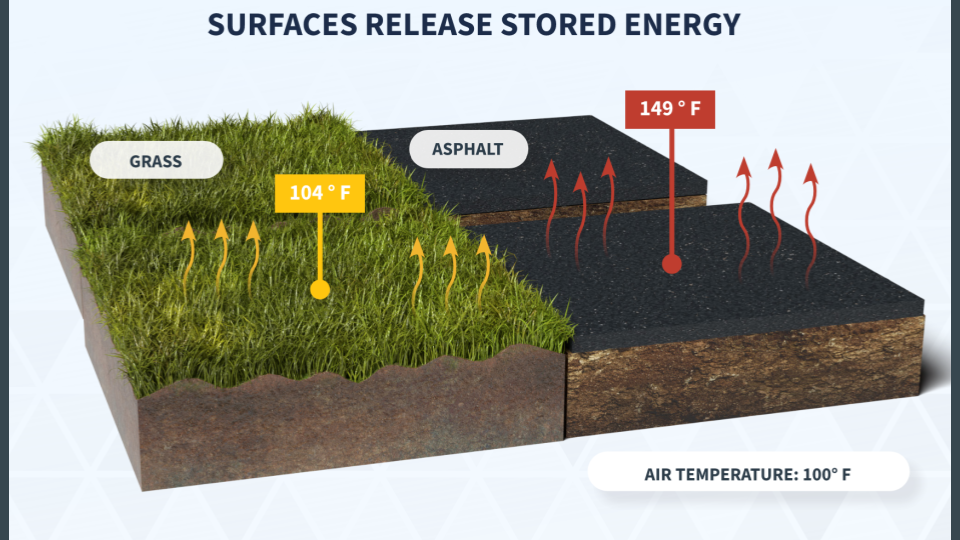
It’s not just catastrophic events that pose a risk; the gradual, everyday changes to our natural environment will increasingly affect our children. As global temperatures rise, we will face more frequent and intense extreme weather, but also simply hotter day-to-day conditions. This demands adjustments to both facilities and scheduling.
Research shows that when temperatures reach 95 degrees Fahrenheit (approximately 35°C), adults decrease their outdoor exercise and activities by 13%. Are our schools also adapting? Here are a few practical action steps K-12 leaders can take to prepare for extreme heat.
SCHEDULES:
- Define Heat-Activity Thresholds: Establish clear temperature points that trigger mandatory adjustments, such as moving outdoor recess and P.E. classes indoors.
- Communicate Broadly: Ensure staff, coaches, and families are aware of heat-aware scheduling and adjusting practices when extreme heat is forecast.
- Consider Implications of Timing Shifts: Recognize that while shifting activities to cooler morning hours may help, shifting to later evening hours (e.g., for sports) can unintentionally disrupt students’ circadian rhythms and sleep quality, affecting their readiness the next day.
FACILITIES:
- Invest in Mitigation: Prioritize infrastructure and site planning that addresses rising temperatures.
- Enhancements include: More shade structures, readily accessible water stations, flexible indoor spaces, and an awareness of the local micro-climate, especially in dense urban schools where the heat-island effect is pronounced.
Aligning Research with Design: Building Resilient Schools
Design and planning must actively align with research to create prepared and resilient school buildings. This concept of building hardening is essential and involves specific design features to mitigate the risk of various extreme weather events.
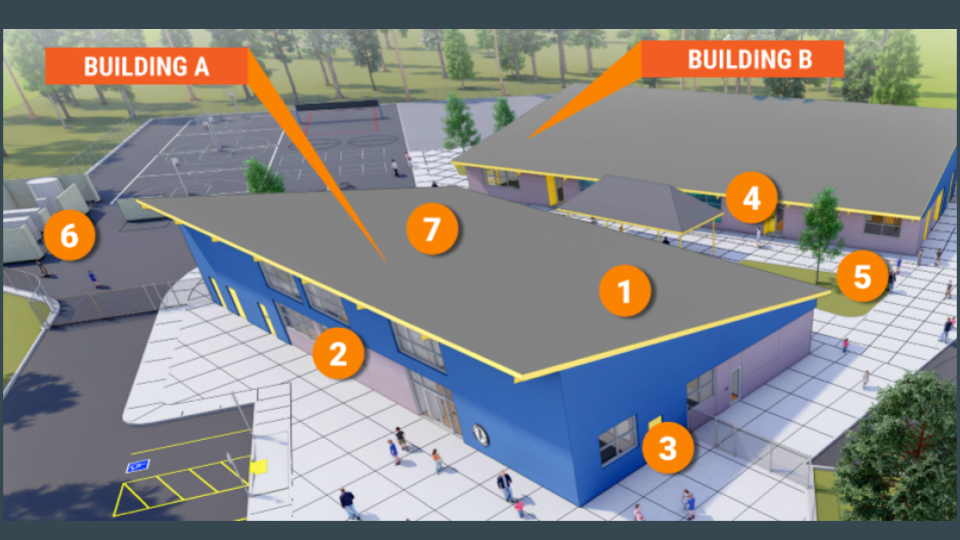
Wildfires (Best Practices for Moderate to High Fire Risk Areas):
- Metal Roof & Wall Panels Allow for a Fire- Resistant Exterior
- Multi-pane Windows with Minimum One Tempered Layer
- Exterior Doors made of non-combustible material (metal/ tempered pane glass)
- Gutters with covering to prevent build-up of debris
- Limited vegetation around buildings creates defensible fire zones, with a minimum 5′-0″ noncombustible softscape/hardscape buffer and easily maintainable, drought-resistant landscaping within 30’-0” of the building.
- Utility yard includes water storage tank and booster to draw water from the well for sprinklers. Generators allow for power on days when it is shut off due to high winds.
- HVAC system to automatically shut down in the event of smoke, fire alarm activation, or fire sprinkler system activation to prevent smoke and fire from spreading throughout the ductwork.
Other Considerations: Minimize openings or add screening protection on louvers and other vents to prevent embers from entering enclosed spaces.
Flooding (Key Design Features):
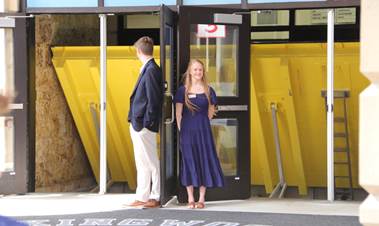
- Flood Risk Management: Civil engineers must assess and mitigate site-specific flood risks, coordinating with local authorities to meet stringent stormwater retention requirements.
- Structural Integrity: Design the foundation and structure to resist uplift pressure from groundwater in addition to the wind-hardened design.
- Envelope System: Develop an exterior envelope capable of withstanding Category 4 hurricane winds, missile E impact loads, and substantial flood pressures, exceeding standard code requirements.
- System Elevation: Elevate all essential Mechanical, Electrical, and Plumbing (MEP) systems above the base flood elevation — in some cases, as high as five feet above the finished floor.
Extreme Heat (Outdoor Design):
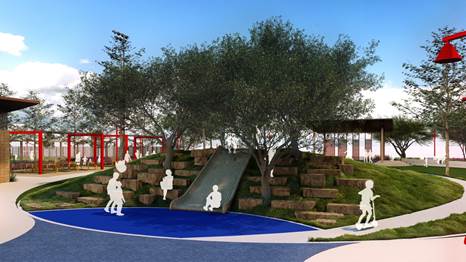
- Step 1: Reduce: Minimize hardscaping (concrete, asphalt) and maximize planting areas and softscape material to reduce thermal mass and heat absorption on the site.
- Step 2: Shade with Trees: Strategically plant canopy trees to provide shade, especially over concrete and asphalt areas like parking lots.
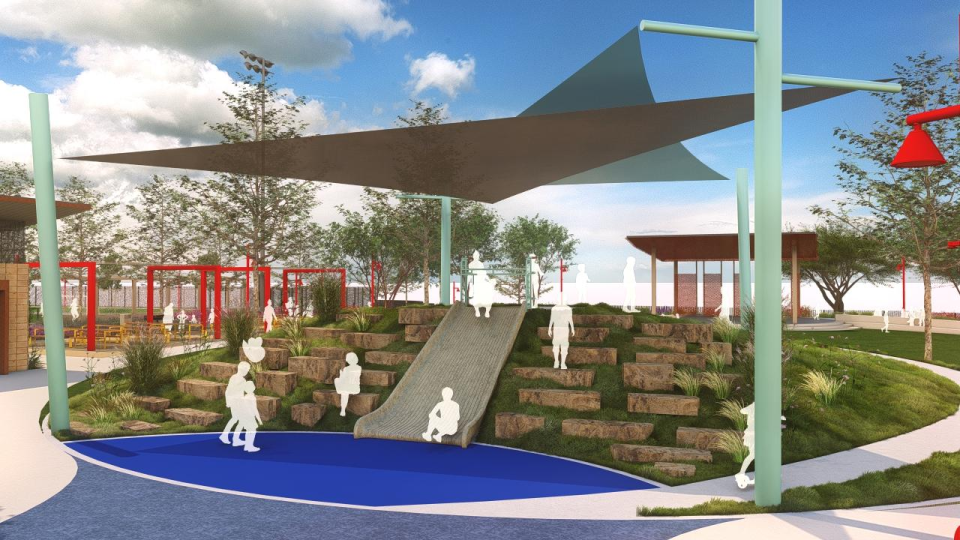
- Step 3: Shade with Structures: For outdoor classrooms and common areas, utilize pergolas, awnings, and trellises to ensure students and staff can comfortably utilize outdoor spaces even on hot days.
Knowledge Brokering
The creation of robust, resilient schools must be guided by high-quality research, ideally peer reviewed. Peer reviewed research is the cornerstone of academic publishing as it ensures credibility, accuracy, and integrity. This process filters out flawed studies and ensures decision-makers are working with reliable, unbiased information.
However, a significant challenge exists: the research-to-practice gap. The literature suggests that, across sectors like health and education it takes 17 years, on average, for peer reviewed research findings to be put into action. Why? Trustworthy knowledge is often generated by academic audiences for academic audiences, hidden behind paywalls in journals that practitioners may never access. Journal articles are typically jargon filled, statistically complicated, and lengthy creating even more barriers to access. The body of knowledge must be made more accessible and actionable. Fortunately, there are non-profit organizations working toward this goal. See for example, this open access research roundup on extreme weather and consider supporting such knowledge brokering work to help narrow the research to practice gap.
The path to resilient schools is two-fold: understanding the increasing threats of extreme weather and actively translating rigorous research into tangible, evidence-based design and operational planning that guarantees safety, stability, and support for every child.
Sources
- Boser, U., & McDaniels, A. (2018) Addressing the Gap Between Education Research and Practice. Center for American Progress. https://files.eric.ed.gov/fulltext/ED592773.pdf
- Cambrice, F. (2015). “Flourishing or Floundering” in Rethinking Disaster Recovery: A Hurricane Katrina Retrospective. Haubert, J. (ed). Lexington Books.
- Dollar, K. M., & Bahraini, N. H. (2025). Bridging the research-to-practice gap: Implementation science approaches to transform health care delivery. Psychological Services, 22(3), 403–408. https://doi.org/10.1037/ser0000979
- Gibbs, L., Block, K., Harms, L., MacDougall, C., Baker, E., Ireton, G., Forbes, D., Richardson,
- J., & Waters, E. (2015). Children and young people’s wellbeing post-disaster: Safety and stability are critical. International Journal of Disaster Risk Reduction, 14, 195–201. https://doi.org/10.1016/j.ijdrr.2015.06.006
- Munro, C.L., & Savel, R.H. (2016) Narrowing the 17-year Research to Practice Gap. American Journal of Critical Care, 25(3), 194-196. https://doi.org/10.4037/ajcc2016449
- Rycroft‐Smith, L. (2022). Knowledge brokering to bridge the research‐practice gap in education: where are we now?. Review of Education, 10(1). https://doi.org/10.1002/rev3.3341
- Yichun, F. (2024). Social cost of lifestyle adaptation: Air pollution and outdoor physical exercise,
- Journal of Environmental Economics and Management, 127. https://doi.org/10.1016/j.jeem.2024.103042