


How do you feel about Artificial Intelligence (AI) in Education? Are you excited? Interested? Cautious? Suspicious? Avoidant? Worried? Lost? … Or a mix of some of the above? Looking to the future, are you optimistic or pessimistic about AI’s role in learning and its impact on the future of work?
The rapid and exponential growth of AI in our lives is shaking us to the core. It is a mixed bag of excitement and fear as its exponential rise is creating so much disruption and change. As with every industry, education is also being challenged by AI. Should education engage with AI or disengage it? Will it make us better and smarter, or numb and dependent? Will it lift the elites or all boats equitably? So many questions.
As designers of learning environments, we are also asking ourselves what impact the adoption of AI in education will have on learning experiences and the environments where they happen. We will discover thoughts and ideas to these questions over a 2-article series.
At its core this series proposes that AI, unlike other tools in the past, has the power to transform education unlike anything we have ever seen. Potential drawbacks to AI in learning abound (inequities, biases, security risks, over dependence, and privacy concerns among others), but its benefits abound as well such as customization, paced learning, addressing disabilities, exponential enhancement of learning, engagement in problem seeking and problem solving, speed of learning, and many other opportunities.
This first article will help get our bearings as to where we are, a ‘sign of the times’ if you will. The speed of change is so dramatic that sharing latest news would be dated immediately. But there are indicators and insights that will be shared to bring a wider perspective of the context we are living in, and specifically, how it will affect learning. We will look at where ‘AI in learning is today’ by taking a broad survey of insights from policies, case studies, and real-World impact. The second article will focus on insights on how ‘AI may impact the future of education’ and how this new foundation for learning could impact learning experiences and environments, what we call ‘the New Taxonomies of Learning Environments in the fast-developing age of AI ‘
AI as a Foundational Shift
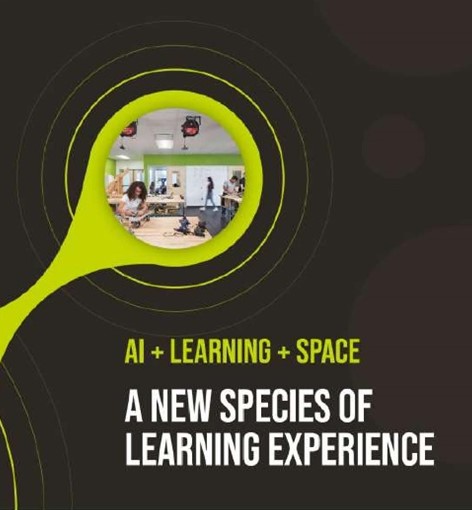
If we are to think of AI as a foundational shift in education, we cannot just look at how to adapt pedagogy and space as an adjustment of our current models. This moment in history calls for a new species of learning experiences, not a Hybrid of current and past species which have and have had multiple failures and struggles.
So, what does that mean exactly? And why a Foundational shift?
To answer these questions, we will be looking at a few indicators, a ‘Sign of these times” that better help understand today’s context.:
- Skills + Experience + Content: The World Economic Forum (WEF) released in 2024 a Report titled “Shaping the Future of Learning: The Role of AI in Education 4.0.” https://www3.weforum.org/docs/WEF_Shaping_the_Future_of_Learning_2024.pdf
The Report Lists 8 Future-Focused Strategies for the Future of Education. (See image below). Four of those strategies are listed as ‘Experiences’ and four as ’Content’. The interesting thing about the word choice selected by the WEF, is that under Content, the 4 strategies are actually labeled as Skills.
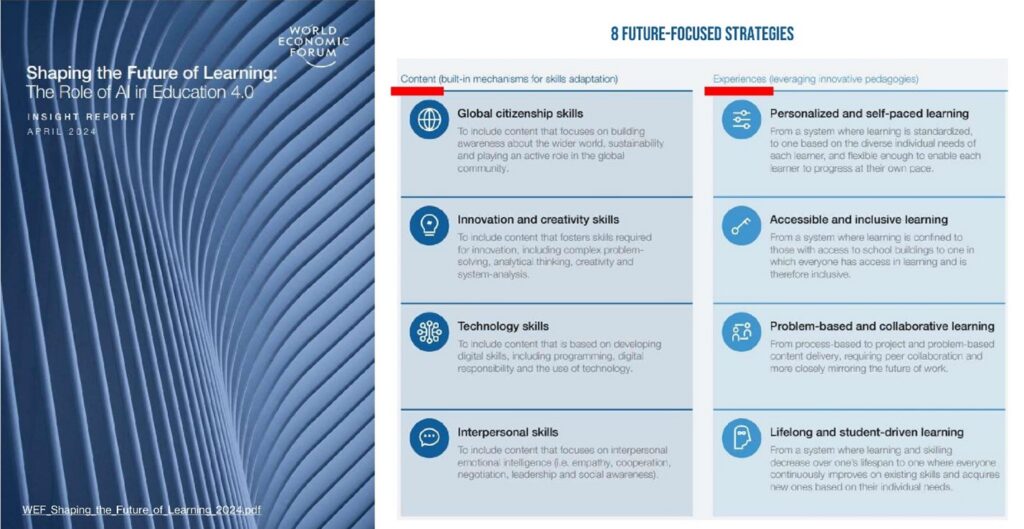
It raises a question. What is the role of Skills vs Experience Vs Content in the future of learning? Can AI change the eternal question of what is Learning? Historically, learning could be considered as the following formula:
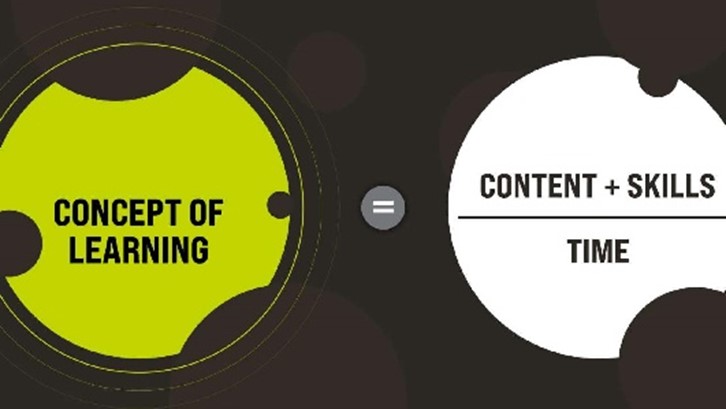
But with AI, where content is ubiquitous and accessible within milliseconds, is this formula still valid? Is the goal to have more skills, and more experiences? What level of content memorization will be needed in the future? And what role does Time play in this equation?
2. Teacher Shortages: The same report indicates that by 2030, there will be a 44 million teacher gap globally. And that teachers work on average 54 hours a week, with low pay, and with 46% of their time being spent on administrative tasks and Assessments. Is this a sustainable model? Teachers are burnt out and underpaid. What if they were to spend 90 % of their time instead teaching, creating bonds with students, and crafting experiences and skills learning opportunities instead? That is the reason most of them went into teaching in the first place.
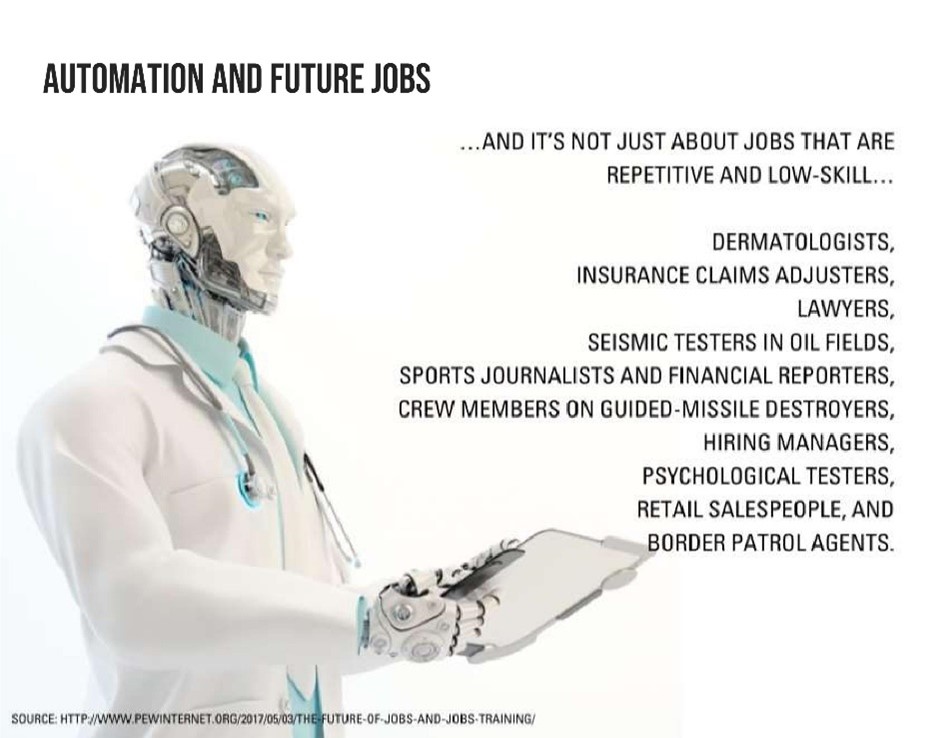
3. Disruption of ‘most’ Jobs: We are getting indicators that absolutely every facet of our future work experiences, immediate and long term, will be intricately supported, driven, or replaced by AI. With robotics and machinery, which used to be true for blue collar jobs, but with AI, it is also true for white collar jobs. The graphic below shows how AI is already disrupting all types of white-collar jobs, from dermatologists to lawyers, and homeland security agents to architects. So, what does that mean for education? For Curriculum? And for pedagogy? Is today’s learning good enough for tomorrow’s needs?
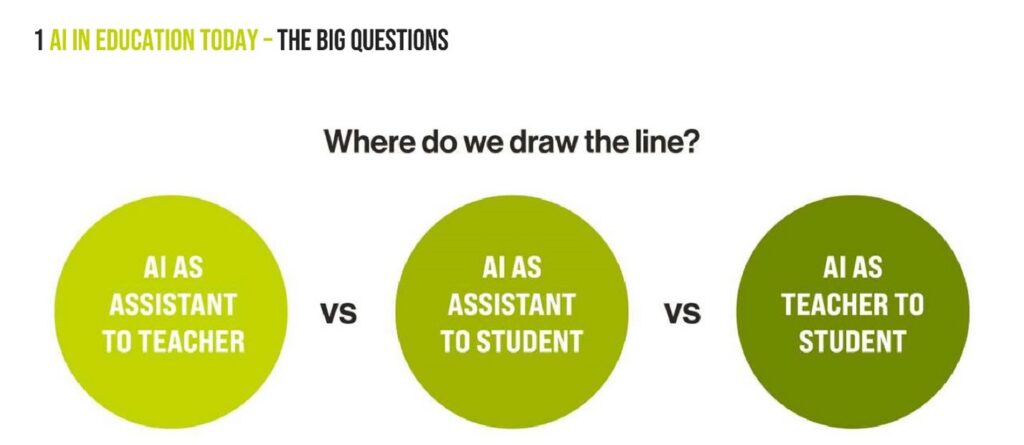
4. AI as supporting cast or main actor: Other indicators are starting to question what the role of the teacher may be in the future and what the integration of AI may be like in the teaching/learning process. Where are the opportunities to enhance teaching? And where do we draw the line between AI as an assistant to teachers, versus AI as assistant to students, or AI as teacher to students.
Those questions are already being explored at The Alpha School. (Program | Alpha School) With over 20 schools, this educational approach is presented as a 2-hour student Learning model, personalized, with accelerated learning through AI, with the rest of the day dedicated to skills development and human connections. A long-term study will be needed to track students going through this program and document the results and evidence if this program has positive outcomes for students’ long term.
5. To Engage or Not to Engage. Regardless of attitudes towards AI, it is clearly a game changer. We are at an inflection point, and decisions need to be made. Do we disassociate? Do we engage? Do we adapt and accelerate?
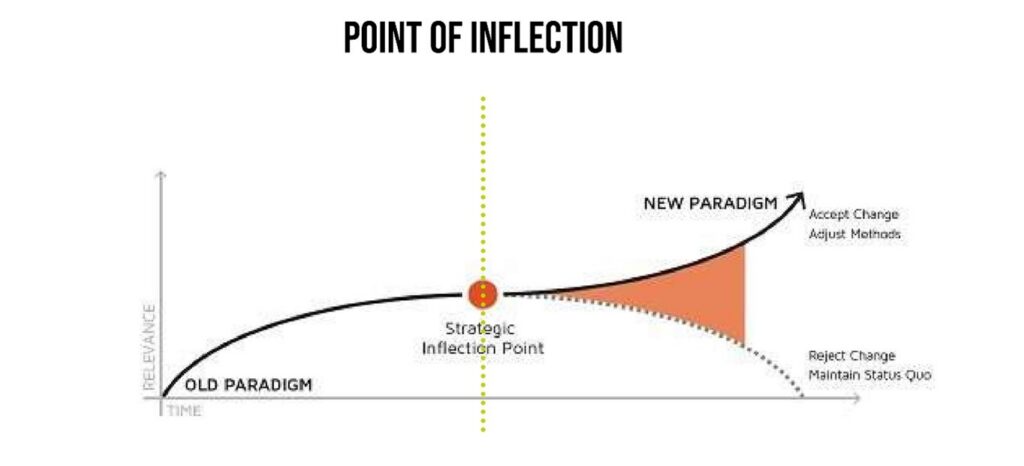
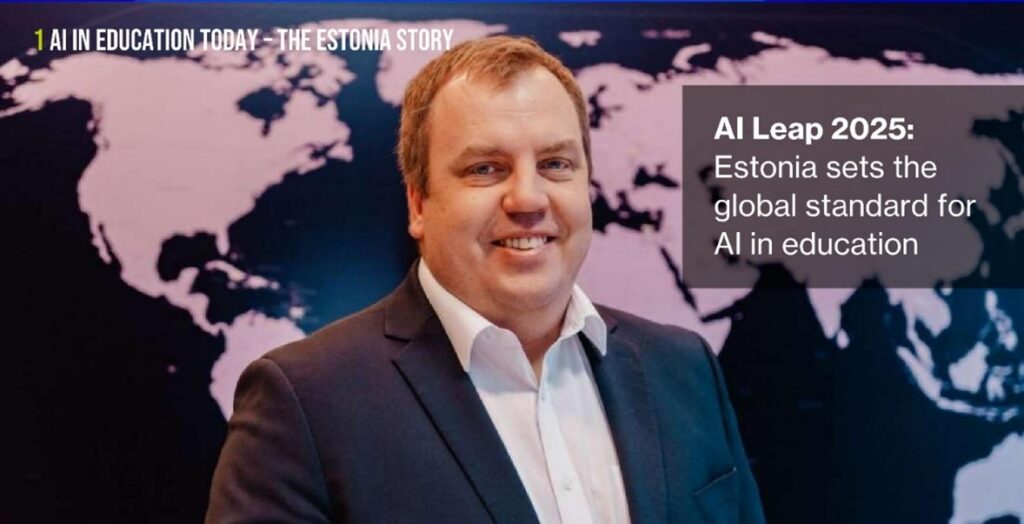
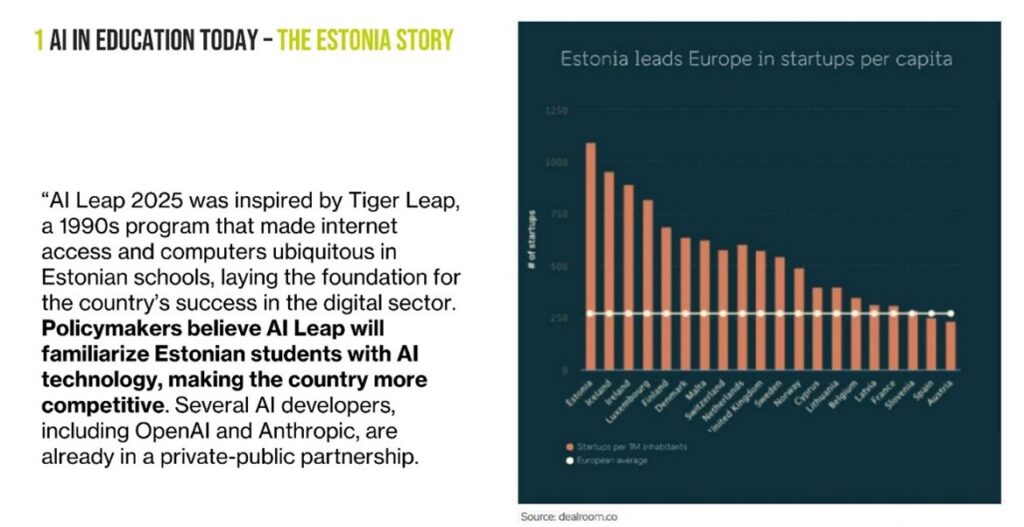
Examples of all three attitudes are happening as we speak. Sweden’s Schools Ministry has determined that students will be moved off digital devices and to books, handwriting, and paper for children under 10 years old. (Switching off: Sweden says back-to-basics schooling works on paper | Sweden | The Guardian). Many other districts like NYC schools are trying to determine what those AI policies may be. At the time of this writing, they still do not have, or have not released, the AI guidelines for class use. (NYC public schools to release guidelines for AI use in class). Meanwhile, Estonia, through its LEAP 2025 program, an ambitious nationwide AI education initiative, is fully engaging with AI for grades 10 and up (Estonia’s groundbreaking AI Leap 2025 programme brings innovative AI tools to all schools). They are partnering with Industry-leaders in AI, like Anthropic and OpenAI, to create foundational AI structures for their learning pedagogy and curriculum.
Three vastly different attitudes towards AI in learning.
6. The Challenges and Concerns. And with all the optimism, when looking at the full picture, we also understand the tremendous risks AI poses to the potential learning process:
- Overdependence of AI may erode critical thinking skills and reduction of cognitive ability. Over-Reliance on AI May Harm Your Cognitive Ability, Experts Warn : ScienceAlert.
- Bias in AI create ethical challenges related to inequities, gender and race biases, and cultural biases among others. Biases in AI: acknowledging and addressing the inevitable ethical issues – PMC
- Data Privacy and Security, one of the most pressing challenges for school districts across the United States. 88% of District Tech Leaders mention protecting student data as one of their top 2 priorities in the age of AI. Schools Face an Uphill Battle in Protecting Student Data in the Age of AI
- Accessibility Concerns and Equity as described by the Department of Education’s Artificial Intelligence and the Future of Teaching and Learning Report, as well as increasing costs of AI tools and their inaccessibility to many Artificial Intelligence and the Future of Teaching and Learning (PDF)
- Reduced Human Interaction because of AI contributing to social isolation, disconnectedness, and loneliness Artificial Intelligence: Contribution to Isolation, Loneliness, and Disconnection – GenWell Knowledge Hub
And that is just the beginning of a longer list of challenges that AI poses in the future of education. A good source to reference for one approach to a safe set of recommendations and guidance for learning in the age of AI is the “Guidance for the Safe and Effective Use of Artificial Intelligence in California Public Schools” https://www.cde.ca.gov/ci/pl/aiincalifornia.asp
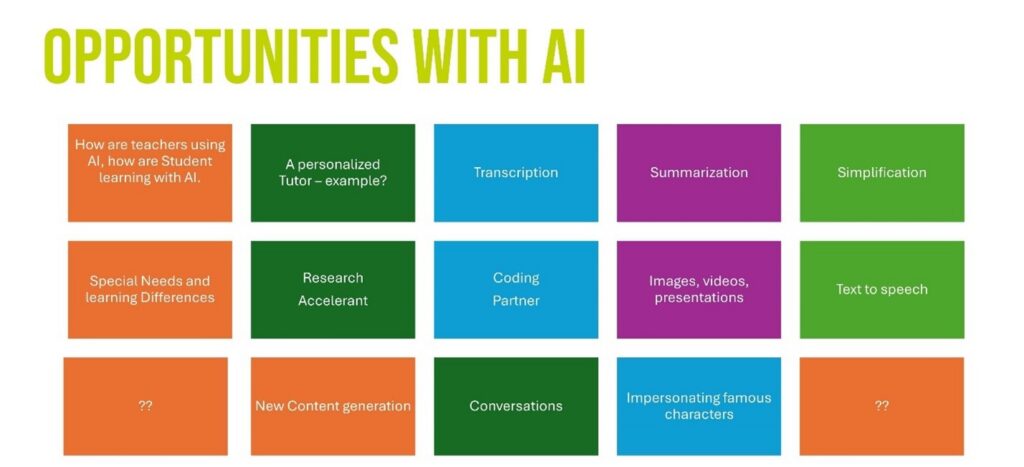
7. The Opportunities. As we progress into the next few years, the balance of the risks of AI in education needs to be balanced with the promise and opportunities that AI can have in Education. The graph below shows some of those amazing opportunities that AI can have in the development of student’s knowledge, skills, and experiences if done appropriately. These opportunities include more personalized learning experiences, including teaching and tutoring, transcription for students with disabilities, simplification of complex content, support for neurodiverse students, text to speech, and research acceleration among many other benefits.

All these indicators, positive, negative, concerning, optimistic, and all things in between, help us better understand the context and the present and future impact of Artificial Intelligence on learning. For us as designers and planners of Learning Environments, designing in the age of AI can be challenging. Looking ahead, in article 2 in the next issue of Essentials, we will unveil an approach to thinking about designing Learning Environments in the age of AI. The next article will present a new paradigm, what we call “New Spatial Taxonomies for the New Learning Ecosystem”, that will challenge how to approach design within the continuum of Pedagogy, Learning, Space, Time, and Technology in the age of AI.
What will AI in education be like tomorrow? And how could spaces explore that future? Stay tuned….