


From Lived Experience to Measured Impact
In the first article in this series, Invisible Strain: Rethinking Schools for Teachers with Disabilities, we explored why educators with disabilities represent a critically underserved population in school design and outlined the research approach developed to better understand their lived experience. That article focused on visibility, surfacing the often-unseen challenges educators navigate daily and the systemic gaps that contribute to burnout and attrition.
This second article turns to what the research revealed and what it means for design practice. Building on interviews, surveys, and simulated experience conducted in real school environments, the study examined how design and environmental conditions shape educators’ capacity to teach effectively. For readers interested in a deeper look at the study’s methodology and research structure, the first article provides that foundation and can be accessed here.
The findings that follow reflect a synthesis of educator narratives, self-reported experience, physiological data, and researcher observation. Together, these lenses offer a clearer picture of how everyday school environments influence effort, confidence, and well-being, and where design can play a meaningful role in supporting educator resilience.
Understanding Educator Resilience: Four Areas of Focus
The study examined four interconnected factors that contribute to educator resilience:
- Cognitive load – the mental and emotional demands experienced by educators, particularly those navigating disabilities
- Self-efficacy – the extent to which environmental conditions support confidence, competence, and agency
- Affective State –the emotional labor associated with teaching in environments that may not fully accommodate diverse needs
- Physiological Response – measurable physical indicators such as heart rate, stress levels, and cadence
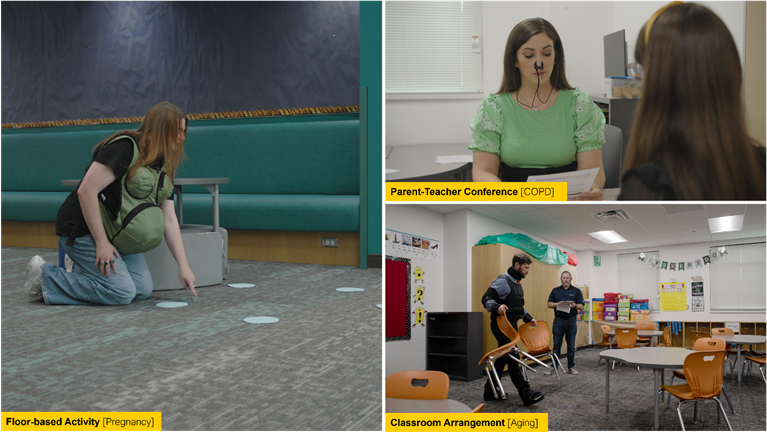
Together, they influence not only how educator complete tasks but also how capable, confident, and supported they feel in their professional roles. These factors were measured by engaging participants in high-fidelity tasks commonly encountered in an education environment. Educators performed the tasks both without and with a disability simulator that introduced a range of conditions — visible and invisible, as well as chronic and temporary. These conditions included Aging, Arthritis, COPD, Diabetic Retinopathy, Lower Back Pain, Partial Hearing Loss and Pregnancy.
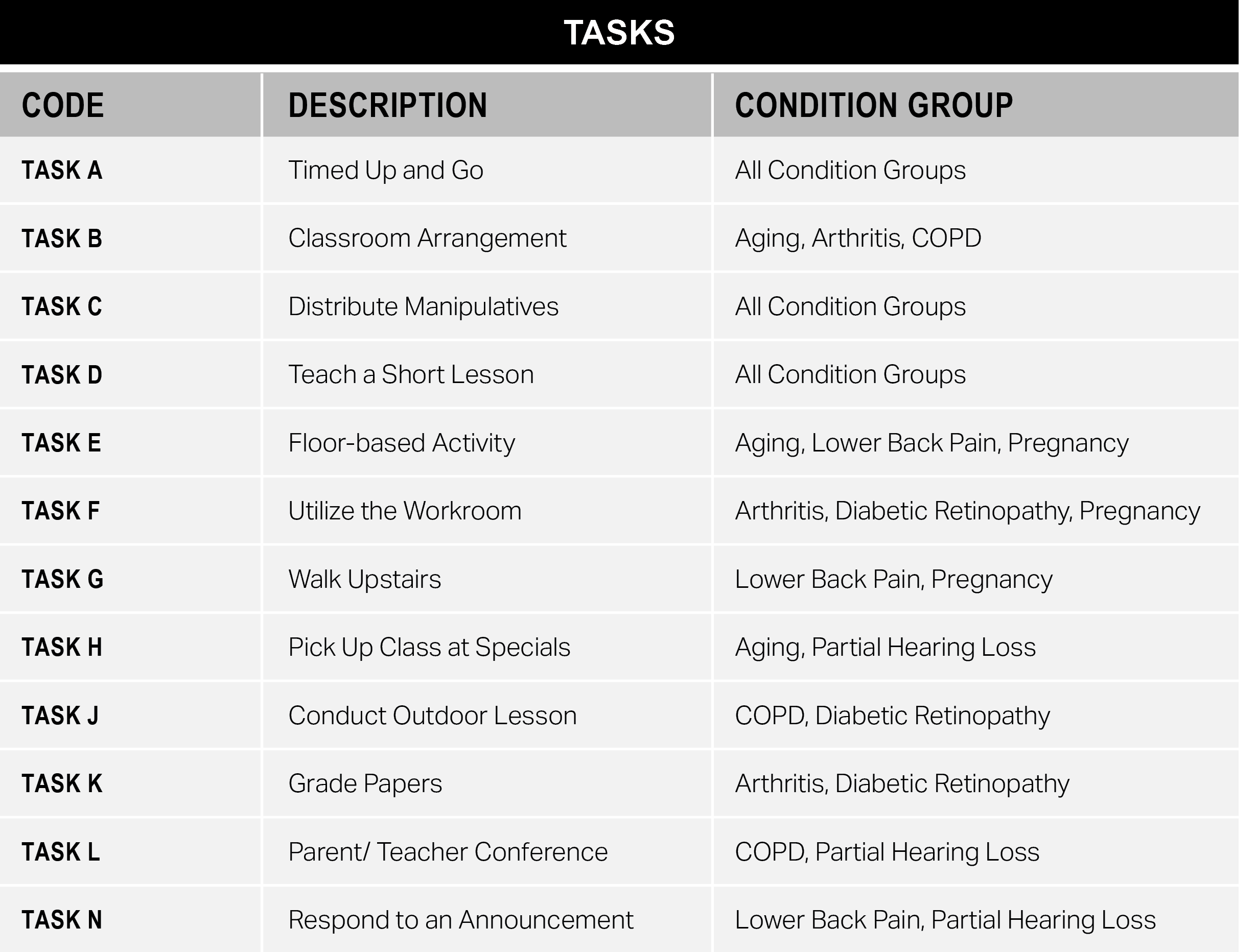
All participants completed their assigned tasks during the on-site simulation, and most did so without a significant change in completion time compared to baseline. Yet despite outward success, participants consistently reported meaningful changes in how completing those tasks felt. This gap between performance and perception became a central insight, revealing how environments can increase strain without visibly affecting outcomes.

Cognitive Load and Task Performance: When Routine Work Becomes High Effort
Findings related to cognitive load and task performance reveal how quickly everyday teaching activities can become mentally and emotionally demanding when health-related limitations are introduced. Across simulation conditions, participants reported higher mental effort and task difficulty compared to baseline. Tasks that initially felt manageable required more focus, more planning, and more energy. At the same time, perceived success declined, while feelings of stress, insecurity, and irritation increased. Notably, mental effort rose from 2.93/7 to 3.98 and task difficulty nearly doubled from 2.16/7 to 4.42, accompanied by a sharp increase in stress and insecurity (2.24/7 to 4.11).
These shifts emerged even when tasks were completed successfully. The environment did not prevent educators from doing their jobs, but it required more from them to do so. This distinction is critical. When environments introduce unnecessary friction through layout inefficiencies, poor organization, sensory overload, or physical barriers, they quietly increase cognitive load.
Over time, this added mental effort can erode confidence and contribute to fatigue and burnout, particularly for educators already managing health conditions or disabilities. These findings highlight the importance of environments and systems that minimize unnecessary cognitive demands and support a sense of capability across diverse user groups.
Self-Efficacy: Confidence, Control, and Professional Capability
Self-efficacy emerged as a key indicator of how environmental conditions affect educators’ professional experience. Across condition groups, overall teacher self-efficacy declined during simulation, with the most pronounced changes related to classroom management and student engagement. Participants reported reduced confidence in handling difficult tasks, maintaining student focus, and managing classroom dynamics. Confidence in handling the most difficult tasks fell sharply for aging (89.2% to 64.0%) and lower back pain (89.3% to 60.3%), while the ability to keep students on task during challenging assignments dropped for aging (88.0% to 64.0%) and COPD (86.5% to 59.5%).
Importantly, these changes were not driven by an inability to complete tasks, but by a reduced sense of control while doing so. When environments require constant adaptation or physical compensation, they can undermine educators’ confidence in their professional role, even when instructional skill remains strong. These findings highlight how design influences not only physical access but perceptions of authority, competence, and agency in the classroom.
Affective State: The Emotional Cost of Added Barriers
In addition to cognitive and professional impacts, the study revealed consistent declines in self-perceived mood during simulation. Participants reported lower levels of calmness, energy, and emotional balance, particularly in conditions involving increased physical demand. For example, aging and COPD groups experienced the steepest declines, with sharp drops in both calm (6.8/7 to 4.2; 6.5/7 to 3.0) and energy/vitality (6.0/7 to 3.4; 5.0/7 to 2.75). As effort increased, emotional regulation became more difficult, reinforcing the cumulative nature of strain across the school day.
These findings underscore the emotional labor of teaching in environments that do not adequately support adult users. Design strategies that reduce stressors and preserve energy are therefore essential to sustaining emotional well-being, not secondary considerations.
Physiological Responses: Where Strain Becomes Visible
Physiological data provided additional insight into how different activities affected physical response during simulation. While overall heart rate changes varied across conditions, mobility-intensive tasks consistently produced elevated responses, particularly for participants experiencing age-related limitations. Activities involving transitions, prolonged movement, or floor-level engagement placed greater physical demands on the body. For example, picking up a class at specials (Task H) produced the greatest increase in heart rate (+3.8%), particularly among aging and partial hearing loss.
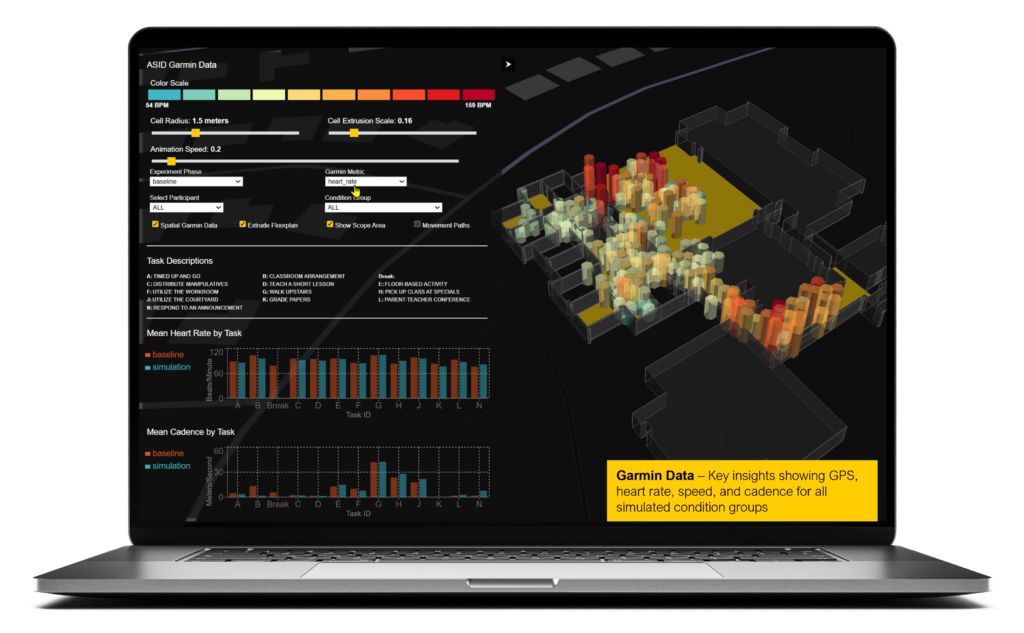
These findings highlight that strain is often task-specific and cumulative. Environments that require repeated physical effort without adequate support can amplify fatigue over time, even when individual moments appear manageable.
Where Evidence Converges
Viewed together, insights from interviews, simulation, self-report measures, and physiological data point to several consistent patterns. Small barriers accumulate over the course of a day, contributing to fatigue and frustration. Environments that lack adjustability require educators to compensate, often through physical or cognitive workarounds. Cognitive load is shaped not only by instructional demands but by spatial organization, sensory conditions, and access to tools.
Loss of control emerged as particularly destabilizing. Feeling unable to manage one’s environment or classroom had an outsized impact on confidence and well-being. Across all measures, preserving energy and reducing unnecessary effort proved critical to sustaining educator resilience.
From Evidence to Experience: Synthesizing Insights into Personas
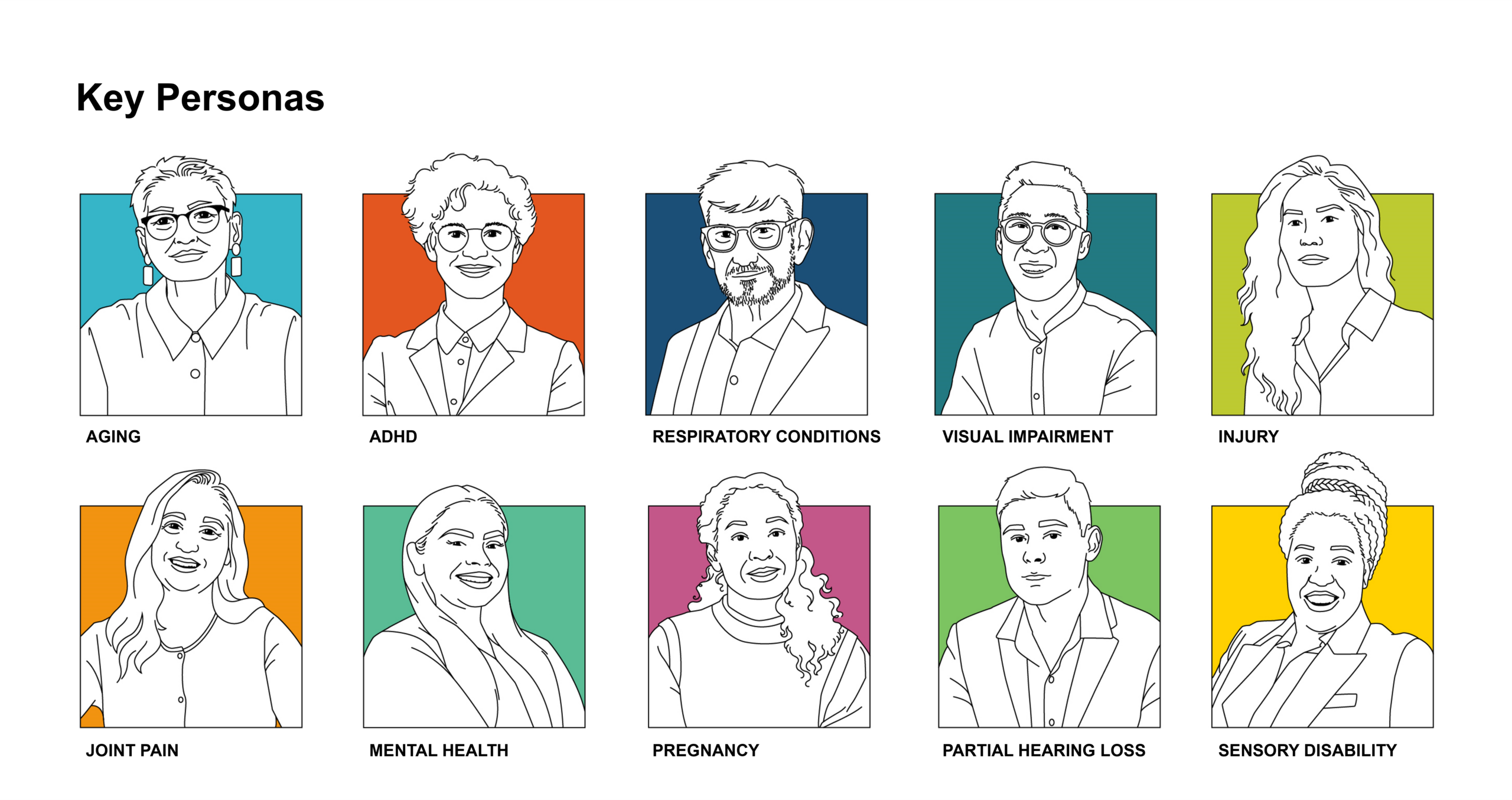
To move from individual data points to actionable design guidance, the research team synthesized findings into a series of educator personas and experience maps. These tools were not intended to represent single individuals, but to capture recurring patterns across conditions, roles, and environments.
By overlaying interview insights, simulation responses, self-report measures, physiological data, and researcher observations onto a typical school-day flow, the team was able to visualize where strain accumulated, where confidence declined, and where support was most needed. This synthesis made it possible to identify moments that consistently challenge educators across multiple conditions, such as transitions between spaces, prolonged standing, floor-level engagement with students, and periods requiring sustained focus amid sensory stimulation.
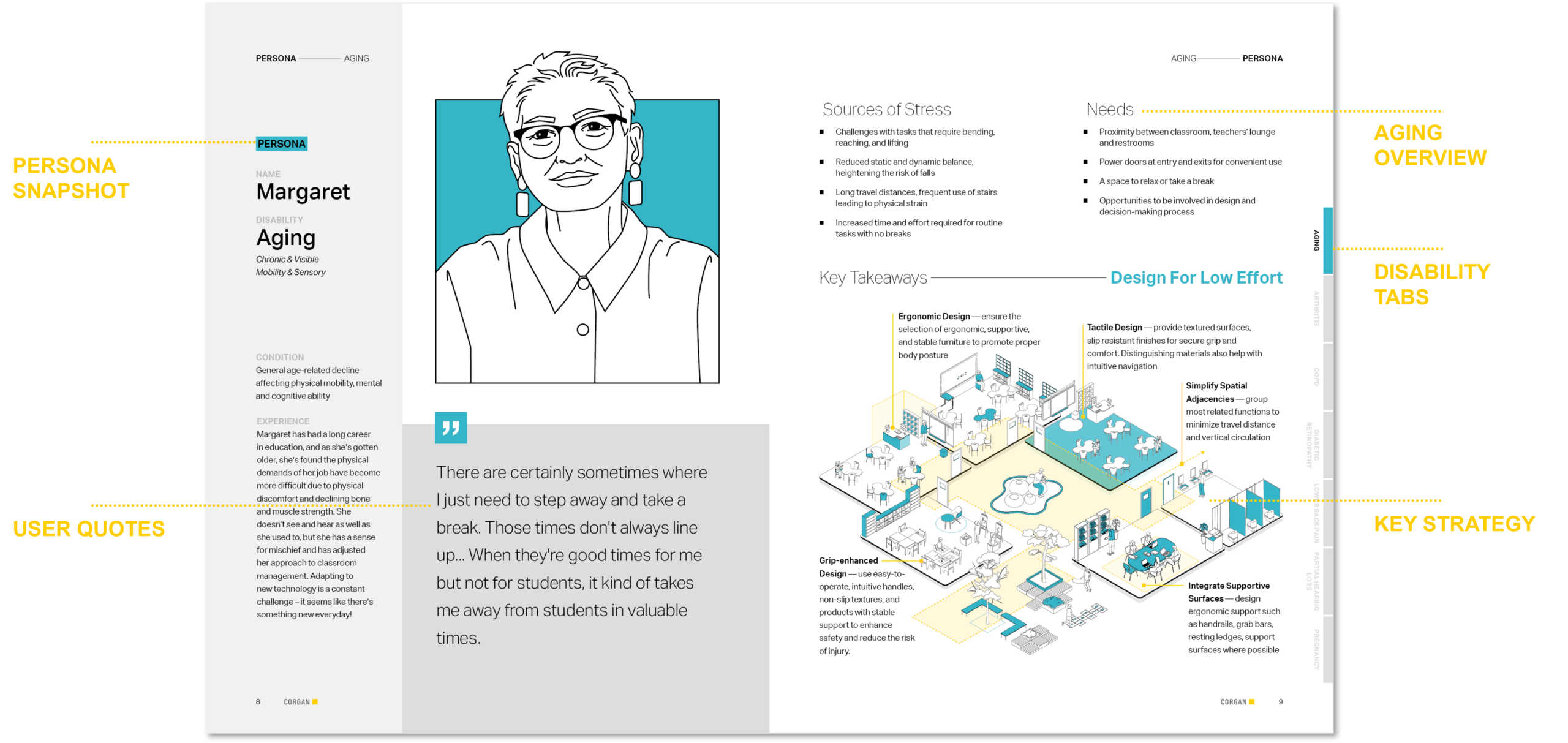
Educator personas helped translate abstract findings into relatable user profiles that designers, administrators, and educators could readily understand and apply. Each persona highlights not only functional needs, but emotional and cognitive dimensions of the teaching experience, revealing how environmental conditions influence professional identity, energy, and resilience.
Most importantly, this approach allows insights to scale. Rather than designing for isolated conditions, the personas surfaced from shared experiences and overlapping needs, enabling strategies that support a wide range of educators. These synthesized tools became the foundation for identifying design opportunities at multiple levels, from small classroom adjustments to broader planning and policy considerations.
Design Implications: Translating Research into Practice
Drawing from the full body of findings, five design priorities emerged to guide more inclusive, teacher-supportive school environments.
- Design for Low Effort and Endurance
Create environments that reduce unnecessary physical demands and support sustained movement throughout the day. Provide varied work zones that accommodate upright, seated, and assisted postures, remove barriers to circulation, and organize tools and materials to minimize excess reaching, lifting, or travel. - Design for Adaptive Use
Enable educators to adjust their environment in response to physical needs and pedagogical shifts. Reconfigurable layouts, adjustable furnishings, and personalized equipment reduce the need for constant adaptation and support diverse teaching styles and abilities. - Design for Cognitive Clarity
Support focus and decision-making by simplifying spatial organization and reducing sensory overload. Clear hierarchies, intuitive layouts, thoughtful acoustics, adjustable lighting, and defined zones for active and quiet tasks help minimize distraction and mental strain. - Design for Built-In Inclusivity
Move beyond minimum accessibility requirements to create environments that feel inherently inclusive. Equitable access to storage, tools, and teaching surfaces, along with multisensory support for vision, hearing, and movement, ensures educators feel considered rather than accommodated. - Design for Sustained Well-Being
Prioritize features that support recovery, emotional regulation, and energy preservation. This includes both spatial and operational strategies, such as access to quiet spaces, opportunities for rest and collaboration, and policies that acknowledge the cumulative demands of teaching.
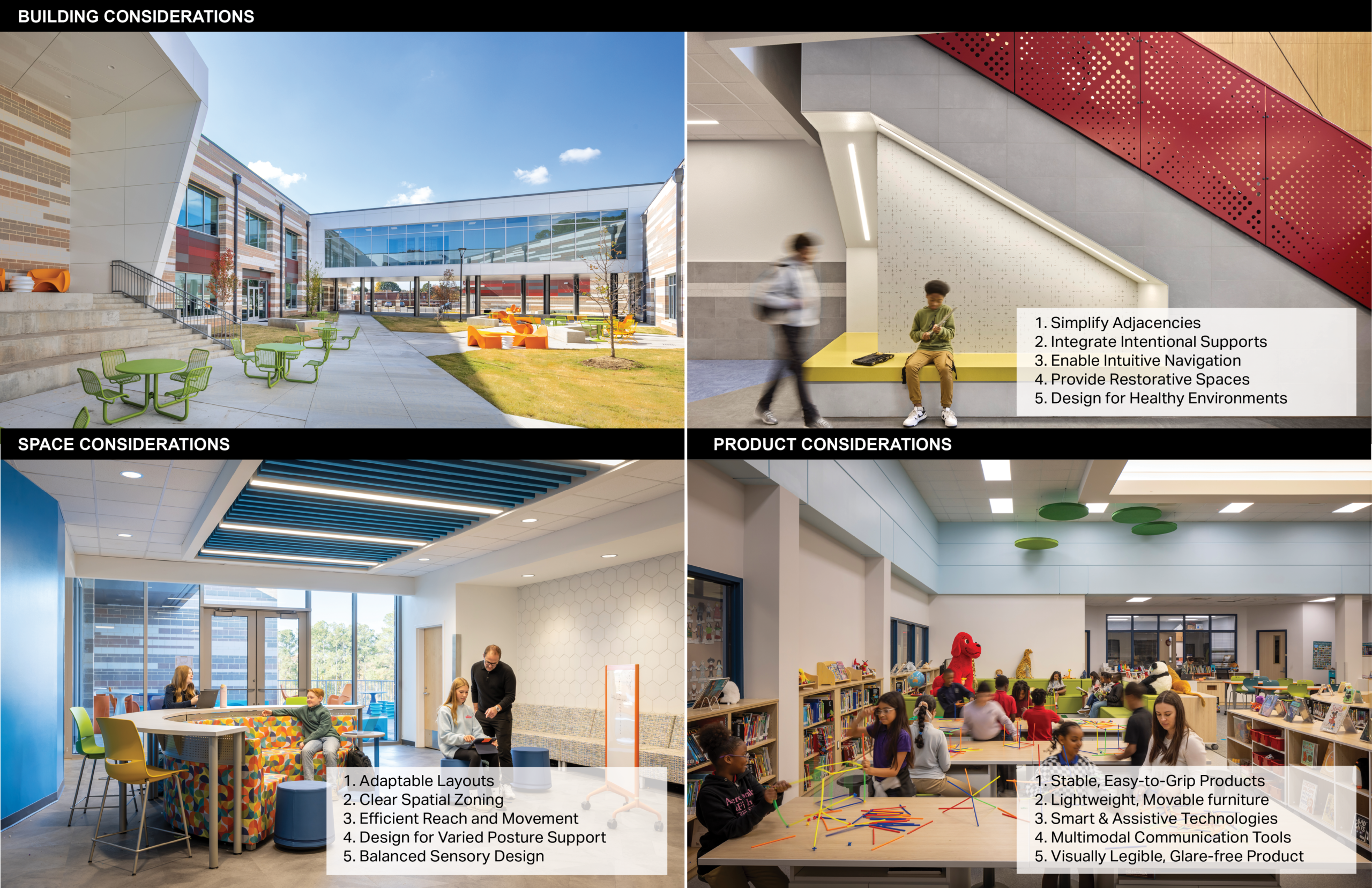
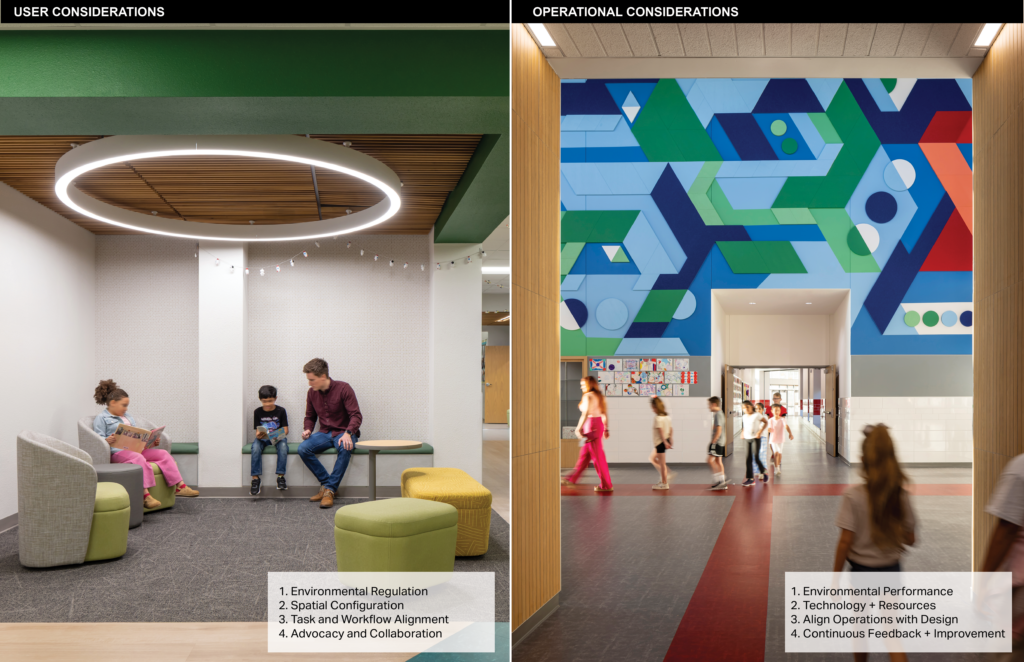
Grounded in a co-creation process with educators, designers, and researchers, the following examples illustrate how these design implications translate into practice. Organized across building, space, product, user, and operational scales, they highlight key considerations and demonstrate how inclusive environments are shaped through interconnected layers. Together, these strategies align the physical environment with user needs and operational intent, enabling consistent and scalable impact.
From Research to Action: Design Guidelines for Scalable Impact
From the outset, this research was intended not only to generate insight but to translate evidence into strategies that can meaningfully shape practice. Educators, particularly those living with disabilities or temporary physical limitations, navigate work environments largely designed for children. As districts across the country grapple with teacher retention and educator well-being, addressing the spatial and environmental factors that contribute to strain is increasingly critical.
To support applications across diverse contexts, the research findings have been translated into a set of design guidelines that bridge user experience and spatial decision-making. Organized as a practical guidebook, these guidelines build on educator personas and connect key insights to specific design opportunities across common school space types, including classrooms, shared environments, and support areas.
Rather than focusing on isolated conditions, the framework emphasizes shared patterns related to effort, energy, control, and resilience, allowing strategies to be applied consistently across scales and project types. This structure enables designers and decision-makers to move from insight to action, aligning user needs with spatial, operational, and planning considerations.
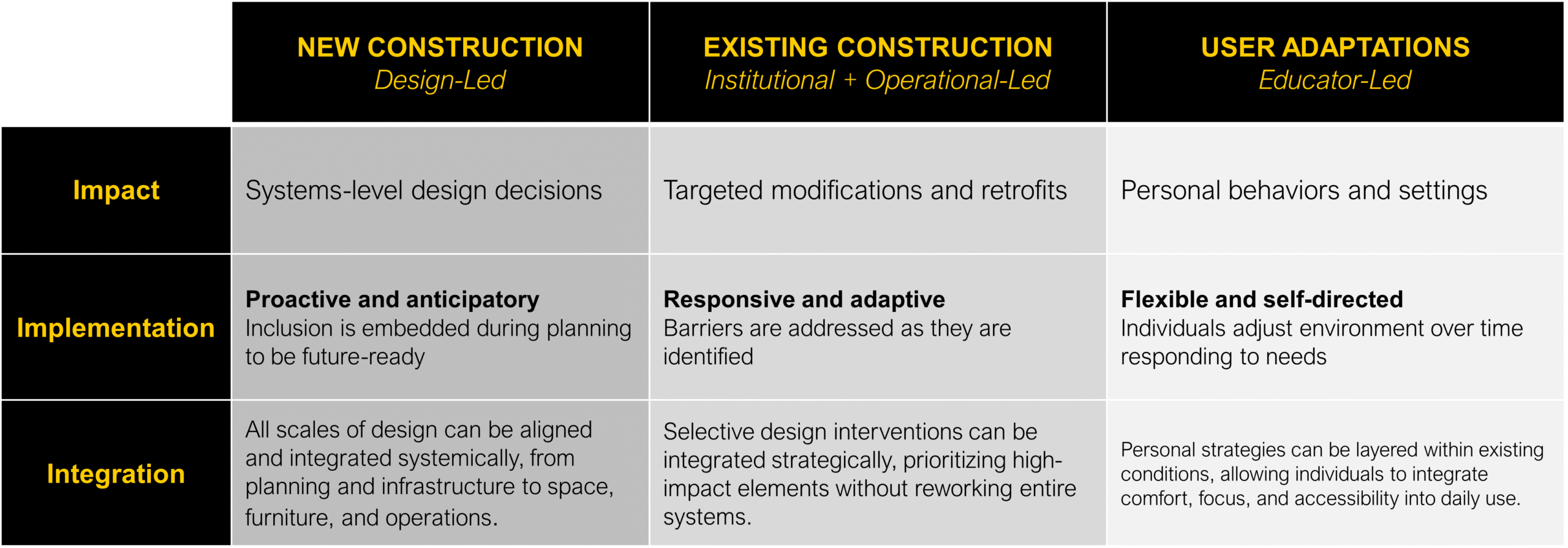
These user-focused insights are paired with space-type and scale-based lenses so strategies can be applied consistently across classrooms, shared spaces, and support areas, as well as across renovation, new construction, and operational decisions. This structure allows the guidelines to function as both a design resource and a planning tool, aligning user experience with spatial and institutional priorities. Across scales, the guidelines support individual educator advocacy, inform project design decisions, and help institutional leaders align design, operations, policy, and investment with inclusive intent.
For those seeking deeper engagement with the evidence behind these strategies, the findings are documented in a comprehensive final research report, with additional interpretation and application offered through a publicly available continuing education course hosted on the ASID platform. Together, these resources extend the design guidelines by providing multiple entry points for designers, educators, administrators, and policymakers to engage with the research at varying levels of depth.
Grounded in lived experience and measured response, the resulting tools offer practical, scalable strategies to support educator resilience, strengthen professional confidence, and create learning environments that are more inclusive, sustainable, and supportive for those who teach within them.