


“I think we need to scrap the entire deck. We need to try something radically different.” It was nearly midnight. My [bon]fire team of four was finalizing a presentation for the next morning. In a few hours, we would stand before more than 250 educators gathered in a school auditorium, one of only a handful of times all year that the full faculty would be together. Our task was straightforward: share findings from six months of design research and help the community understand how their soon-to-be-built campus would shape future teaching and learning.
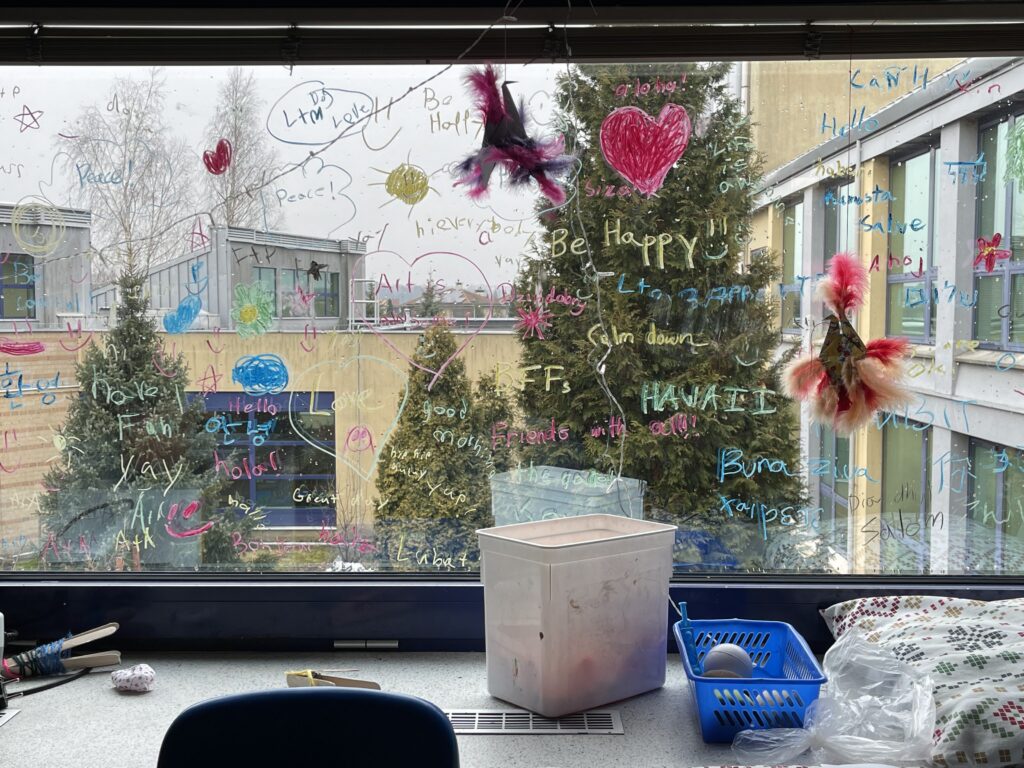
The school had spent years reimagining its PreK–12 campus, serving more than 1,000 students from over 50 countries. Their existing architectural vision emphasized flexible, collaborative environments designed to support a more dynamic model of teaching.
There was just one challenge. Current professional culture and future spaces were pointing in opposite directions.
Our slide deck did exactly what it was supposed to do. It clearly connected the design of the future campus to the collaborative practices the school hoped to inspire.
It would work. But something felt off.
This was not a group that needed another future-of-learning presentation. They didn’t need promises about how innovative spaces would change things one day. They needed a shared experience.
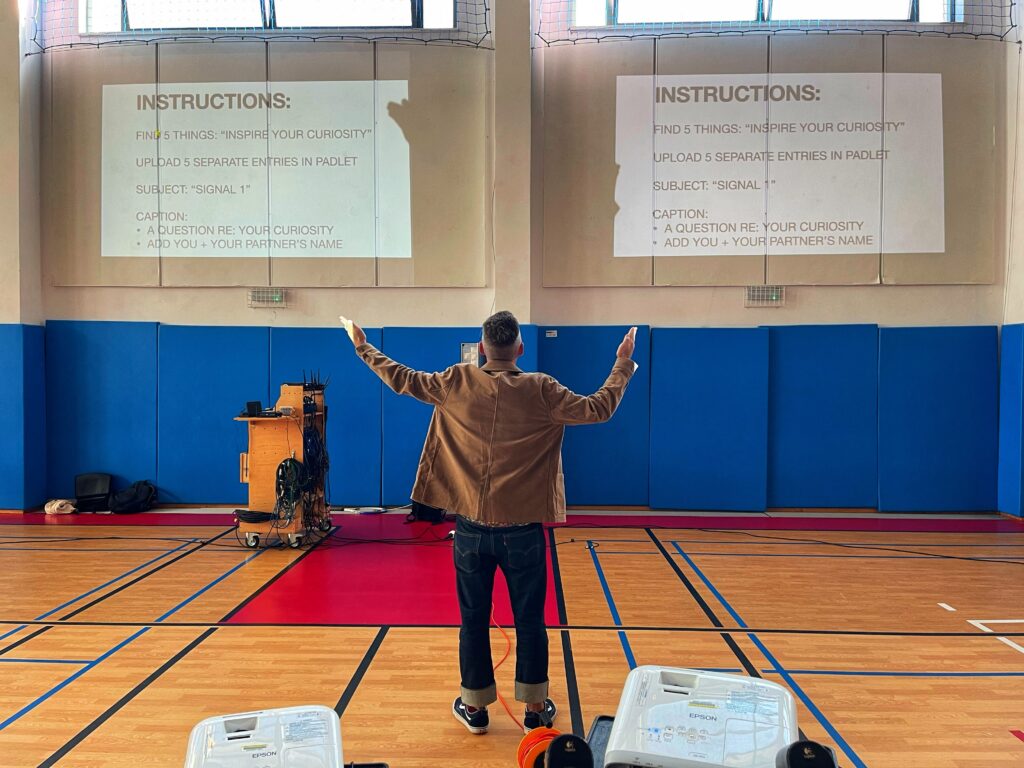
Instead of presenting, we set the slide deck aside and invited the faculty into a simple challenge: partner up, walk the campus, share what sparks curiosity with each other, and visually document it all together.
What followed was not a presentation about collaboration. It was a real-time prototype of what collaboration feels like, an investment in better appreciating each other as colleagues.
As my project team member, Scott Witthoft, reminds us in his book, This is a Prototype, “A prototype is always experiential. It opens up possibilities that aren’t obvious through thinking or imagination alone.”
When the massive group returned, the energy in the room had shifted. Partners were laughing, telling stories, and in some cases high-fiving. Groups shared nearly 500 photos of “curious” discoveries. Observations deepened. Conversations evolved. The school’s professionals were no longer debating abstract ideas. They were actively making meaning together, the very same thing they wanted for their students.
That real-time shift revealed a broader truth: The most important prototypes in school design are not spatial. They are cultural.
As Kevin Stoller, founder of Kay-Twelve, recently shared with me, “Instead of asking, ‘What should we buy?’ schools should begin by asking, ‘What kinds of learning experiences do we want? And how can we test those ideas in small ways together?’”
That mindset shift changes everything.
Rethinking the Prototyping Mindset
In many school planning processes, prototyping is framed as a technical or spatial exercise: testing furniture, piloting classrooms, or building model environments. These approaches have real value. But they often miss the deeper opportunity.
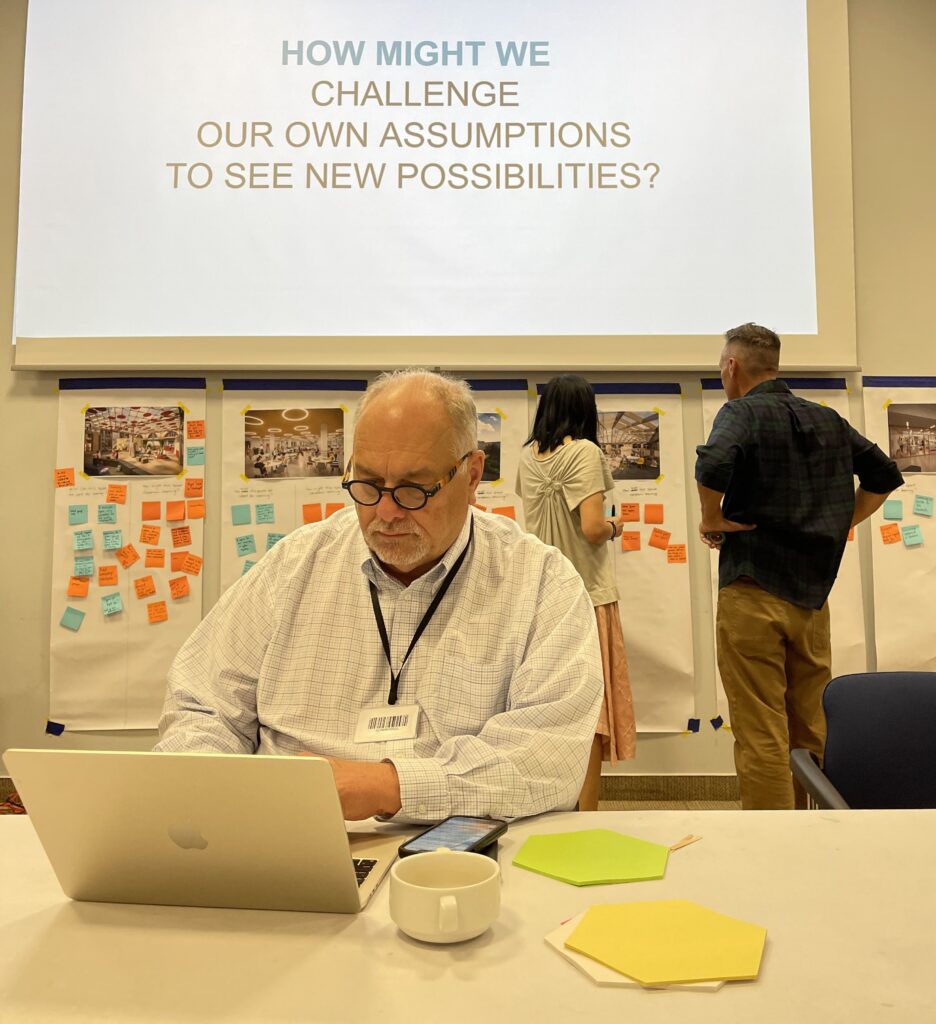
A prototyping mindset for educators is not primarily about testing environments. It is about testing how a professional community collaborates and evolves together. It is relational. It is experiential. It is cultural.
As The Space: A Guide for Leaders author Dr. Robert Dillon reminds us, prototyping is often misunderstood as something physical. In reality, “It’s about prototyping ideas that define who we are when we are at our best.”
In this context, prototyping means creating opportunities for educators to experiment with new ways of working before those ways are embedded in physical space.
I appreciate the wise caution of International School of Bologna (Italy) Head of School Janecke Aarnaes. She reminds us that it’s simply not enough to change the furniture or space “if we do not think about developing our own capability of acting and making use of that new space.”
Ultimately, school design is not simply an architectural challenge. It is a professional learning and cultural transformation process.
Five Principles for Developing a Prototyping Mindset
1. Start with behaviors, not buildings
The most effective design processes begin by testing how people work together, not by finalizing how spaces will look. When schools prototype practice first, architecture becomes a viable response.
“Sometimes what needs to change isn’t just the spaces. Often it’s about rethinking how people use those spaces.” — Randy Fielding, AIA, founder, Fielding International
Try this: Invite faculty into small groups to redesign a single lesson using a different structure. Imagine: team teaching, flexible grouping, or interdisciplinary framing. Teach or simulate it immediately. Improv a little. Experiment imperfectly. Then reflect as a group: What worked? What didn’t? What would space need to support these choices?
2. Prototype relationships, not just environments
Future-ready spaces assume new patterns of interaction. Those patterns, however, rarely emerge on their own. Prototyping mindsets must focus on how people work together: across disciplines and roles, as well as across perspectives.
“Prototyping your practice helps separate what is genuinely a space issue from what is cultural, pedagogical, or procedural.” — Ewan McIntosh, founder, NoTosh
Try this: Run a “new partnerships” protocol: pair educators who don’t typically collaborate. Give them a shared challenge (e.g., design a cross-disciplinary mini-unit or solve a real student engagement issue). Observe how they collaborate as professionals (communication styles, wait time, attitudes, pace, etc.), not just what they produce. Reflect on how space can support these professional interactions.
3. Treat design as professional learning
Preparing for new spaces should resemble professional development. Educators need time to practice, reflect, and refine new approaches before a building opens.
“The whole co-creation process is a means of building people’s capacity for a different shared future.” — Fiona Young, PhD, founder, architecture_with studio and member of my [bon]fire project team
Try this: Facilitate a workshop around a key question (e.g., What does collaboration actually look like in our classrooms?). Have teachers design and commit to a small experiment they will run in the coming week, then partner with a colleague to observe and reflect. Reverse roles the following week.
4. Use prototypes to reduce fear and build readiness
Change creates uncertainty. Imagining new spaces can feel abstract or overwhelming, especially if they will demand changing how one teaches or works. Prototypes allow educators to experience change in low-risk ways, building confidence over time.
“Creating prototypes takes away some of the fear.” — Rosan Bosch, international school designer
Try this: Create a temporary “future classroom” using existing furniture, tape or simple materials. Invite teachers to teach or role-play in the space, then reflect on what worked and what support would be needed.
5. Start small, iterate, and build momentum
Prototyping does not require large budgets or disruption. Small, repeated experiments generate insight and build trust. They create meaningful forward movement. Over time, these small changes compound into transformation.
“If you can make small changes in short periods of time consistently, that will add up to be larger changes over time.” — Jonathan Moody, CEO, Moody Nolan
Try this: Ask faculty teams to design one “prototype week” idea. This could be something they could test in the next month (schedule shift, advisory format, collaboration block). Define success criteria and gather feedback. Invite colleagues to creatively team up to advance the first prototype.
From Prototype to Practice
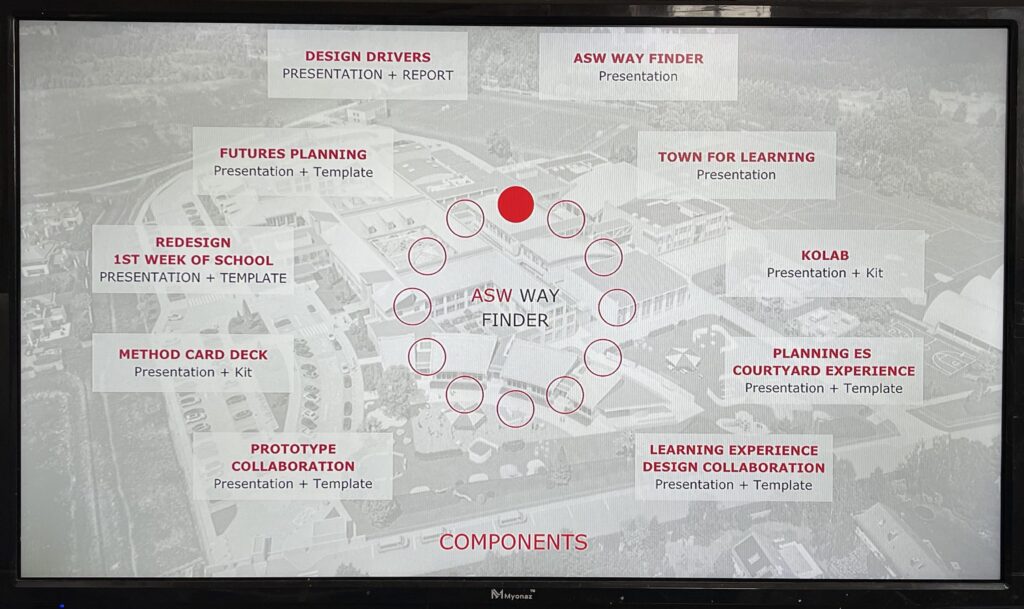
Our team’s campus “curiosity” walk was not a one-time activity. It became part of a broader approach, one that prioritized experience over discussion. This included a ‘festival of learning’ event, an academic coaching toolkit, and a step-by-step process for helping teachers co-plan and reflect upon using collaborative spaces as teams.
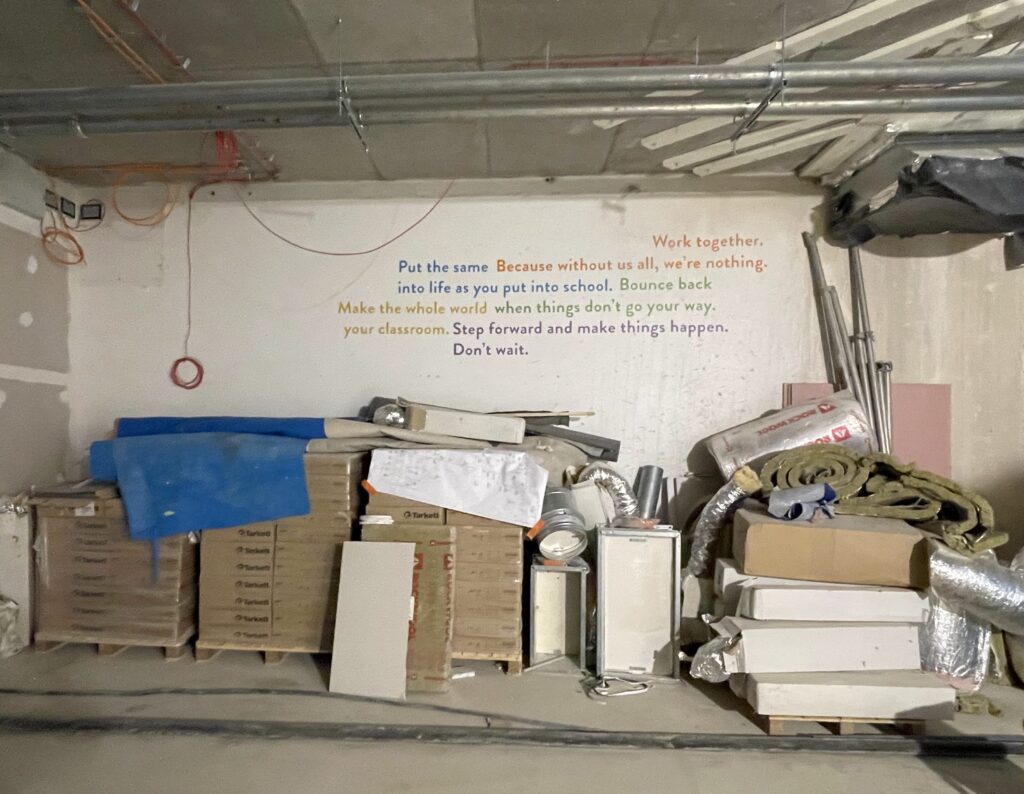
These prototypes are intentionally simple. They require minimal resources but generate meaningful insight. They help educators move from imagining the future to experiencing it.
And that experience matters.
If new buildings open before new practices take root, the gap between intention and reality remains. Worse, they can be in conflict in ways that cannot be undone.
When educators begin to prototype how they work together, however, something shifts.
As David Jakes, author of The Design Thinking Classroom and another member of my [bon]fire project team, told me: “The prototyping educator’s mindset is about being open. It’s about being generative. It’s about being fearless. But it also means having the support from your peers to be that way.”
When that happens, the future stops being theoretical.
It becomes something we do together.
Designing for Ways of Being Together
There is a natural temptation in school design to focus on what can be seen: walls, furniture, layouts, and systems. But the deeper transformative work is often invisible.
It lives in the habits, relationships, and shared expectations that shape how a community functions day to day. If those elements do not evolve alongside new environments, even the most innovative spaces will struggle to deliver on their promise.
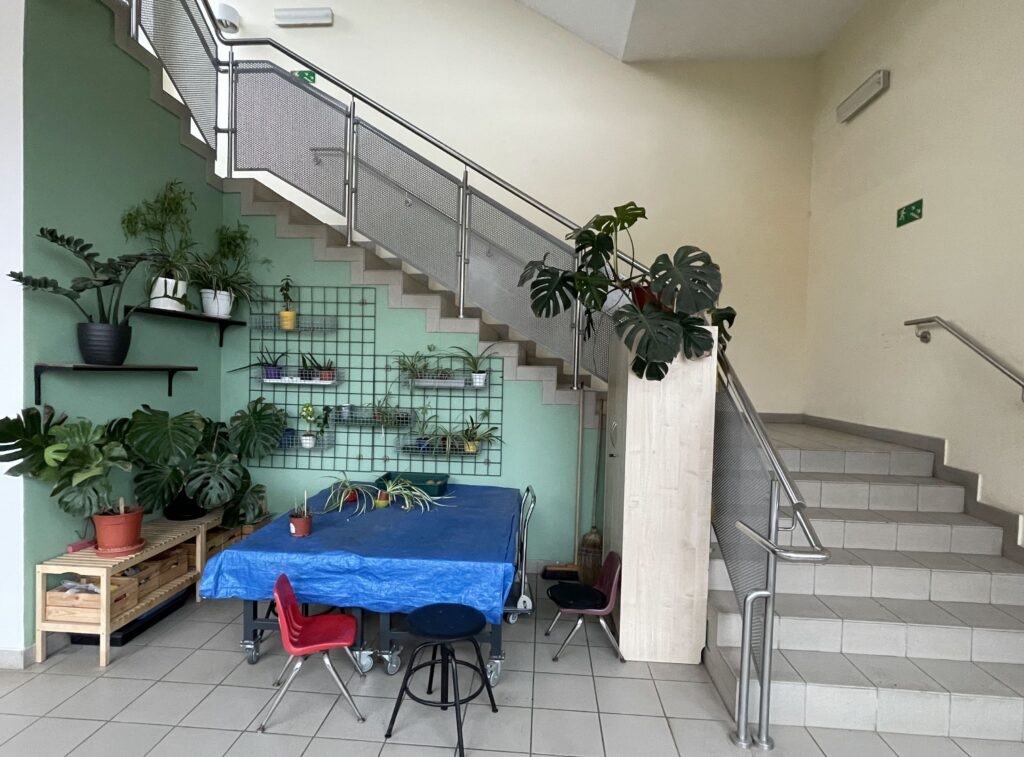
If they do evolve, those same spaces become catalysts for transformation.
Prototyping is not a preliminary step in the design process. It is how schools explore and refine the ways of working together that will define a shared future. It is how we move from designing buildings to designing experiences worth inhabiting.
And it begins with a shift in mindset.
As Jolene Levine, 2024 EDmarket Chair, reminds us, “A prototyping mindset begins with curiosity and a willingness to rethink long-standing practices.”
In the end, prototyping is not just a part of the design process. It is a way of collaborating together as professional educators.