


For generations, classrooms have been designed around stillness. Rows of desks, chairs facing forward, and the expectation that students remain seated and quiet have long been seen as the foundation of focused learning. Yet neuroscience and educational research increasingly tell a different story: the brain learns best when the body is allowed to move.
Today’s educators and designers have an opportunity to rethink classroom environments in ways that better align with how children’s brains actually function. Movement is not a distraction from learning — it is a powerful driver. By integrating flexible furniture, standing options, and small opportunities for micro-movement throughout the school day, classrooms can become environments that support concentration, emotional regulation, and inclusion for all students.
The future of learning environments may not look like rows of chairs, but rather dynamic spaces where movement and cognition work together.
The Brain–Body Connection: Why Movement Matters
The relationship between movement and learning is deeply rooted in human biology. One of the most important brain areas involved in learning is the prefrontal cortex.This region is responsible for executive functions: attention control, working memory, impulse regulation, and decision-making. These functions allow students to plan, follow instructions, and stay focused during complex tasks. Movement stimulates this region of the brain in several ways:
First, physical activity increases blood flow and oxygen to the brain, which improves overall neural efficiency. Second, movement stimulates the release of neurochemicals such as dopamine and norepinephrine, which play a crucial role in attention and motivation. Third, body movement engages sensory and motor systems that help regulate arousal levels — the brain’s internal “alertness dial.”
When children sit still for long periods, this regulatory system can become dysregulated. Some students become lethargic and disengaged, while others grow restless and fidgety. In both cases, the brain struggles to maintain optimal attention and children’s attention easily shifts to other things than learning.
Small, continuous movements — shifting weight, standing, balancing, or gently rocking — help stabilize this system. These micro-movements keep the brain alert without overwhelming it, supporting sustained concentration and mental flexibility.
Emotional Regulation and the Learning Brain
Learning is not purely cognitive; it is also emotional and students who feel overwhelmed, anxious, or frustrated have reduced capacity for higher-level cognitive processing.
Movement plays a powerful role in emotional regulation. Physical activity stimulates the production of serotonin and endorphins, which support mood stability and stress reduction. Even small amounts of movement can help calm the nervous system and improve resilience during challenging tasks. A regulated nervous system allows students to remain engaged in learning rather than becoming distracted by internal stress responses.
Beyond attention and regulation, movement also enhances how learning is encoded in the brain. When information is experienced through multiple channels — such as movement, touch, sound, and visual input — the brain forms richer and more widespread neural connections. Instead of relying on a single memory trace, the brain builds multiple pathways linked to the same information. This makes learning more robust, easier to recall, and more resistant to forgetting. In this sense, movement is not just supporting learning conditions — it actively strengthens the learning process itself.
Designing for Inclusion: Supporting Neurodiverse Learners
Movement-rich learning environments are particularly beneficial for neurodiverse students, including those with ADHD, sensory processing differences, or autism spectrum conditions. For many of these learners, movement is not optional — it is a natural self-regulation strategy.
Students with ADHD, for example, often have lower baseline levels of dopamine and norepinephrine in the brain. Movement naturally increases these neurochemicals, helping improve focus and impulse control. Fidgeting is often an unconseus act of trying to increase the dopamine and norepinephrine levels up to more optimal level.
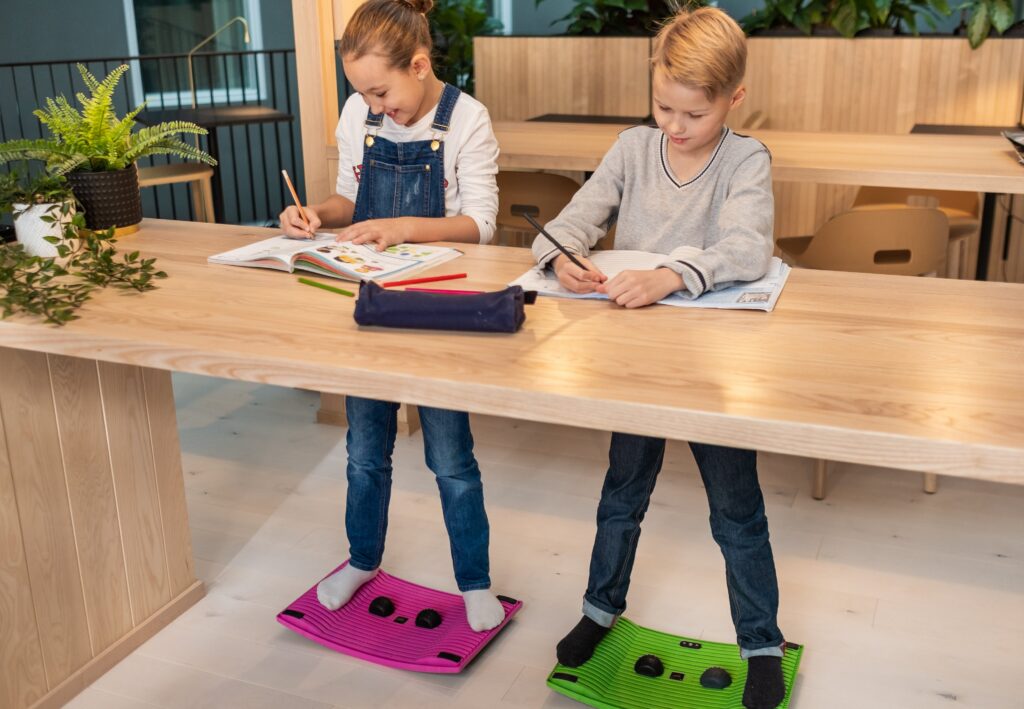
When students are expected to remain still, the brain may struggle to maintain attention and often the focus goes into trying to remain still instead of being able to focus on learning. Allowing movement —through standing desks, balance tools, active seating, movement breaks — gives these students the ability to regulate their attention in a socially acceptable way.
Importantly, movement-friendly classrooms benefit all students, not just those with diagnoses. When environments are designed for the most diverse needs, they become more supportive and accessible for everyone.
This approach reflects the principles of universal design for learning: creating educational environments that accommodate variability rather than expecting all students to learn in the same way.
Flexible Furniture and Movement-Supportive Tools
The physical design of the classroom plays a critical role in enabling movement. Traditional desks and chairs encourage static posture, while flexible furniture allows students to adjust position throughout the day. Effective classroom design might include:
- Sit–stand desks, allowing students to alternate between sitting and standing
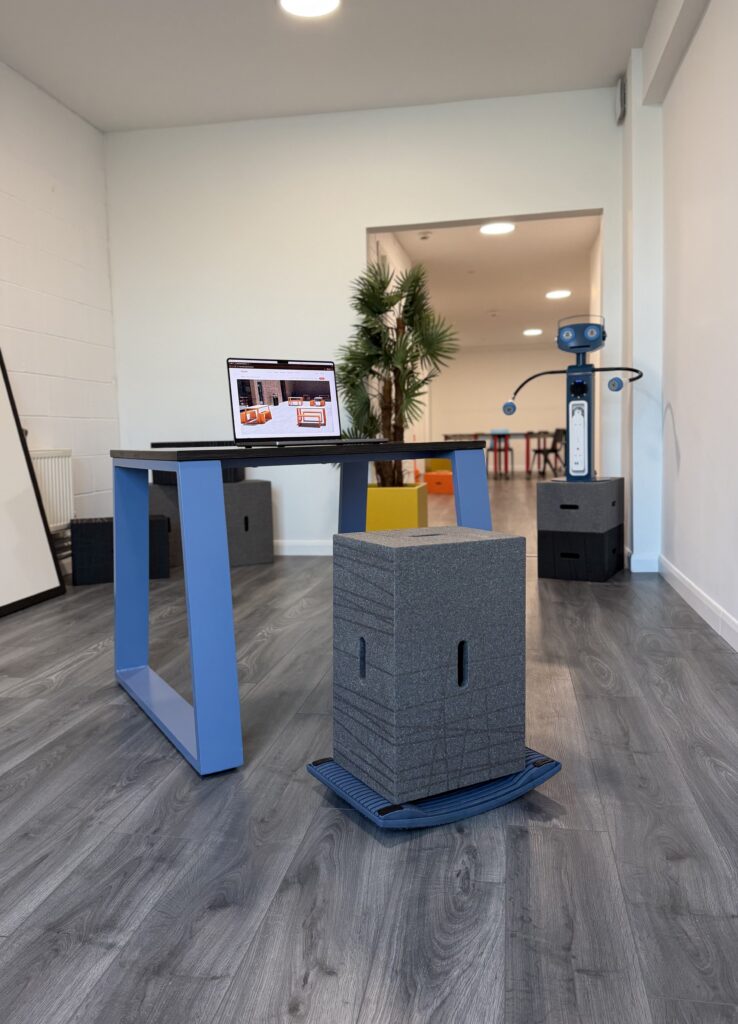
- Flexible seating, such as stools or wobble chairs that permit gentle movement
- Activation boards which encourage subtle postural shifts
- Standing collaboration areas for group work
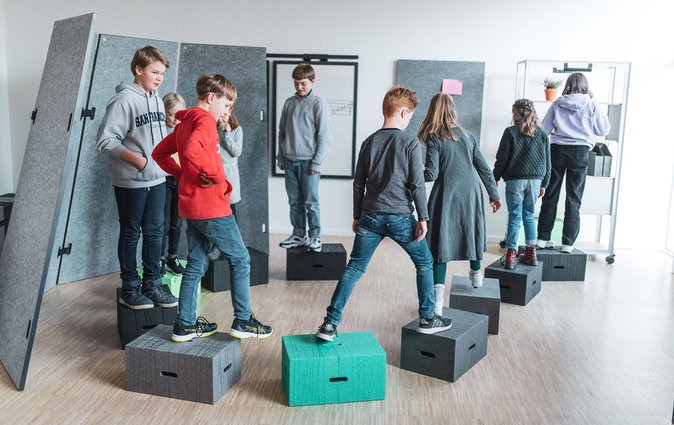
- Open floor spaces for short movement activities (when space is limited, foldable desks are great!)
These elements allow students to naturally change posture, maintaining alertness and comfort during long learning periods. Importantly, movement-supportive tools should be easy to integrate into everyday classroom routines. The goal is to create a classroom offering variety for different needs, a classroom that supports learning.
Integrating Movement Into Daily Learning
Creating movement-rich classrooms is not only about furniture; it is also about teaching practices. Small changes in lesson structure can make a significant difference.
Here are several practical strategies educators can implement:
- Introduce Micro-Movement Breaks
Short movement breaks lasting 1-2 minutes can reset attention and improve focus. Simple stretching, dancing or balance exercises can help students recharge and regulate between learning segments.
- Encourage Standing During Certain Activities
Reading, brainstorming, and collaborative discussions often work well in a standing position. Allowing students to stand naturally reduces restlessness and improves engagement and collaboration.
- Use Movement During Instruction
Teachers can incorporate physical actions into learning tasks — for example, stepping to different sides of the room to indicate answers or use Xbricks and/or Gymba Boards in solving math problems.

- Provide Choice
Some students concentrate best while seated, others while standing or gently moving. Offering choice empowers students to discover what works best for their learning style.
- Normalize Movement
Perhaps most importantly, movement should be framed as a learning strategy rather than a behavioral issue. When teachers explain the connections between the brain and the body, students begin to understand that movement actually helps them think more clearly. Instead of being seen as a bad behaviour, movement comes a positive and useful part of learning.
A Vision for the Classroom of the Future
Education is evolving rapidly as research continues to deepen our understanding of how the brain learns. In this new landscape, classroom design must evolve as well. Rather than asking students to suppress their natural need to move, schools can harness movement as a tool for cognitive development, emotional well-being, and inclusive learning.
The classroom of the future may look less like a static environment and more like a dynamic learning ecosystem — a place where students shift between sitting, standing, collaborating, and gently moving as they explore new ideas.
Such environments support not only academic performance but also physical health, emotional resilience, and a lifelong love of learning. When we rethink classroom design through the lens of movement, we are not simply rearranging furniture. We are aligning education with the biology of the human brain.
And in doing so, we create classrooms where every child has a better chance to focus, engage, and thrive.