


After retiring as a rural school administrator in southern Missouri, I transitioned to the role of Deputy Superintendent in Fayetteville, Arkansas — a region I consider a “utopia of possibilities”. Northwest Arkansas is defined by the rugged beauty of the Ozark Mountains, where rolling ridges, forested valleys, and winding rivers change dramatically with the seasons. This stunning natural backdrop, combined with a world-class arts scene and a thriving trail system, creates a “builder’s dream” for reimagining educational spaces.
A Vision for Sustainable Design
When we envisioned our newest junior high schools, our primary focus was on WELL and LEED certification. We prioritized low-toxicity materials with natural finishes and strictly avoided Volatile Organic Compounds (VOCs) to ensure a healthy indoor environment.
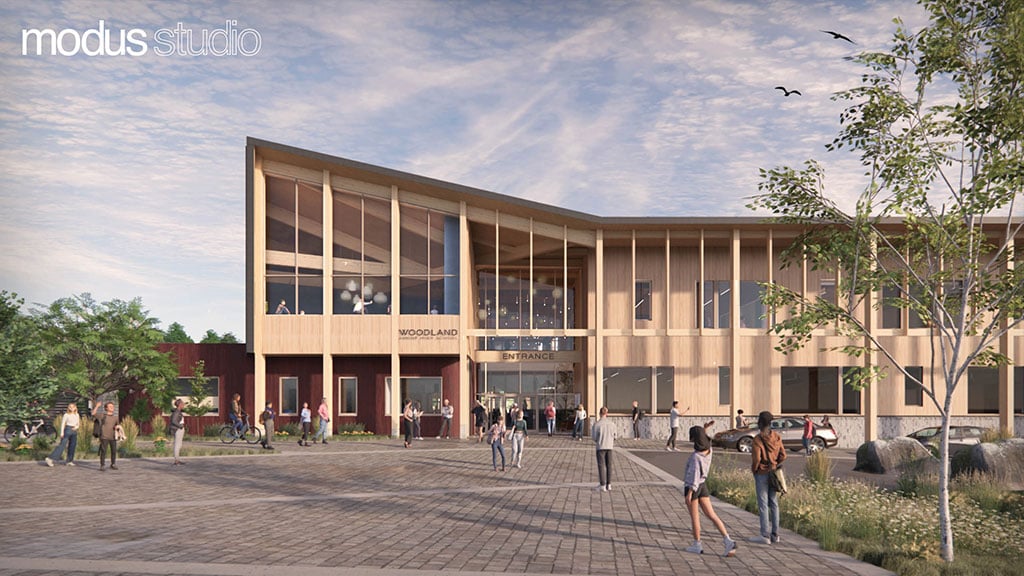
A prime example of the district’s new vision is the construction of Woodland Junior High, designed by Modus Studio. This building is a masterclass in biophilic design, seamlessly weaving the structure into the existing hillside and forest. The district secured a unique piece of farmland — complete with a meandering creek, an “Old Red Barn,” and an expansive meadow — which provided the perfect palette for our sustainability and outdoor education goals. This 28-acre site occupies the edge of suburbs in northeast Fayetteville and the historical agricultural roots of Washington County in Northwest Arkansas.
Bringing the Outside In
To foster a “Material Connection with Nature,” the school utilizes floor-to-ceiling glass to invite the landscape inside and incorporates outdoor “porches” that serve as functional classrooms.
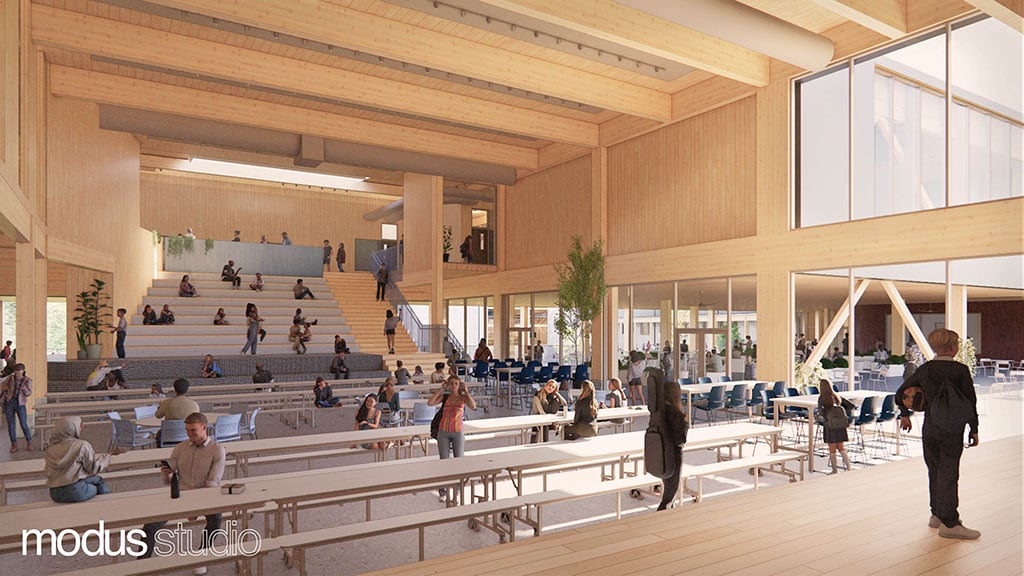
Walking through the halls of Woodland Junior High, the first thing you notice is the warmth of the mass timber, where the rich woodwork and natural grains elevate the entire interior quality. This design choice was vital, as research like the DeVerwondering case study in Almere, Netherlands, (a pioneering biophilic school that merges sustainability with education) suggests that without these natural elements, school environments can become “mind-numbing and lifeless,” potentially limiting a child’s growth.
The walls themselves serve as interactive learning tools through corridor dashboards. These displays engage students with real-time data, showing them exactly how the building is performing — from the quality of the air they breathe to the amount of food waste being diverted through the composting program. Even the simple act of getting a drink at lunch has been reimagined; by replacing traditional cartons with bulk milk machines, the school prevents millions of pieces of waste from reaching landfills, turning daily habits into an ongoing lesson in environmental stewardship.
The Campus as a Living Classroom
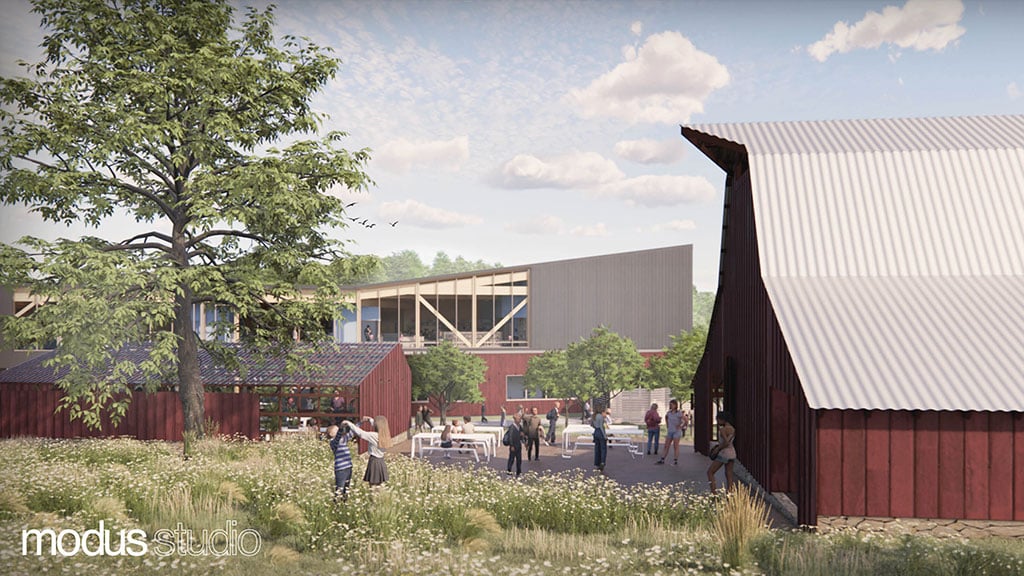
Beyond the physical walls of the school building, the campus itself serves as a living classroom, where the surrounding landscape invites students to engage in hands-on, student-led learning. Historic structures on the 28-acre site have been given new life to support this mission: the “Old Barn,” a landmark of the area’s agricultural roots, has been transformed into a functional outdoor classroom, and a former storage building now operates as a productive greenhouse. Wandering through the grounds, students find themselves deeply connected to natural systems as they tend to vegetable gardens and an orchard. Instead of traditional manicured lawns, expansive “no-mow” natural meadows reflect the rugged beauty of the Ozark landscape, allowing the local ecosystem to flourish right outside the classroom door.
The school’s commitment to environmental stewardship is further realized through an intricate water management system. By observing cisterns, retention ponds, and the visible path of stormwater flow, students witness the ecological cycle in real-time within their own school biotope. These water elements do more than manage the land; they are purposefully designed to reduce stress and improve overall well-being, creating a restorative environment that enhances learning outcomes for every child.
Equity Through Innovation
Every element of this design — from solar energy and electric car chargers to the expansive bike trail system — is intended to deepen the student’s connection to the world. In a school system over a century old, where resources were historically inequitable, we have finally created a leveled field for learning. This approach ensures that every child has the opportunity to thrive in a space that supports their mental health and enhances their learning outcomes.
What began with the sight of an “Old Red Barn” on a piece of Arkansas farmland has transformed into a living realization of what can be. By rooting Woodland Junior High in the rugged beauty of the Ozarks, we have moved beyond traditional construction to create a space where the architecture and the landscape breathe together.
This now physical reality means that the natural world is no longer just a backdrop, but an active participant in every student’s day. From the warmth of the mass timber to the restorative flow of the campus waterways, every detail is designed to support mental health and enhance learning.
Ultimately, this project has succeeded in creating a leveled field for learning. In a district with over a century of history, we have provided a space where innovation and equity meet, ensuring that every child — regardless of their background — has the opportunity to thrive within this new landscape of possibility.