


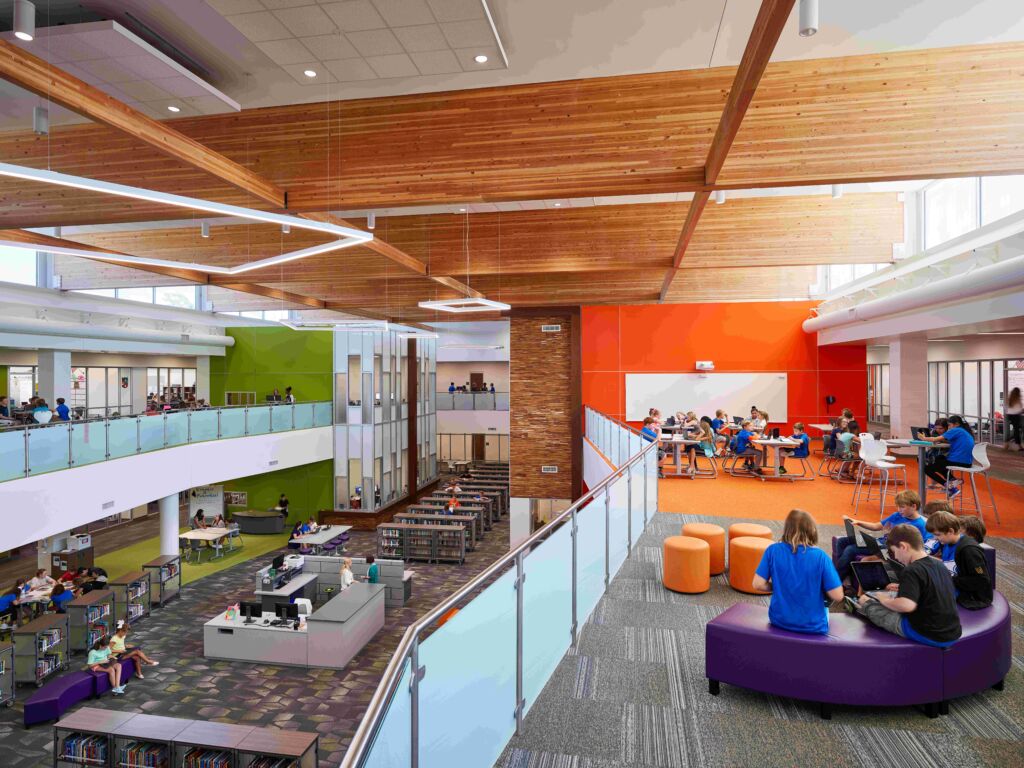
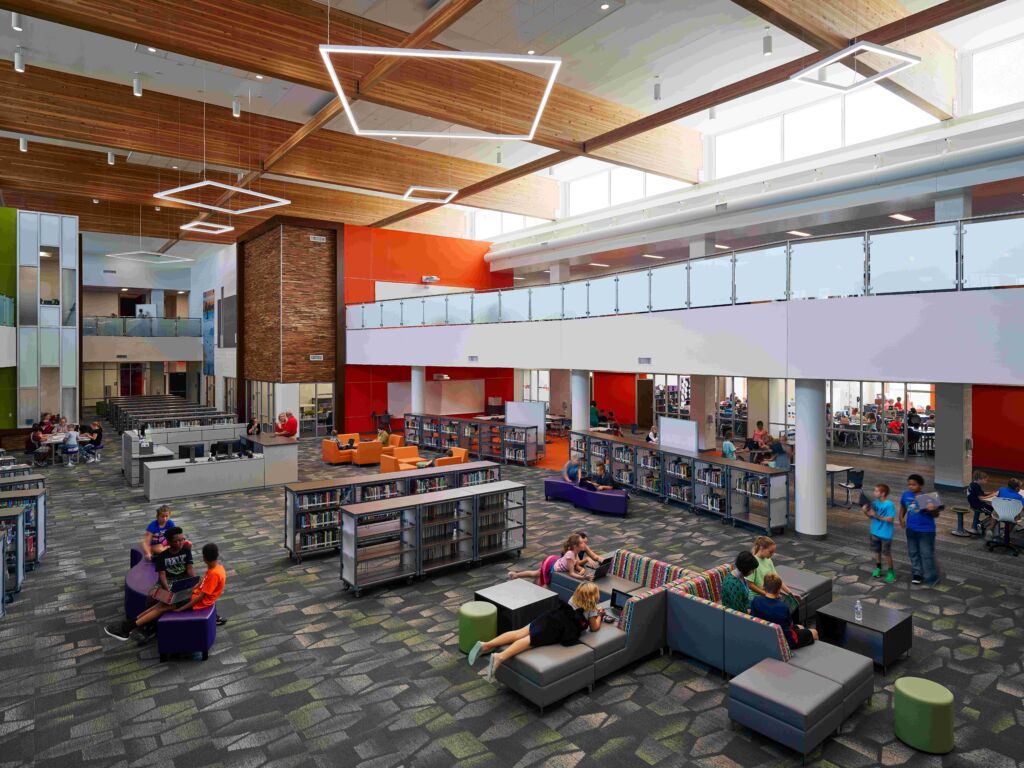
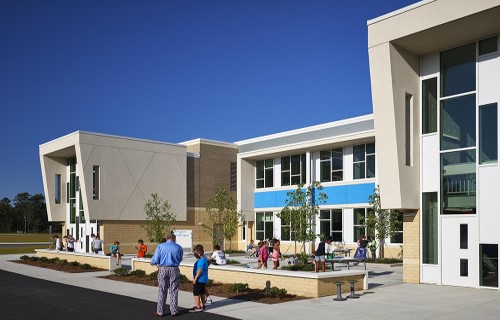
Nine years ago, I was hired to open a new state-of-the-art facility designed to serve fifth- and sixth-grade students along the South Carolina coast. At the time, the building represented innovation in nearly every visible way. It featured flexible furniture, open collaborative learning spaces, natural lighting throughout the building, geothermal efficiencies, outdoor learning areas, and modern architectural elements designed to move beyond the traditional school model.
The building itself represented the future of education and student engagement. In many ways, it did, but were we preparing for that potential?
What I have thought my experience taught me — but that I understand more deeply now through my experiences in the EDmarket Certified Learning Places Specialist (ECLPS) program and as a Fulbright Finland Leaders for Global Schools participant — is that innovative buildings alone do not create innovative learning.
The Race to Occupancy
The year before the school opened, I was stationed at the district office to oversee the building’s operational launch. My days were consumed with staffing the school, developing schedules, ordering furniture and equipment, establishing procedures, preparing for student safety and security, managing logistics, and attending construction meetings. At the same time, I was frequently reassigned to fill in as an assistant principal or principal at other schools across the district due to extended administrative absences.
The future of learning environments is not simply about creating modern buildings. It is about creating shared understanding.
The pace was relentless. Every conversation seemed urgent. Timelines, inspections, occupancy deadlines, technology installations, transportation patterns, furniture deliveries, and construction punch lists dominated nearly every meeting.
That urgency reached its peak just days before our doors were scheduled to open. Our staff was a newly formed team, made up of teachers transferring from four different feeder schools alongside brand-new hires. They were slated to report for the school year on a Monday. Up until the Friday evening prior, we still had not received official occupancy. We were fully prepared to implement a contingency plan and operate out of the four separate feeder buildings.
Then, at 7:40 p.m. on that Friday, the notice of occupancy finally came through. I immediately notified my team to switch gears and prepare to implement our opening plan in the new building.
However, I quickly learned that “occupancy” does not mean “completed.” The cafeteria lacked tables, classroom furniture wasn’t fully in place, and neither my administrative nor my office team had even been inside the building. Movers were scrambling to transport items over from the other schools, and countless boxes were waiting to be unpacked.
Despite the logistical scramble, I knew we had a critical opportunity. We needed to understand how the new, open-concept collaborative learning spaces actually functioned in practice — assessing noise levels, seating arrangements, and sightlines. I implemented a plan for members of my administrative and curriculum teams to conduct their back-to-school breakout sessions in these different areas. What they didn’t know was that my goal was twofold: first, I needed to see firsthand how these innovative spaces operated, and second, I wanted to actively model for our newly assembled staff how to utilize these environments right out of the gate.
The Missing Conversation
I still remember one phrase repeatedly surfacing during those planning sessions: “What’s the plan, guys?” At the time, it felt like the right question. Looking back now, I realize we were often discussing the operational plan for opening a building — not the instructional vision for transforming learning inside it. That distinction matters more than I understood at the time.
One of the district project managers involved in the construction openly acknowledged that this was the first school project they had overseen. Operational details that experienced educators might immediately recognize as essential were occasionally overlooked. At one point, even practical needs, such as adequate staff mailboxes, were only realized late in the process.
But those oversights were not the true issue.
As I reflect on those early planning meetings, what stands out most is not necessarily what we discussed, but what we rarely discussed at all. There were no conversations centered around pedagogy. We talked extensively about furniture, but never about how teaching practices might need to evolve because of the furniture.
The process largely revolved around construction, compliance, budgets, and timelines. Missing from many discussions were the voices and perspectives necessary to truly align learning environments with learning sciences. I was not brought up to speed on the steering committee’s vision for the changes to the teaching and learning experience that could take place in the new building. There were no conversations about how educators would transition instructional practices within these spaces, what professional learning would be necessary, or how the building itself could actively support student-centered learning.
In many ways, there seemed to be an unspoken assumption that innovative spaces would naturally produce innovative instruction. Experience has taught me otherwise.
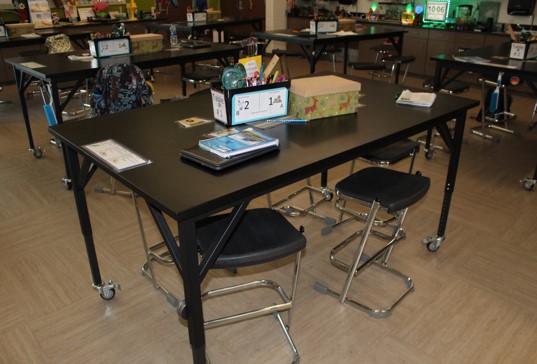
Through the ECLPS program, I later came to better understand how often educational design processes prioritize facility completion over instructional transformation. Schools can become beautifully designed structures that continue operating through largely traditional models of teaching and learning. The building, the furniture, and the room change. The pedagogy often does not.
A Universal Challenge: Perspectives from Finland
This past January, my participation in the Fulbright Finland Leaders for Global Schools program gave me the opportunity to observe international approaches to modern school design. During school visits across Finland, I expected to see a seamless integration of modern environments and innovative instruction. Instead, observing several newly constructed schools revealed a familiar reality: much like my own experience, the focus on deliberate pedagogical shifts was not always fully realized, and the professional development required to help teachers successfully transition into these modern spaces was sometimes lacking.
However, there was a profound distinction in how these spaces felt and functioned. While the instructional practices might not have completely evolved alongside the modern architecture, the physical environments themselves were deeply anchored in shared cultural values. Specifically, their school designs naturally incorporated biophilic principles, prioritizing natural light, organic materials, and a seamless connection to the outdoors.
In Finland, the “why” behind these design choices did not require a formal operational rollout or extensive staff training. The belief that natural, calming environments are essential to student well-being and focus is a universally understood value. The architecture reflected a coherent cultural belief about human development and our connection to nature, grounding the physical space in shared purpose—even when the daily operational transition into those new spaces mirrored the challenges we faced back home.
That experience forced me to reconsider my own assumptions about school design back home.
In the United States, we often invest heavily in modernizing facilities, but not always in helping educators understand how those spaces should influence instructional practice. Flexible seating alone does not create student agency. Open environments do not automatically produce collaboration. Natural lighting does not independently improve engagement.
These features create opportunities — but only if the instructional vision evolves alongside the architecture. Without that alignment, educators understandably revert to familiar practices, even inside innovative environments.
More Than a Construction Project
One of the greatest lessons I have learned as a school leader is that buildings themselves communicate values. Space influences behavior. Furniture shapes interaction. Lighting affects mood and energy. Design impacts movement, collaboration, and belonging.
Whether intentional or not, schools teach through their learning spaces and environments.
Yet educational leaders are often insufficiently prepared to lead conversations at the intersection of architecture, pedagogy, and organizational change. During school construction projects, discussions frequently center on square footage, occupancy timelines, and budgets. Those conversations are certainly necessary, but they cannot become only conversations.
The more important question is this: What kinds of learning experiences are these spaces intended to support?
If I were opening St. James Intermediate School again today, I would approach the process very differently. Before discussing floor plans or furniture layouts, I would spend significant time building collective clarity around the instructional vision itself. I would want stakeholders to discuss what learner agency should look like, how collaboration should function, what role student wellness plays in academic success, and how educators might need to shift their practices in flexible environments.
I would also invest far more intentionally in professional learning before the building ever opened. Teachers need opportunities to experience innovative learning environments, observe active learning in practice, and understand how instructional design connects to physical design. Without that shared understanding, even the most innovative schools can unintentionally drift back toward traditional models.
What I have come to understand is that opening a modern school is not simply a construction project. It is a change leadership project. And change leadership requires far more than operational readiness.
The Future of Learning Spaces
Nine years later, I remain incredibly proud of St. James Intermediate School and the work our students and staff have accomplished within its walls. The building still represents innovation in our district, and I remain grateful to have been part of its opening.
But time, reflection, research, and international learning experiences have deepened my understanding of what truly matters in educational design.
The future of learning environments is not simply about creating modern buildings. It is about creating shared understanding.
When architecture, instructional practice, leadership vision, and educator capacity align, learning environments can become transformational. Without that alignment, schools risk becoming spaces designed for the future while continuing to operate through systems rooted in the past.
That may be the greatest lesson the building taught me — not during construction meetings, but years later, after finally understanding the questions we should have been asking all along, and who should have been asking them.
Disclaimer: The author of this publication is a participant in the 2025-2026 Fulbright Leaders for Global Schools Program (Fulbright LGS), a program sponsored by the U.S. Department of State’s Bureau of Educational and Cultural Affairs (ECA) with funding provided by the U.S. Government and administered by IREX. The views and information presented are the grantee’s own and do not represent the U.S. Department of State, the Fulbright Program, or IREX.