


Projections show an increasing demand for skilled workers in the coming decade. Manufacturers could need 3.8 million workers by 2033 (1). Installation, maintenance, and repair occupations will create about 569,000 openings annually through 2035 (2). Add to this the annual costs of higher education — nearly $12,000 in tuition and fees for public four-year in-state institutions and over $31,000 for out-of-state schools (3) — and the traditional four-year college route becomes daunting.
Career and technical education (CTE) programs offer many attractive benefits: Get an associate degree at a fraction of those costs (or bypass college altogether). Join the workforce faster than your peers. Potentially earn as much as or more than those in jobs requiring a four-year degree (4). Avoid major student loan debt. Sign me up!
Unsurprisingly, student participation in CTE pathways is growing. Secondary education students concentrating on CTE courses grew from 2.84 million in 2021 – 2022 to 3.81 million in 2023 – 2024. That equates to roughly a 34% increase in just two years (5). School districts, therefore, face tremendous pressure to give their students a head start in high-skill technical fields.
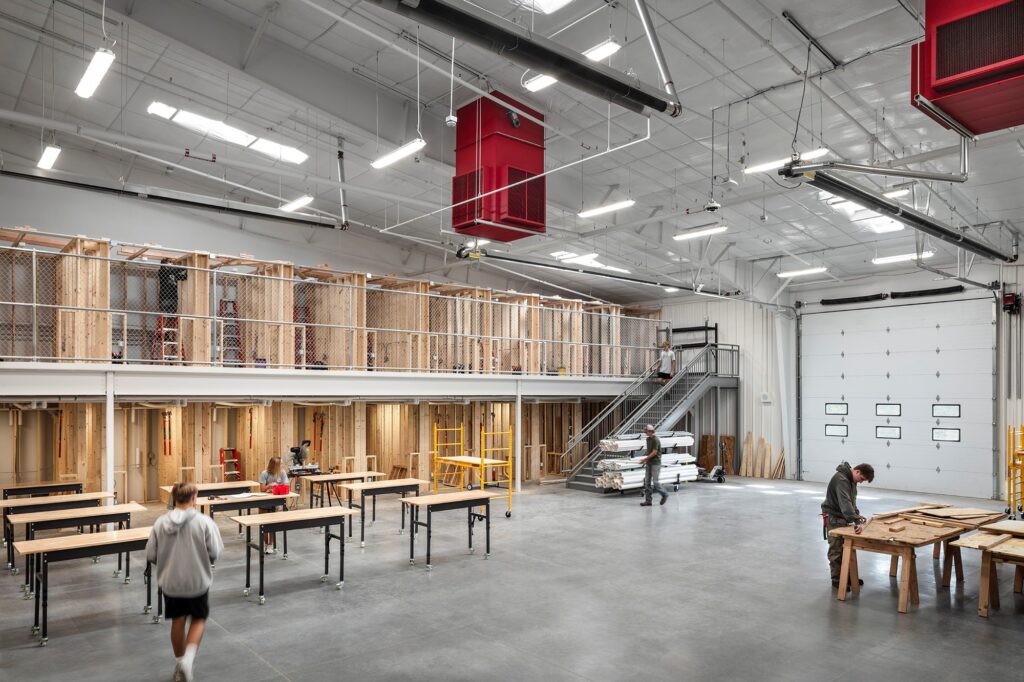
Walking the talk with CTE programs means offering clean, modern facilities that encourage hands-on learning and reflect real-world working environments. Following are five ways that schools can elevate their career-focused spaces to equip students with the skills they need to confidently enter the workforce.
CTE Hub: Create More Opportunities for More Students
Some school districts face difficulties when they split CTE offerings between schools. Consider a two-high-school district where one school has more programs and newer equipment than the other. This division has the potential to restrict career options or even create racial and income disparities.
One solution is a centralized facility that gives all students equal access to programs, instructors, and equipment. While some transportation hurdles might arise, a CTE hub allows students to explore a wider variety of careers. Districts will not have to replicate costly settings and equipment at every school. A central facility can also serve as a regional resource that attracts partnerships with community colleges and employers.
A happy medium with this strategy might be retaining introductory courses at individual high schools and offering more advanced coursework at the CTE-focused facility.
One example of this strategy in action is the North Scott Regional Innovation Center (RIC), designed by Legat Architects. Located in the rural suburb of Eldridge, Iowa, the facility welcomes students from not only North Scott Community School District but also from five neighboring districts. Additionally, it has allowed the district to create a partnership with Eastern Iowa Community Colleges, which offers career advancement programs at three campuses.
“The decision to open up the North Scott Regional Center to multiple area districts creates opportunities for more than 9,000 students in Eastern Iowa,” said Legat’s Zach Campbell. “It also benefits regional employers by extending the talent pipeline.”
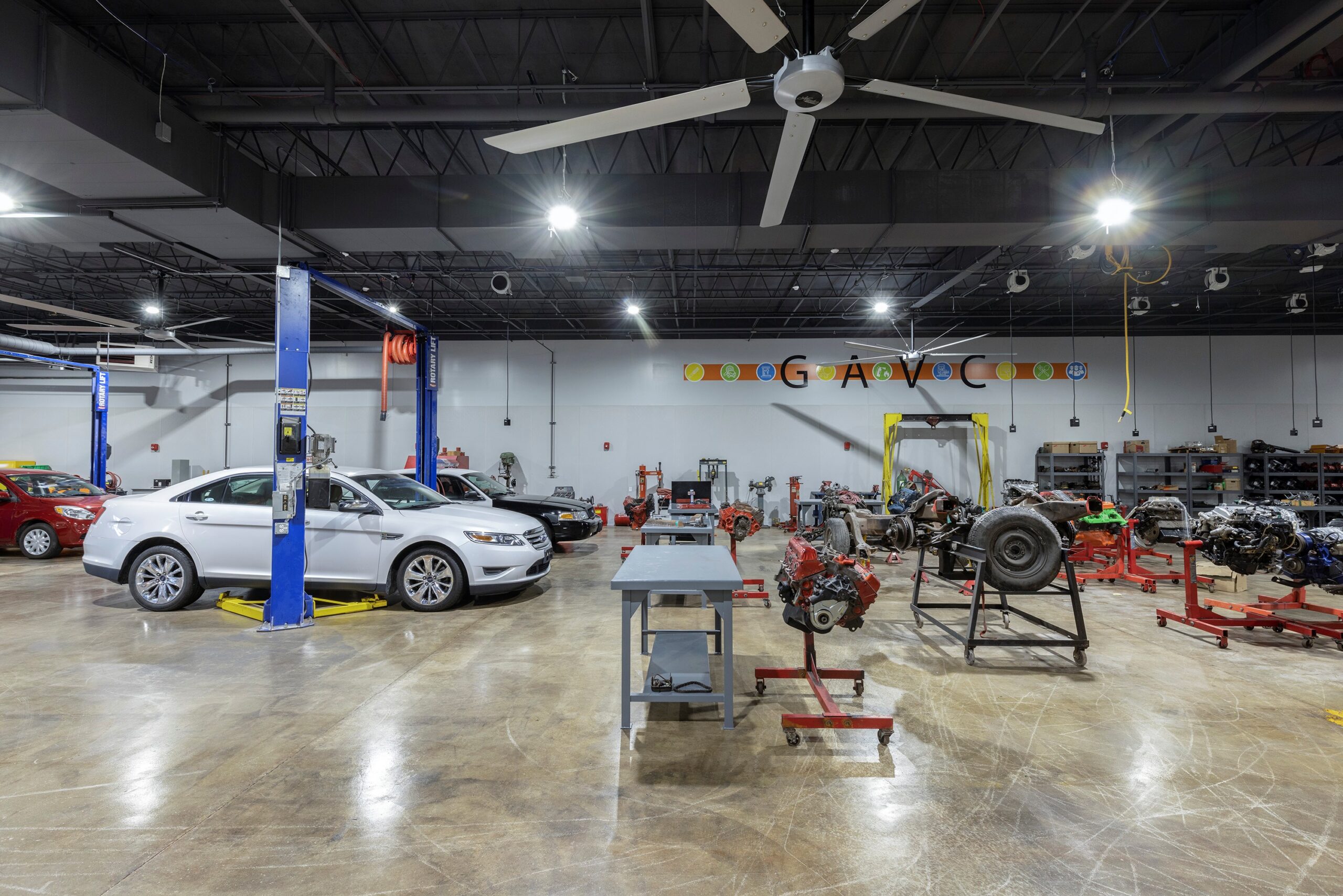
Districts can save costs by converting an existing facility to address CTE demands. A Legat-designed retrofit transformed a portion of a vacant church into the Galesburg Area Vocational Center in Galesburg, Illinois. The facility brings Galesburg Junior Senior High School’s vocational programs a home, and it welcomes students from seven other area high schools. The retrofit sped up the project and cost less than 30% of a new facility.
Flexible Spaces: Prepare for an Uncertain Future
In the coming years, in-demand fields ranging from healthcare and energy to agriculture and advanced manufacturing will pave new CTE pathways. It is difficult, however, to pinpoint how evolving technologies and jobs will impact specific regions.
High schools, therefore, must stay ahead of the game to avoid obsolescence. How can they adapt their CTE catalogs based on workforce demands? Flexible environments offer a quick and cost-effective answer.
A Legat-designed addition and renovation now under construction at Dundee-Crown High School in Carpentersville, Illinois will bolster the school’s CTE program. Labs feature an overhead structural grid system that supports heavy equipment, utilities, and fixtures. The labs will host fashion courses, electrical and robotics labs, woodshops, and much more. They can also be flipped to welcome new fields of study.
The North Scott RIC has already demonstrated adaptability with its spaces. The initial program called for four flexible classrooms at the facility’s core. During construction, the district determined it wanted to enhance its nursing program — one of those classrooms was quickly converted into a nursing lab.
Central Gathering Area: Build a Bridge Between Communities
Another challenge that districts confront with CTE spaces is creating a sense of belonging among students and the larger school community. This is especially important among career tech programs, which can feel separate from broader academic offerings.
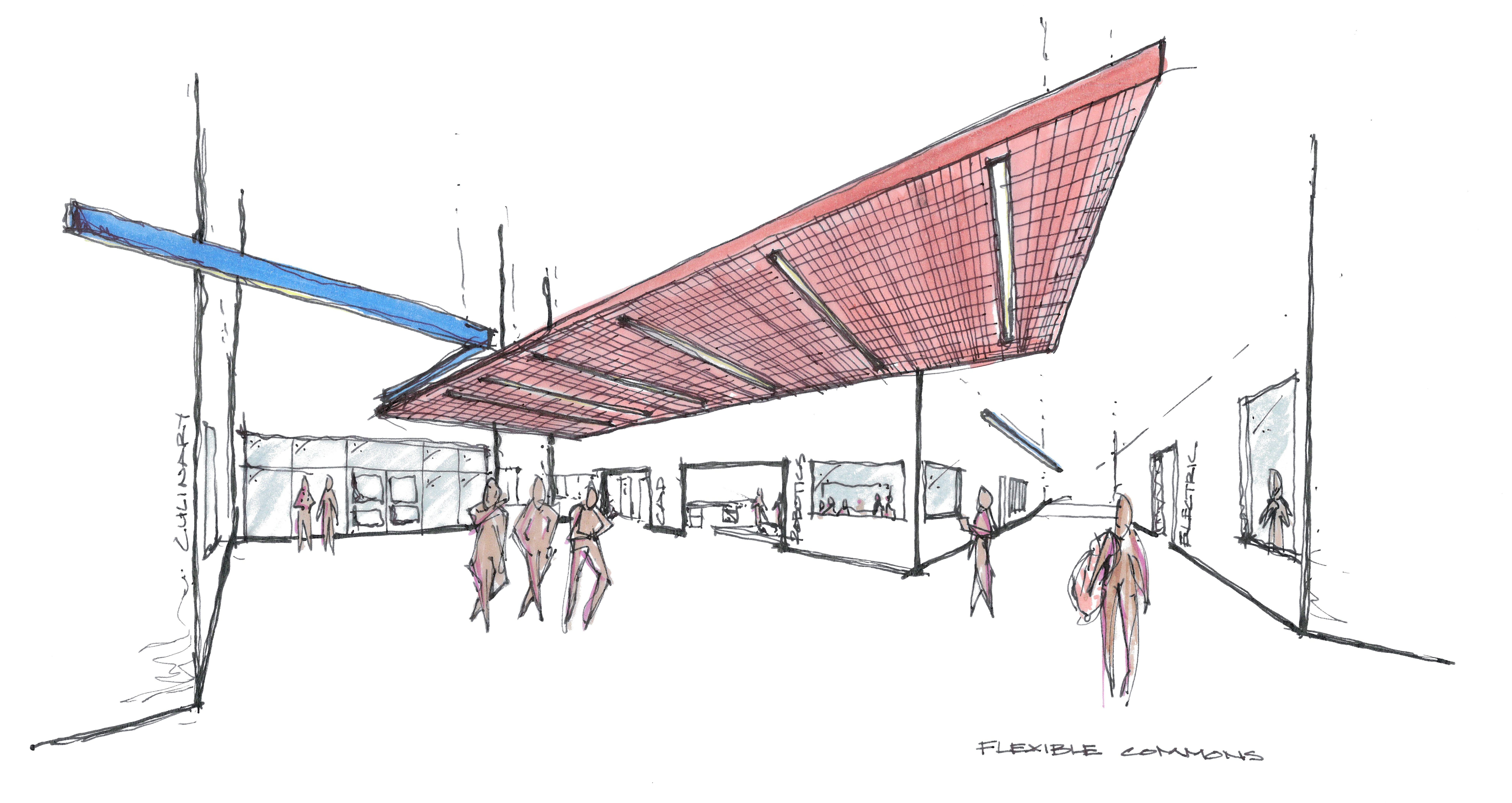
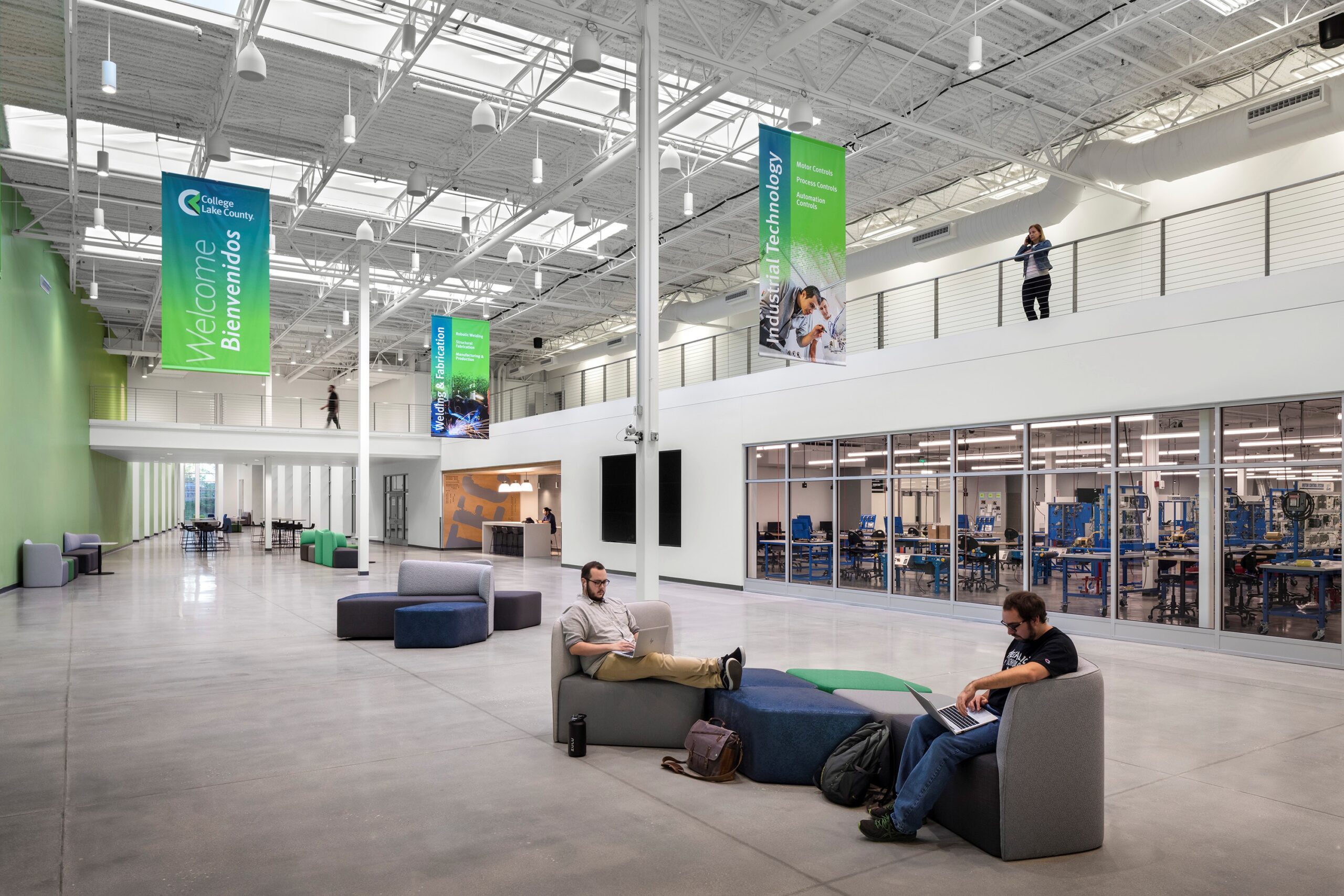
A large, central area — call it a collaboration zone, a commons, or an atrium — creates many key connections not just for students but also among district staff, employers, and community members. The space enables students to socialize between classes or as they wait for transportation. Adding movable furnishings and audiovisual systems supports demonstrations, competitions, or presentations from community college instructors or local employers. A large enough gathering area also creates an ideal venue for career fairs.
A central zone’s usefulness is not limited to CTE offerings — it might host professional development for district staff, board meetings, nonprofit events, or award ceremonies. The North Scott RIC’s commons area and arena can even be rented for wedding receptions.
Another retrofit designed by Legat converted a home improvement big-box store into College of Lake County’s Advanced Technology Center. The large atrium at the facility’s core has served as a place for students to gather. It has also been used for large events ranging from apprenticeship fairs and manufacturer networking events to state of the college addresses and an annual piano and musical instrument sale.
Dundee-Crown High School’s revived CTE program will feature an L-shaped commons that connects all labs and classrooms. An operable partition divides the open space, allowing simultaneous events: culinary students operate a mock restaurant in one section, while engineering students hold robotics competitions in another. Glass overhead doors around the commons open to create classroom or lab extensions. The automotive lab, for example, offers two overhead doors: one for cars to access the lab and one for cars to enter the commons for demonstrations.
In each of these cases, a central space connects programs and creates community.
Placement and Visibility: Open a Window to CTE
Imagine a career counselor encouraging a student to investigate the culinary arts. If that student rarely sees the school’s spaces dedicated to that program, she will be less likely to explore this career path. Alternatively, if she stops by the so-called “culinary arts lab” to discover a decades-old classroom with dated equipment and poor lighting, the possibility of her getting excited dwindles.
Consider an alternative outcome: every day, that student passes a large interior window that displays a professional-grade lab with stainless-steel workstations, commercial ovens, and bakery equipment. Culinary arts students prepare soufflés or decorate pastries. How much more likely is this to pique the student’s curiosity and encourage her to follow that counselor’s advice?
These hypothetical examples illustrate the importance of schools making CTE spaces visible to reinforce the value of these programs and expose students to new careers. In other words: if you got it, flaunt it!
It starts with location. When schools give CTE and traditional academic disciplines equal prominence on campus, it positions the former as a serious career path.
Additionally, the facility’s exterior should draw attention to CTE pathways. Strategies range from affordable options like prominent signage to more expensive investments such as glass curtain walls that display indoor activity to passersby.
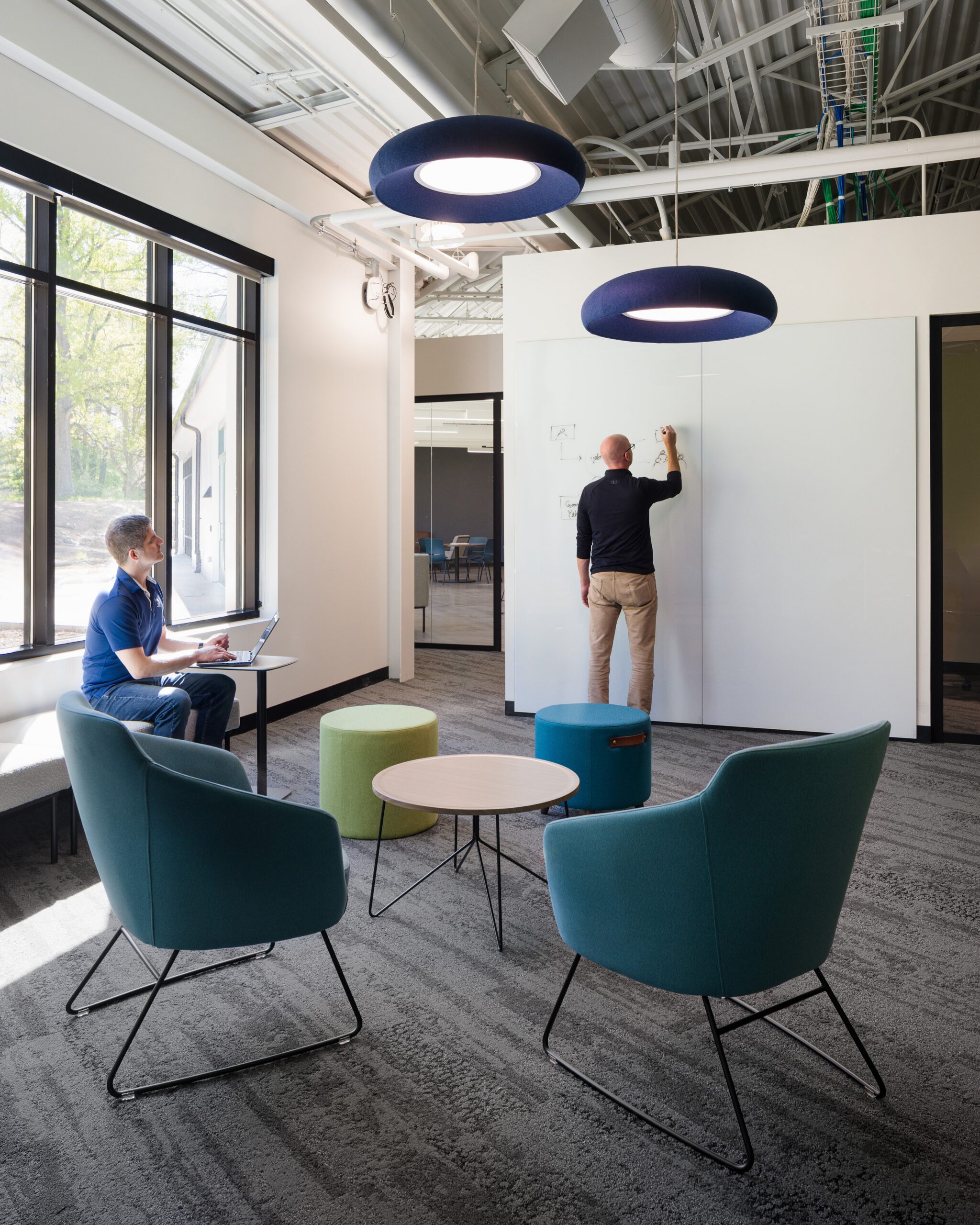
The school’s interior provides the most fertile ground for showcasing CTE offerings to students. Internal glazing exhibits lab activities to those in the corridor. Monitors and display cases spotlight student achievements through awards and completed projects. Presentation zones or critique areas within commons show learning beyond the classroom.
Every lab and classroom in Dundee-Crown High School’s forthcoming CTE facility will have either a glass overhead door, a foldable glass door, or a large window into the commons area. One window displays a conference room with a wall that can be removed to reveal the business classroom behind it.
Districts also make workforce-training initiatives more mainstream by integrating them throughout schools. At Dundee-Crown High School, for instance, a retail shop near the heart of the school will offer products produced in career pathway programs. Every day, more than 2,000 students will pass that shop on their way to lunch.
When it comes to CTE, seeing is believing . . . in the program and in oneself.
Employer Involvement: Build the Pipeline
One of the most important goals for high school CTE programs is building a talent pipeline for local employers. This becomes a formidable challenge with workplace practices changing so rapidly and the rising costs of manufacturing equipment.
Districts undergoing a construction project should reach out to these organizations — their involvement from a project’s inception to well beyond the ribbon cutting creates a win-win scenario.
During planning, the district/architect team might tour local workplaces and invite employer representatives to participate in meetings. This not only helps create facilities that respond to workforce development needs and current industry standards, but it also gives employers a sense of ownership in the project.
Several employers joined planning efforts for the North Scott RIC. HVAC professionals, plumbers, and electricians consulted on the construction tech lab. Farmers and a representative from John Deere’s Moline, Illinois headquarters participated in meetings for the agriculture spaces. Eastern Iowa Community Colleges offered input on equipment and furnishings for the diesel tech lab.
Regional businesses might also sponsor a lab to reinforce partnerships with a district and build top-of-mind awareness among students. Moreover, many schools struggle to afford the costly equipment that employers use. When employers donate equipment, they give future employees a head start, reducing the learning curve that comes with new hires.
The design of CTE environments should also encourage employers to have an ongoing presence at the facility. Again, large gathering areas welcome industry partners for career fairs, mock interviews, and student project reviews. Conference rooms and presentation zones enable employers to interact with potential future employees. Within labs, demonstration areas and strong audiovisual technologies allow even more student/employer connections.
Fight the Stigma
Thanks to decades of underinvestment, many people view CTE spaces — particularly those involving the skilled trades — as outdated and disconnected. It’s a place over there where those students go. When technical labs and shops are neglected, many students do not see them. Those who do get a glimpse are not impressed. Often, the setting is dirty and disorganized. Students conclude that their school views CTE careers as inferior.
Modernizing career-focused facilities goes a long way to combat outdated perceptions. A school that creates equity between CTE and traditional academic environments conveys a powerful message to all learners: we take you seriously, and your future is important. Though CTE educators cover a vast array of subjects, they share a drive to help students find their place in the world. Where a student learns plays a critical role in how they approach their studies. Perhaps, then, for students to find their place, they first need to find their space.
References
- Taking charge: Manufacturers support growth with active workforce strategies; The Manufacturing Institute, Deloitte
- Occupational Outlook Handbook; U.S. Bureau of Labor Statistics
- Trends in College Pricing: Highlights; College Board
- Missed Opportunities: Credential Shortages in Programs Aligned with High-Paying Middle-Skills Jobs in 55 US Metro Areas; Georgetown University Center on Education and the Workforce
- National Enrollment Profile: Career Clusters; Department of Education Office of Career, Technical, and Adult Education