

When it comes to libraries and media centers, it’s important to create flexible spaces that adapt to the changing needs of students and teachers.
At the heart of every educational institution is a place where students can discover a love of books, open their minds to new possibilities, work together to solve problems, and develop the confidence to think for themselves. It’s a place where learning can extend beyond the classroom, connecting lessons and ideas to the environment around them.
Today, that place is evolving. Modern libraries and media centers are becoming dynamic learning commons – spaces where students, educators, and resources come together in ways that support collaboration, exploration, independent study, research, and creativity.
As educational approaches continue to evolve, the spaces that support learning need to evolve with them. Forward-thinking design solutions can provide the flexibility needed to accommodate different activities, learning styles, technologies, and users today while allowing the environment to adapt for what comes next.
Here are four key elements to consider when designing a library or media center for the future of learning.
Linked Spaces
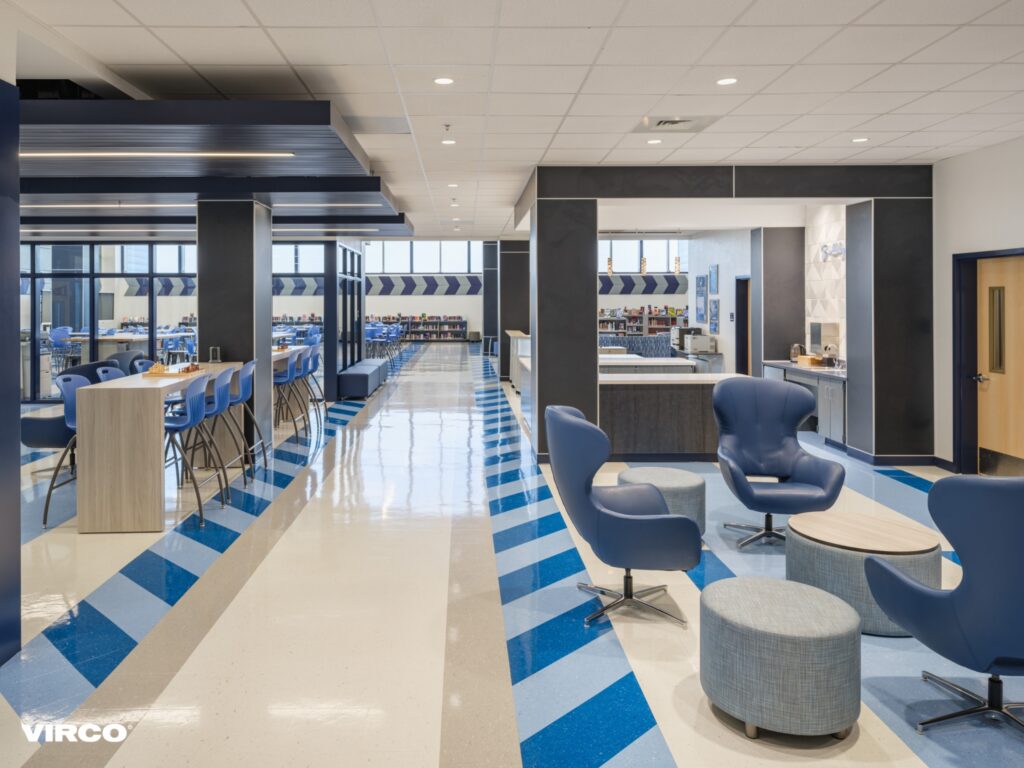
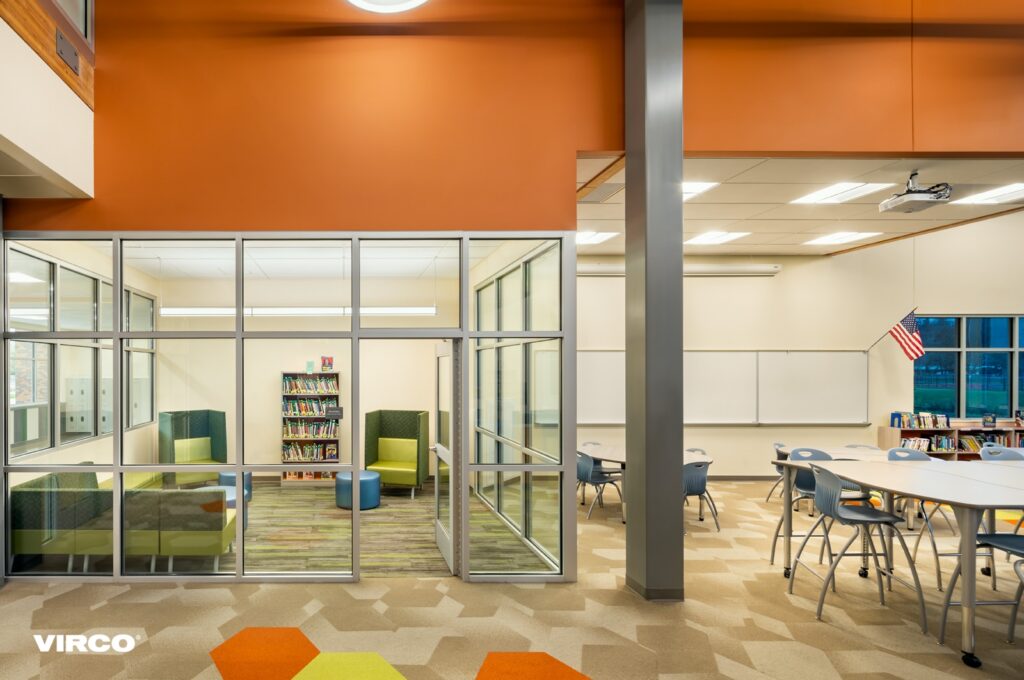
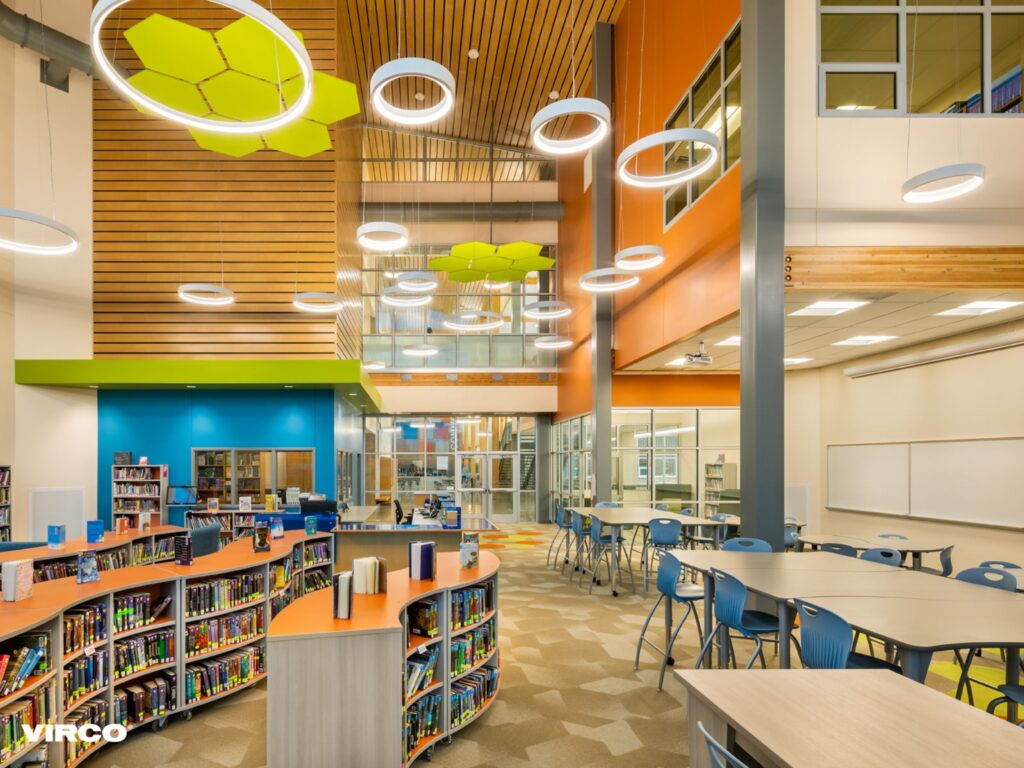
A successful learning commons should support multiple activities at once without making the environment feel fragmented. Linked spaces accomplish this by creating areas that are defined yet interconnected.
Rather than relying on rigid walls or isolated rooms, permeable boundaries allow different learning areas to maintain their own identities while encouraging movement and interaction between them. Students can transition naturally from individual study to small-group collaboration, while educators can move easily between activities and learning zones.
This interconnected approach supports a variety of learning modalities and encourages collaboration, interdisciplinary learning, and self-direction. It also gives students the freedom to choose an environment that best supports the task at hand.
Linked spaces create a learning environment that feels connected, flexible, and responsive.
Activity Zones
Not every learning activity requires the same type of space. A student conducting independent research may need a quiet place to concentrate, while a group working on a project may need room to spread out, collaborate, and share ideas.
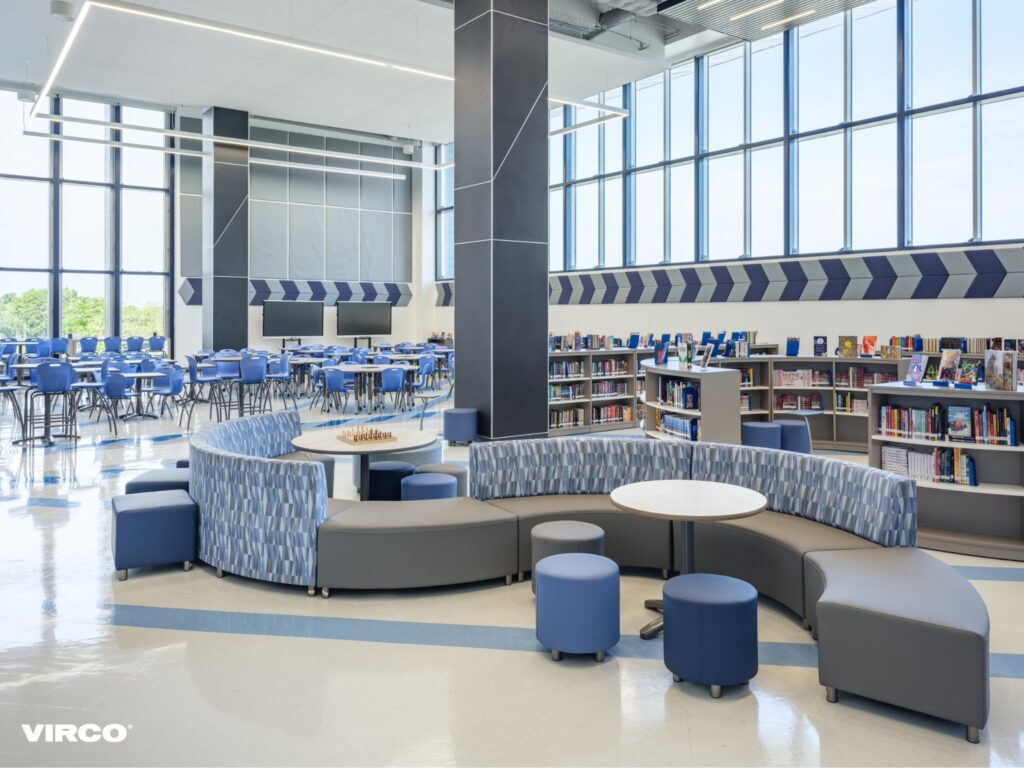
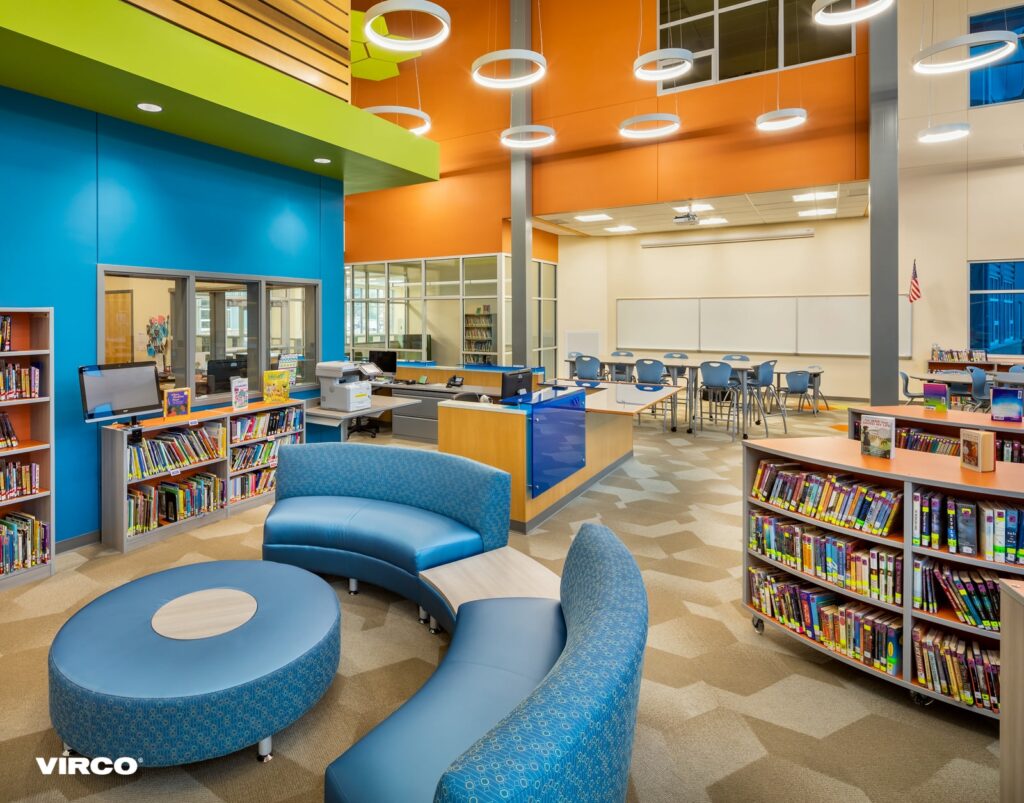
Activity Zones introduce purposeful spatial diversity to support these different needs. A well-planned media center might include areas for small-group work, individual projects, presentations, independent tasks, research, and reflection.
Providing these choices gives students greater control over how and where they learn. It also allows educators to facilitate different types of instruction without being limited to a single classroom configuration.
The result is an environment that can shift throughout the day as activities, group sizes, and learning objectives change.
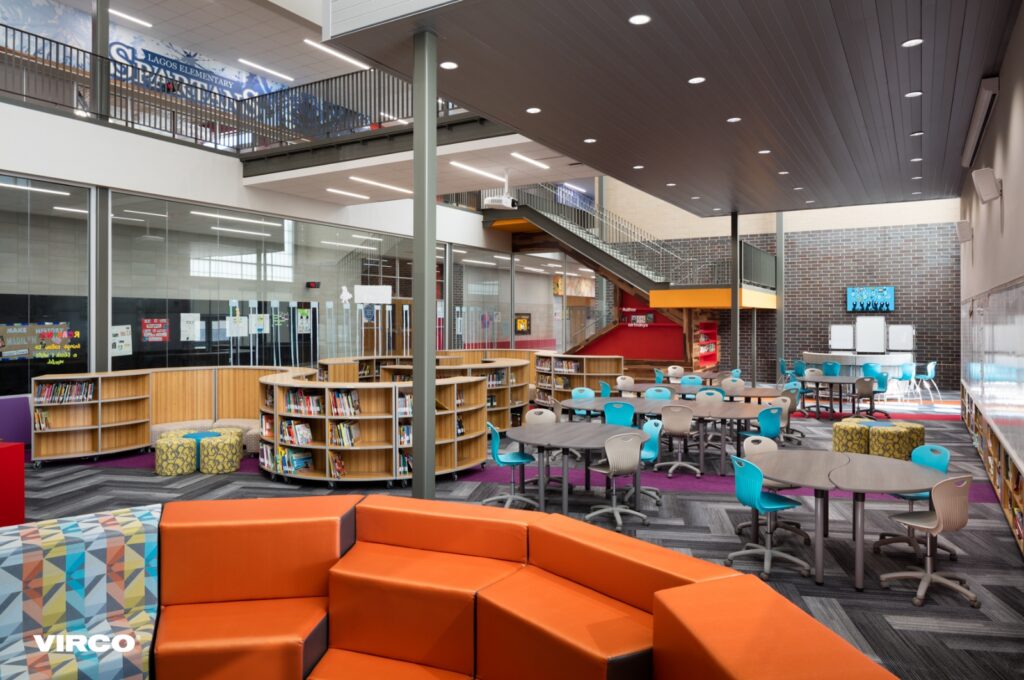
Variety and Flexibility in Furnishings and Finishes
The flexibility of a learning commons depends not only on the architecture but also on the furnishings and finishes within it.
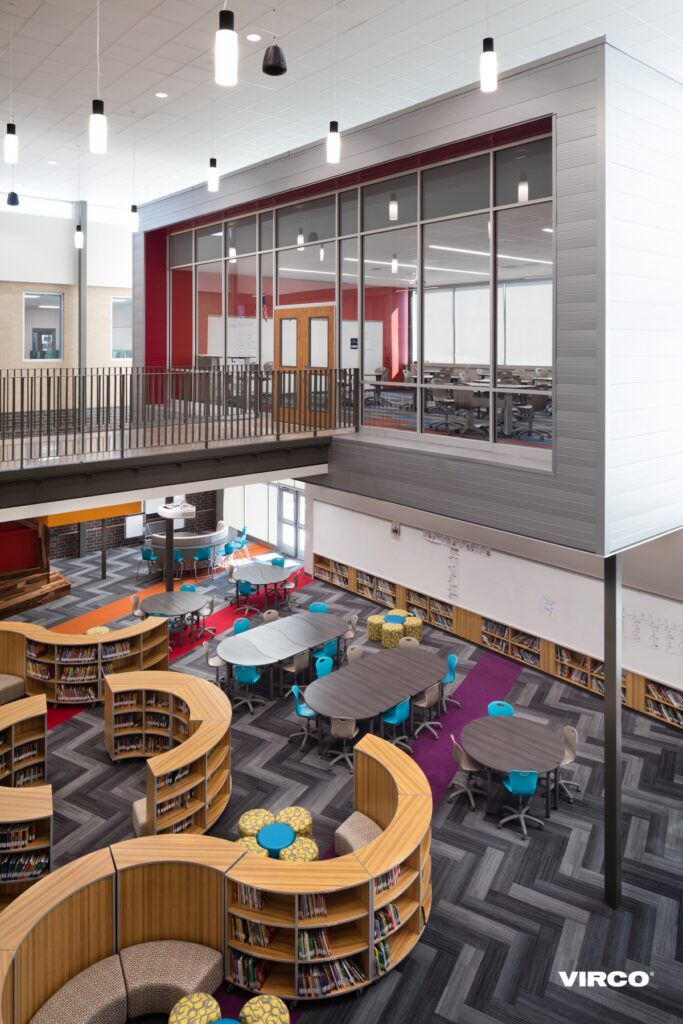
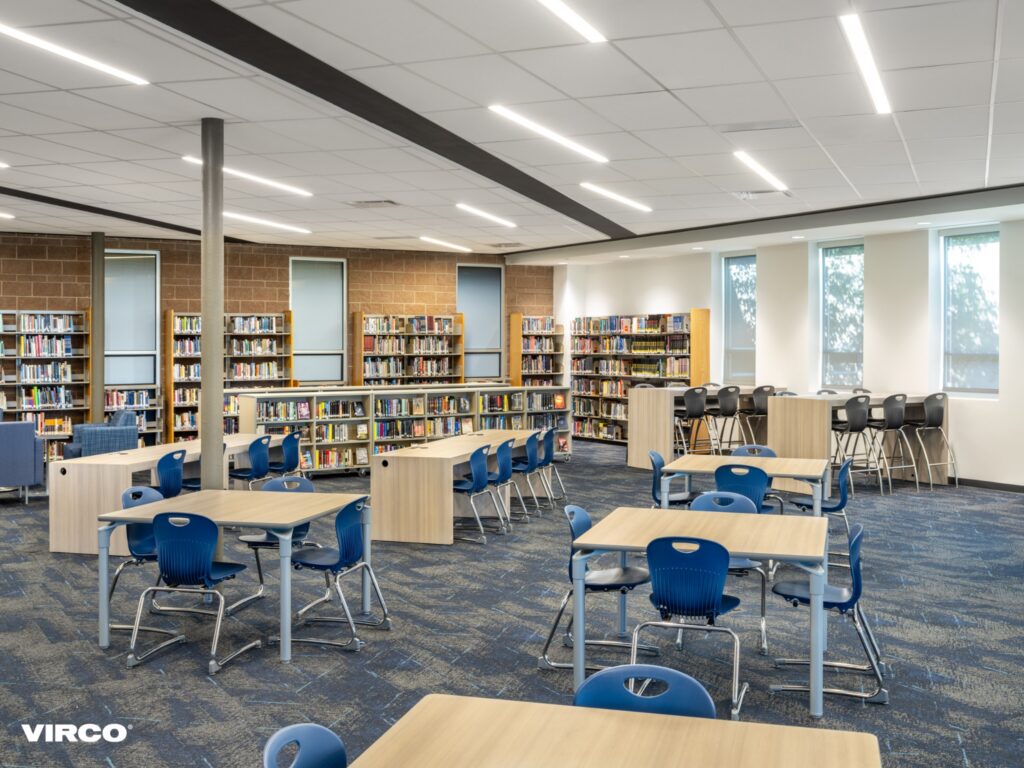
A well-designed media center incorporates a variety of seating arrangements, versatile worksurfaces, and accessible storage to support diverse activities. Different heights, sizes, and configurations give students and educators options for individual work, informal interaction, group collaboration, and presentations.
Technology-integrated furnishings can further support collaboration and connectivity, helping students move seamlessly between physical and digital resources. Mobile or adaptable pieces can also make it easier to reconfigure a space as needs change.
Finishes play an equally important role. Purposely selected materials, colors, and textures can help define activity zones while creating visual connections throughout the space. When furnishings and finishes work together, they create an environment that feels cohesive.
The goal is to provide enough choice and flexibility to support the many ways learning happens.
A Linked Indoor-Outdoor Connection
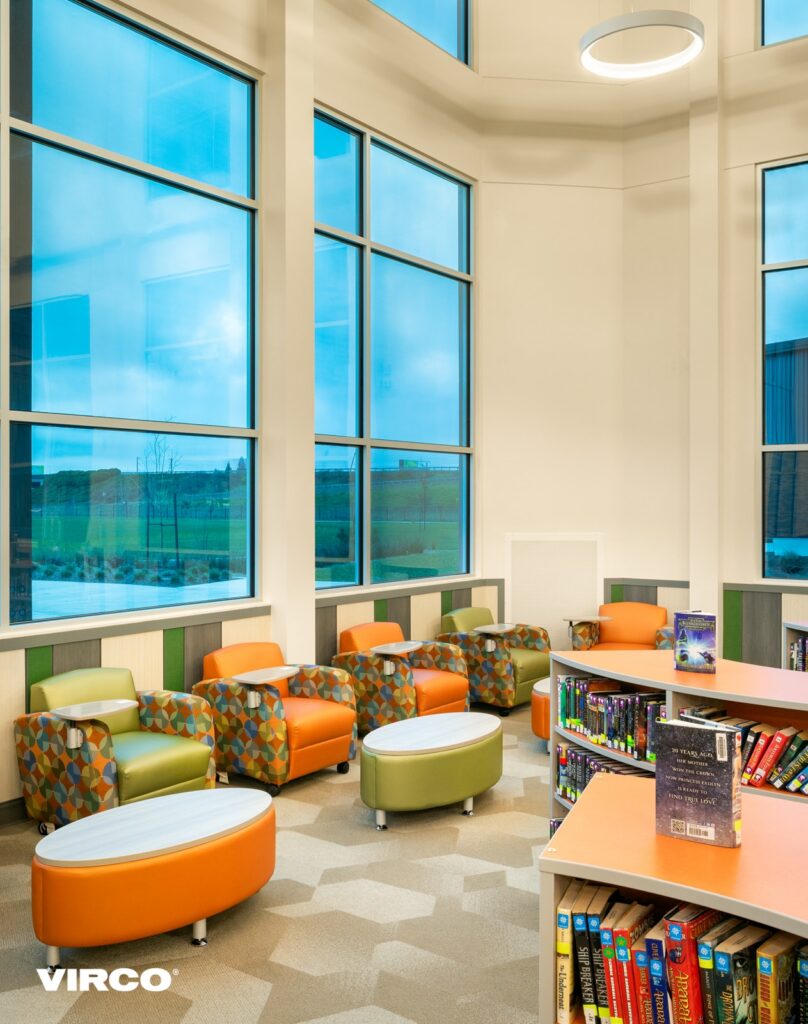
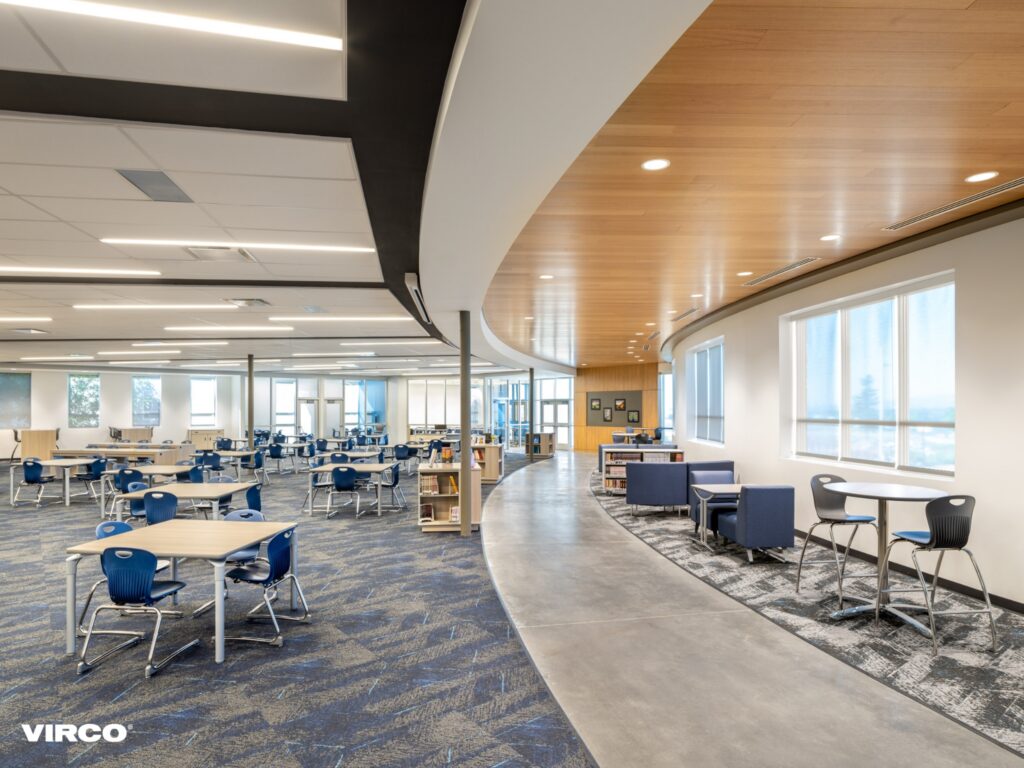
When thoughtfully designed, the connection between indoor and outdoor environments can expand the sense of possibility within a media center or learning commons.
Strategic furniture groupings and zoning can maximize access to natural light while creating a visual and physical connection to the surrounding environment. Organic furniture forms and outdoor-inspired elements can bring aspects of nature into the interior, creating spaces that feel welcoming and connected to their surroundings.
Fabrics, colors, textures, and finishes that reflect the local landscape can further reinforce this relationship. These details help blur the boundaries between indoors and out while creating an environment that feels grounded in its setting.
Designing for What’s Next
The modern learning commons/media center is much more than a place to store books. It is a dynamic learning environment where students research, collaborate, create, reflect, and connect ideas. It becomes the school’s “idea engine.”
Designing these spaces with flexibility in mind allows them to support the full range of learning experiences happening within an educational institution. Linked spaces, purposeful activity zones, adaptable furnishings and finishes, and strong indoor-outdoor connections can work together to create environments that are ready to evolve.
Most importantly, flexible design puts the learner at the center. By providing choices and spaces that can adapt to different needs, libraries and media centers can continue to serve as vibrant hubs for discovery, collaboration, and independent thinking.
Virco, America’s leading manufacturer and supplier of school furniture and equipment, provides a wide range of services that include space planning and project management. Our PlanSCAPE® designers will work closely with you to create a library or media center that meets the needs of every curious mind.