

Career & Technical Education (CTE) has evolved from a narrow vocational track into a platform for authentic, real‑world learning that fuses academic rigor with industry experience. To unlock its full impact, leaders must re‑envision the spaces where CTE happens — making them flexible, transparent, and deeply connected to local economies.
The Shift: From Prepared to Planned
Across innovative districts, success is no longer measured only by test scores or college acceptances — it’s defined by whether students graduate with a clear path forward and early steps toward it (enrolled, enlisted, or employed). Today’s modern CTE spans middle schools, high schools, and community colleges, building durable, transferable skills that transcend any single credential while pairing academic rigor with hands‑on, project‑based learning.
This evolution is backed by the federal framework of Perkins V, which channels funding to programs aligned with high‑skill, high‑wage, in‑demand occupations — encouraging states and districts to target regional growth sectors like health care, cybersecurity, robotics, and logistics.
“Our School Board and Superintendent and County Manager and Board of Supervisors have made [the ACE Centers] possible, but Quinn Evans is the one who put pen to paper to take this to the next level and make this real for our students.”
— Mac Beaton, Director of Workforce and Career Development, Henrico County Public Schools
Why It Matters Now
When students choose learning experiences aligned to genuine interests, engagement rises, and dropout rates fall. In Henrico County, for example, the district reported a 99.95% on‑time graduation rate for students participating in CTE within two years of opening new centers — evidence that well‑designed programs and places can move the needle on outcomes.
CTE also expands opportunities for students whose next step may not be a four-year college. With pathways to industry certifications, dual‑enrollment credits, AP coursework, and immediate employment, students gain agency — choosing experiences, defining goals, and building personalized post‑secondary plans.
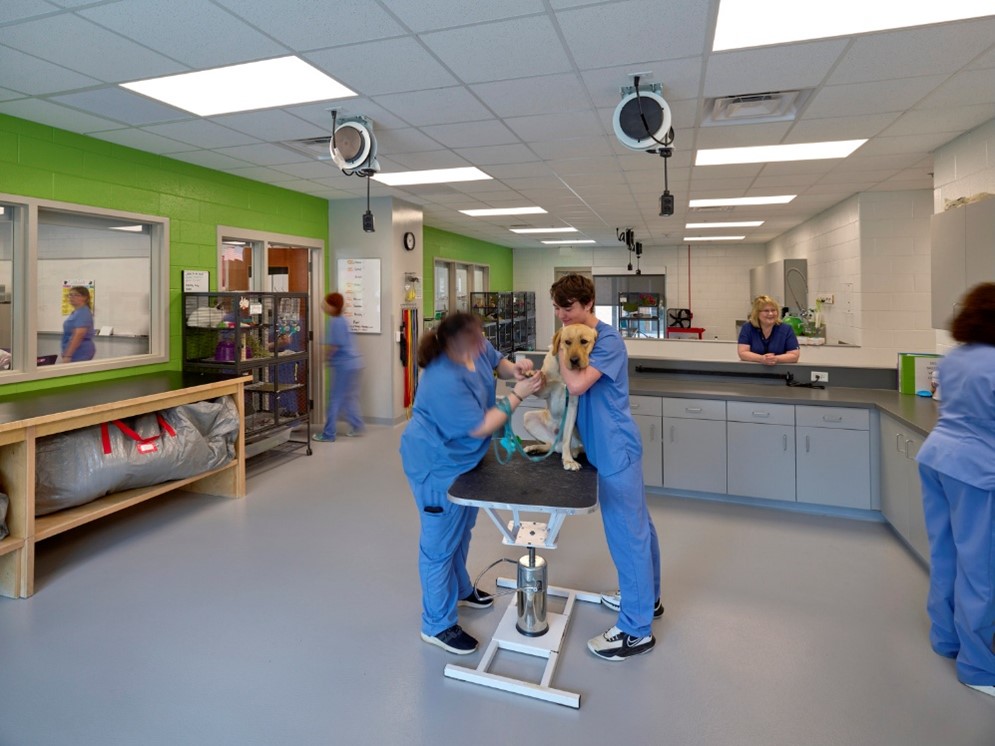
The new Advanced Career Education (ACE) Center at Hermitage clusters culinary, hospitality, and marketing education spaces around a central forum where students execute real events.
Design is Strategy: Seven Principles for Next‑generation CTE Environments
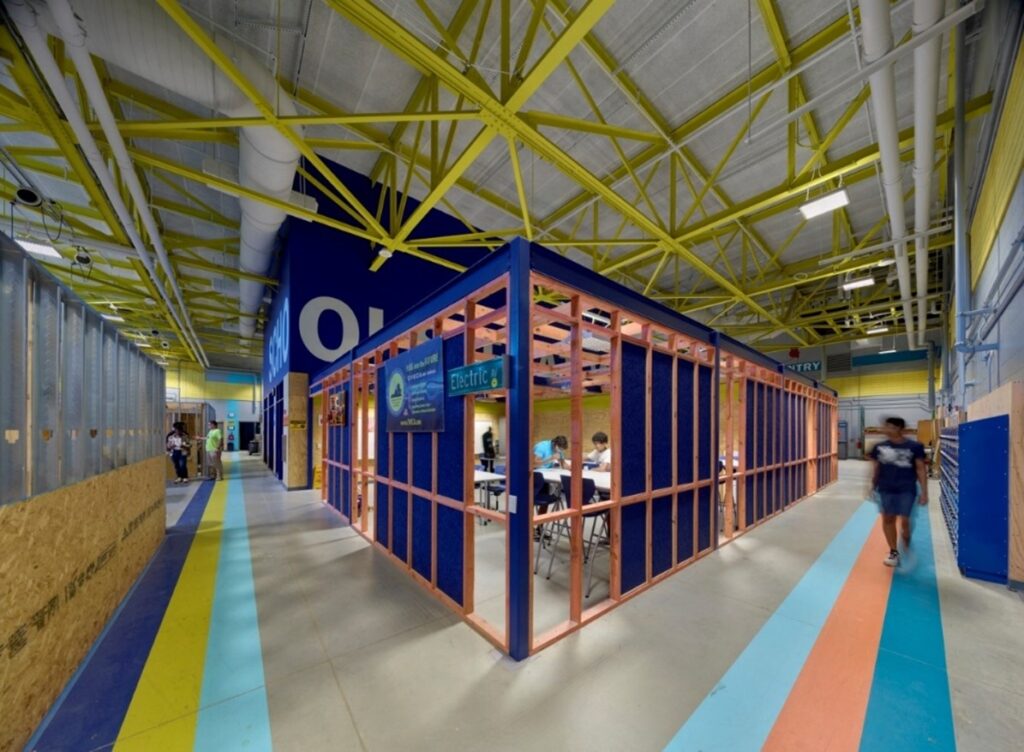
- Visual Transparency: Visibility between labs, corridors, and collaboration zones puts learning on display. It builds excitement, promotes curiosity, strengthens community, and enables passive supervision and enhanced safety. Seeing into labs and studios demystifies technical programs, sparking interest in unfamiliar career paths and encouraging exploration.
- Model Real Work: Students are most engaged when their environments reflect real professional settings. Access to learning spaces that mirror industry standards boosts confidence and career readiness, allowing students to clearly envision themselves in their future roles.
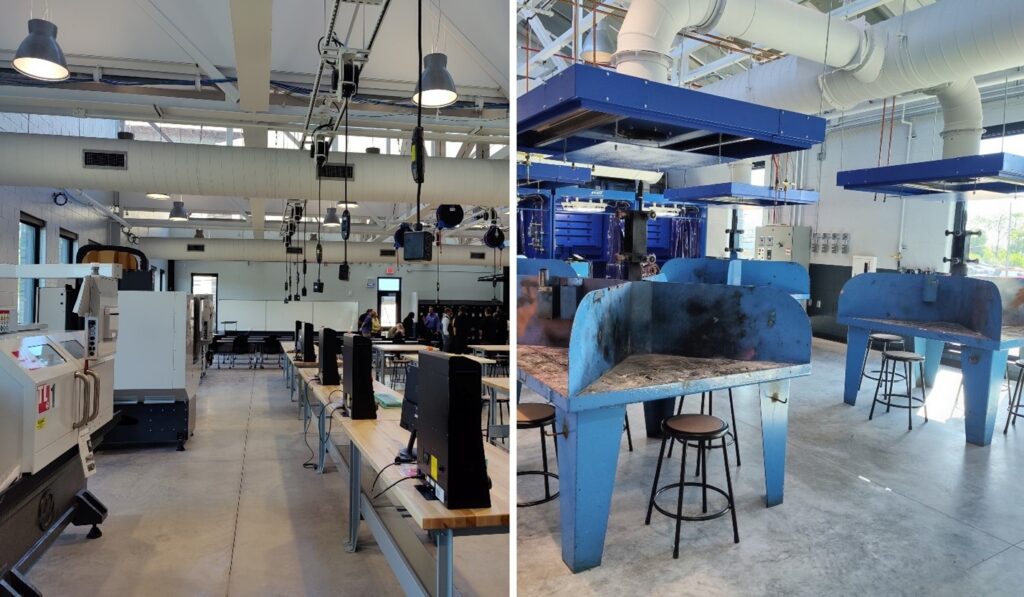
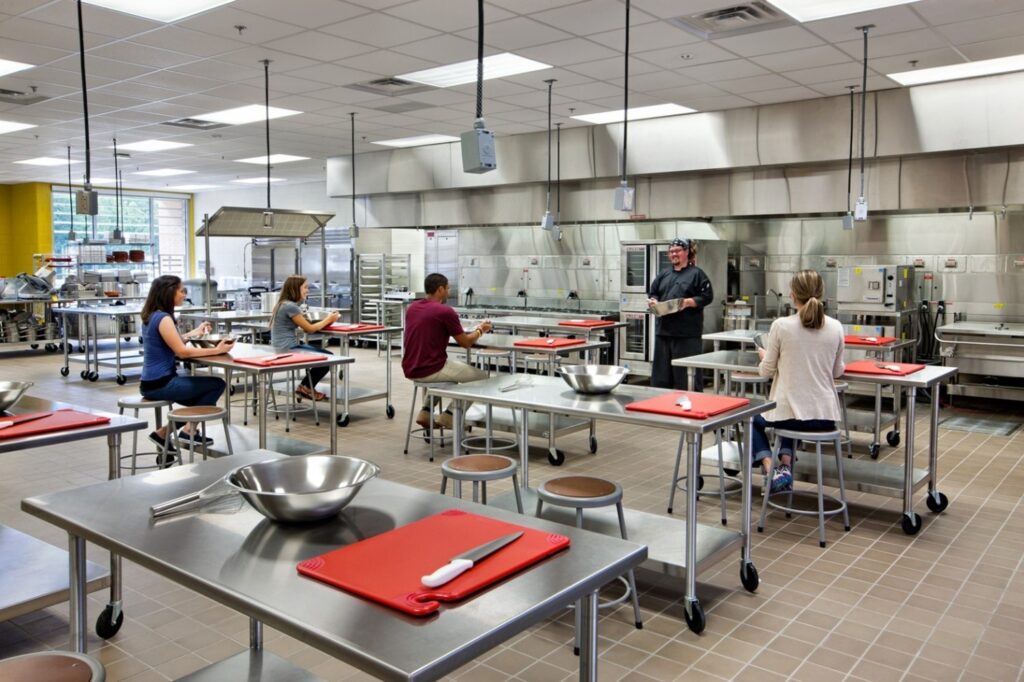
- Specialized Equipment and Infrastructure: From culinary arts to automotive technology, each CTE program relies on specialized equipment and systems that mirror professional practice. Proper infrastructure — ventilation, power loads, technology systems — is critical to support these tools and enable long-term program evolution.
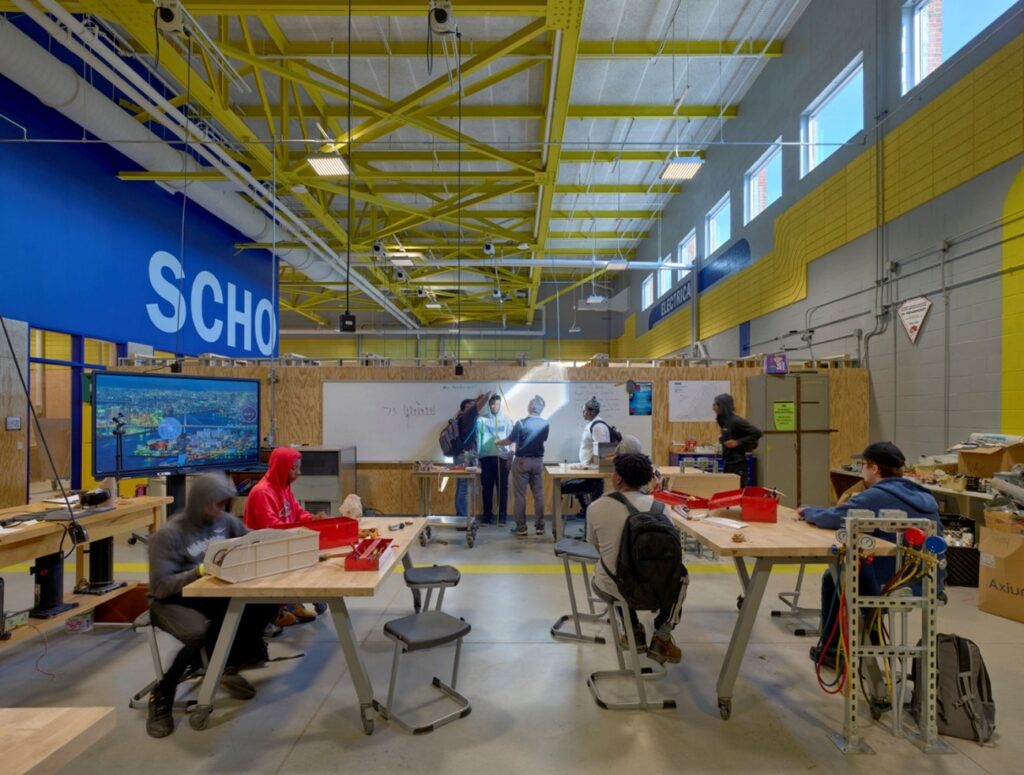
- Flexibility, Adaptability, and Scalability: As industry needs evolve, so must CTE spaces. Modular furniture, configurable rooms, and accessible infrastructure pathways allow spaces to shift as programs grow, ensuring longevity and scalability.
- Community Connections
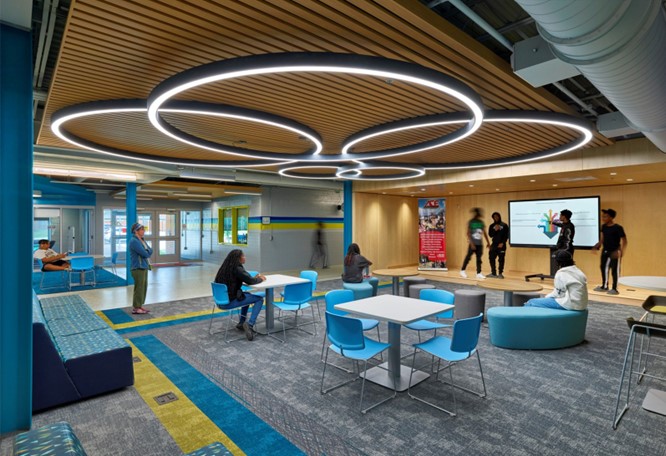
Spaces that accommodate visiting professionals, community events, and business partnerships strengthen ties to local employers. Dedicated zones for industry partners — conference rooms, shared labs, pitch platforms — foster mentorship and broaden access to post-secondary opportunities. - Building as a Teaching Tool
Exposing structure, mechanical systems, and building components turns the facility into an educational resource — especially valuable for students interested in architecture, engineering, or construction. - Student Wellness
Hands-on learning can be physically and mentally demanding. Thoughtful design — daylight-filled classrooms, collaboration areas, quiet spaces, and access to the outdoors — supports student well-being. Sustainable features, natural light, and attention to acoustics reduce stress, spark creativity, and support holistic development.

What it Looks Like in Practice
Whether new construction or renovation, these principles establish a framework that elevates CTE learning environments at any scale. ensuring spaces that work for today and can adapt for tomorrow.
Expansion‑ready scholar studios — Albemarle County Public Schools (Charlottesville, VA)
The 60,000-square-foot Advanced Career Academy on the Lambs Lane campus serves as a CTE hub for biomedical sciences, engineering, and culinary arts. Designed for expansion, it features reconfigurable labs and scalable infrastructure that allow programs to grow and adapt to industry shifts. A central commons functions as an entry, café, and presentation space, while the “Scholar Studios” model embeds flexibility through adaptable, technology-rich learning environments.
Industry co‑location — Southeastern High School (Detroit, MI)
Located beside the Stellantis automotive plant, the new 11,000-square-foot CTE annex at Southeastern High School aligns program design with industry needs. Funded in part by a gift from Stellantis, the space includes welding and CNC labs built to professional standards and designed for adaptability to future manufacturing technologies.
Universal design in action — Maryland School for the Deaf (MD)
The 48,300-square-foot renovation of MSD’s CTE facility emphasizes Deaf Space principles — open sightlines, controlled acoustics, and clear lighting — demonstrating how design can support both technical learning and communication with universal design principals in mind. Programs like robotics, horticulture, broadcasting, and culinary arts are organized around a bright central atrium connecting the act of making across disciplines.
Place‑based pipeline design — Henrico County Advanced Career Education Centers (VA)
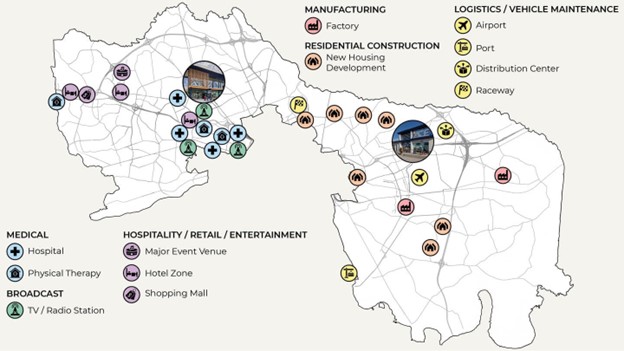
Henrico County’s ACE Centers at Highland Springs and Hermitage were intentionally designed to align CTE programs with local industries, creating a community pipeline from education to career. Highland Springs focuses on construction trades, STEM, transportation, and entrepreneurship, while Hermitage emphasizes health, medical, and service careers, reflecting the economic landscape of each region. Collaboration with employers and postsecondary partners provides real-world environments — like Highland Springs’ integrated Construction Trades Lab and Hermitage’s culinary and media studios — while flexible labs and entrepreneurship hubs foster direct engagement with industry. By combining location-driven program alignment, transparent and adaptable spaces, and attention to student wellness and sustainability, the ACE Centers connect students to meaningful career pathways and strengthen ties between schools and the broader community.
What leaders can do next
1) Start with outcomes, not rooms. Define the graduate profile and career pipelines first; then design spaces that make those outcomes visible and repeatable.
2) Co‑locate with industry. Site programs near major employers when possible, and embed partner‑ready spaces (mentor rooms, shared labs, maker forums) in the plan.
3) Invest in adaptability. Prioritize infrastructure that can change faster than curricula — power/data density, ventilation continuity, and equipment walls built for swap‑outs.
4) Elevate Wellness. Treat daylight, acoustics, and indoor‑outdoor work as core performance features, not nice‑to‑haves.
5) Make the building teach. Expose systems; invite students behind the scenes. If the structure explains itself, it becomes a daily lab.
The Bottom Line
Modern CTE is not simply about preparing students for jobs — it is about empowering them to shape their own futures, explore their interests, and develop skills that will remain relevant throughout their lives. By designing programs that reflect community needs, forging partnerships with local businesses, and creating flexible, real-world learning environments, school districts are redefining what student success looks like.
Across large and small projects, urban and rural regions, new facilities and adaptive reuse, the same truth emerges: when students are given the environment, tools, and opportunities to explore careers connected to their passions and communities, they thrive. And when schools invest in re-envisioning CTE, entire communities thrive with them.