

Imagine a child you know is in kindergarten. They will graduate in 2038 and may remain active in their careers until the 2080s. What will the world look like? What will be needed during a lifetime of extraordinary change? How must education evolve to prepare them?
Research
These questions prompted a yearlong research initiative grounded in published data, future-focused reports, evaluation of learning environments, and engagement with educators, professionals, thought leaders, child advocates, health professionals, parents, and students. Through surveys, interviews, focus groups, and collaborative sessions, a consistent message emerged: to prepare students for what’s ahead, we must reconsider not just what we teach, but how we teach, and where learning happens.
The Future: A Range of Possibilities
By the time today’s kindergarteners consider retirement, likely in the 2080s, the world will be vastly different. Looking back at a similar span of time, we see a world without the internet — defined by the space race, room-sized computers, and the civil rights movement. Even shorter timeframes reveal dramatic change. That kindergartener will enter the workforce around 2042 — just sixteen years from now. Sixteen years ago, the first iPhone had just launched, video rental stores were common, and Netflix mailed DVDs. Uber, Instagram, and Airbnb didn’t yet exist.
The pace of change is accelerating. While we can’t predict the future, we can imagine scenarios to prepare for it. Using a “time cone” — a strategic planning tool that illustrates how certainty decreases over time — we can envision probable, preferable, and unexpected futures (like COVID) and ask: how do we prepare learners for a future we cannot fully define?
Our vision: “Nurture each learner to activate their potential and confidently shape a bright future together.”
Key Impact Factors Shaping the Future
Technology will continue reshaping how we live and work. Students may face fast-spreading misinformation, widening digital divides, and disappearing careers that demand reskilling — or they may benefit from new industries, greater productivity, and breakthroughs in health, energy, communications and transportation. Likely, it will be both. Students must develop media literacy, adaptability, and the ability to use technology to solve problems.
The Environment will challenge today’s students throughout their lifetimes. Projections suggest 50% of the global population will be impacted by climate effects — floods, heat waves, resource scarcity. Students must develop systems thinking, resilience, and environmental stewardship to understand and address these challenges.
Society is already facing increased political division, wealth inequity, and mental and physical health challenges. Schools must become places of belonging, trust, and civic learning — where students navigate identity, differences, and collaboration in an increasingly complex world.
Education itself is under pressure. Student disengagement has increased and educators face growing burnout — a National Education Association poll found 55% are considering leaving the profession early. Yet the path forward is clear: what will best prepare students is not efficiency or compliance, but humanity, creativity, and connection — schools that trust their teachers and inspire their learners.
A Vision for the Future
The future does not just happen — we have the power to shape it. Our vision: “Nurture each learner to activate their potential and confidently shape a bright future together.”
Deciphering terms:
- Nurture — Strong relationships and supportive environments develop the whole child.
- Activate potential — Every learner has unique gifts that, when cultivated, prepare them to contribute meaningfully.
- Confidently shape a bright future — Learners need the skills, mindsets, and confidence to solve complex challenges.
- Together — Learning builds connection, empathy, and the capacity to solve tomorrow’s challenges collaboratively.
4 Pillars to Achieve the Vision
Four pillars lay the foundation for future-ready learners: 1) Experience Wonder; 2) Prioritize Wellness; 3) Build Community; and 4) Empower Learning. While these ideas are not new, they represent enduring truths, when aligned with pedagogy and design, create quality education and future-ready learning environments.
Pillar 1: Experience Wonder
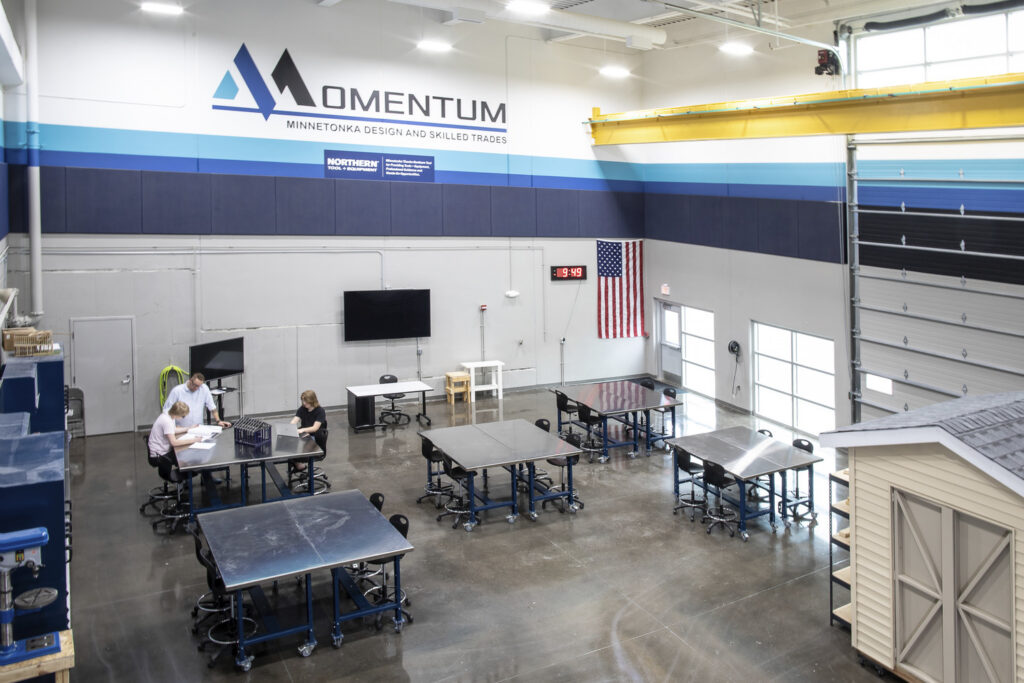
Curiosity is the catalyst for learning. When wonder is present, learners shift from passive recipients to active creators of knowledge. The educator becomes a facilitator guiding hands-on discovery, while technology becomes a tool for creation rather than consumption.
The built environment can foster wonder with spaces that:
- Inspire Curiosity — invite exploration, display student work, and celebrate learning in progress
- Stimulate Engagement — act as instructional tools that activate participation
- Encourage Creativity — offer maker zones where students can spread out and “get messy”
- Instill Playfulness — use novelty and surprise to foster moments of joy
- Create Moments of Awe — use scale, light, and connection to nature to connect students to something larger than themselves
Spaces should ignite curiosity and make learning irresistible.
Pillar 2: Prioritize Wellness
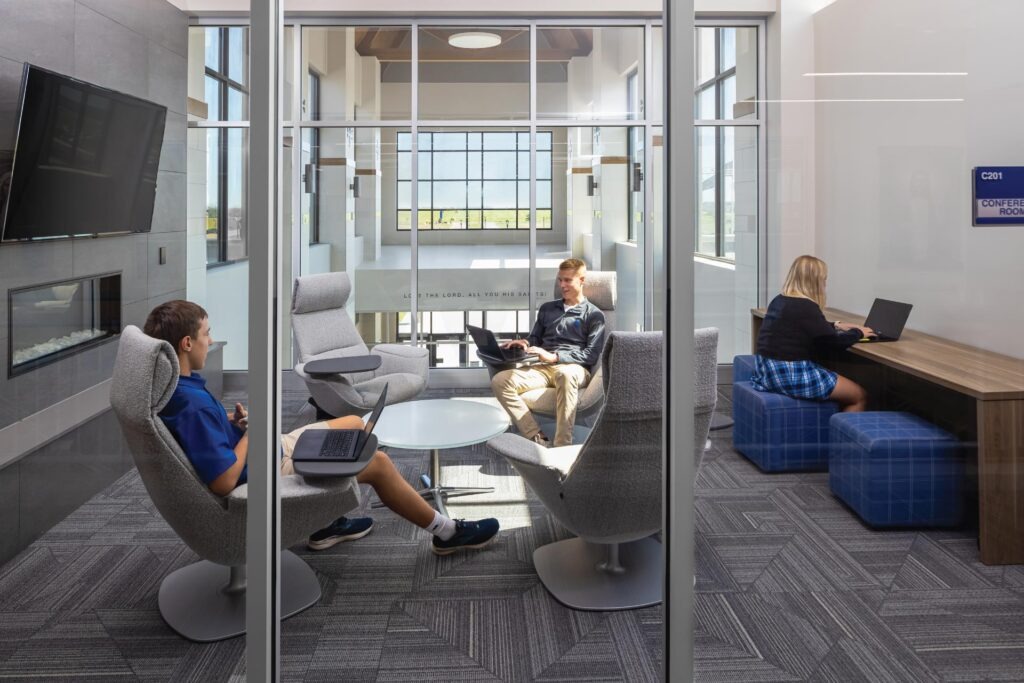
Wellness is an essential foundation across a lifetime. By integrating mental, physical, and ecological health, schools become training grounds for habits that sustain both the individual and the planet. Teaching strategies shift to prioritizing the whole child, using movement to activate the brain, taking a preventative approach on mental health and behaviors, and embedding sustainability into daily learning.
Physical space can help cultivate wellness by designing for:
- Mental Health — spaces for emotional regulation and respite, with clear sightlines and predictable settings and personal control
- Physical Health — active classrooms, movement throughout the day, teaching kitchens, and access to medical care
- Safety & Security — secure, predictable environments where learners feel physically and psychologically safe
- Indoor Environmental Quality — natural daylight, clean air, good acoustics, and non-toxic sustainable materials
- Environmental Sustainability — energy-efficient systems that model lifelong stewardship
Pillar 3: Build Community
In a time of increasing isolation and division, schools play a critical role in fostering connection. Students who experience belonging and learn to collaborate will be better prepared to contribute to a more inclusive and interconnected world. Teaching strategies emphasize team-based transdisciplinary learning and real-world community partnerships that bridge the classroom and neighborhood.
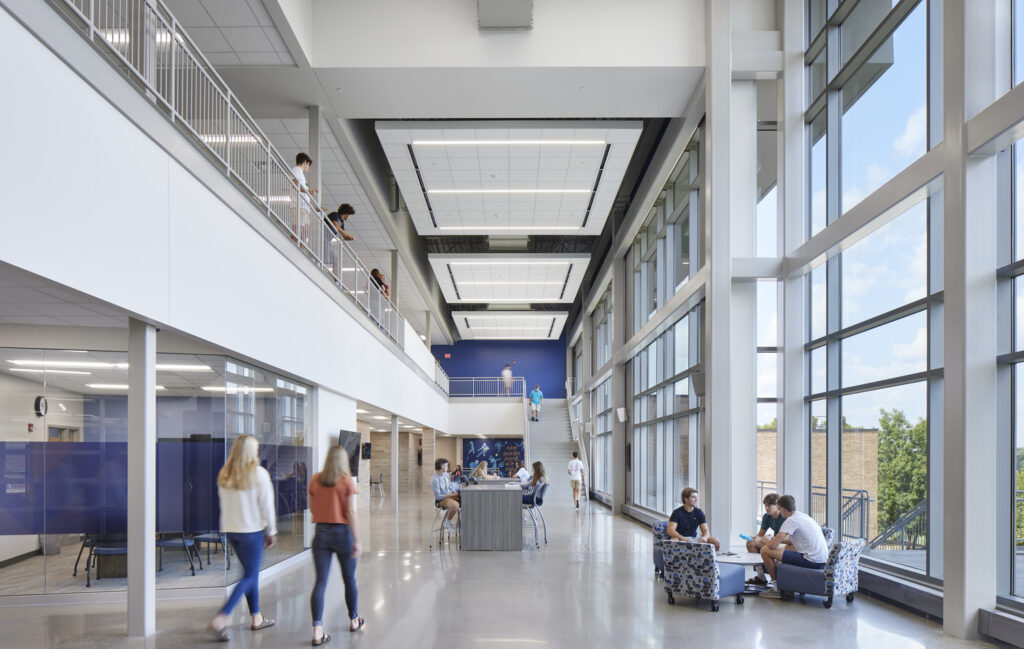
The physical environment reinforces community through:
- Designs for belonging — cultural diversity, universal design, and a sense of family
- Gathering spaces — varying sizes and settings
- Reflecting identity — honoring history, values, ethos, and community
- Civic assets — spaces designed for beyond the school day, supporting community programs and crisis response
- Community outreach — intergenerational connections and business and civic partnerships
Spaces should bring people together, honoring where they come from while empowering who they are becoming.
Pillar 4: Empower Learning
In a rapidly changing world, content alone is not enough. Learners must develop the ability to adapt, think critically, and take ownership of their learning. The capacity to learn, unlearn, and relearn is essential for future success. Teaching strategies prioritize personalization, real-world relevance, giving students choice and voice to direct their own discovery.
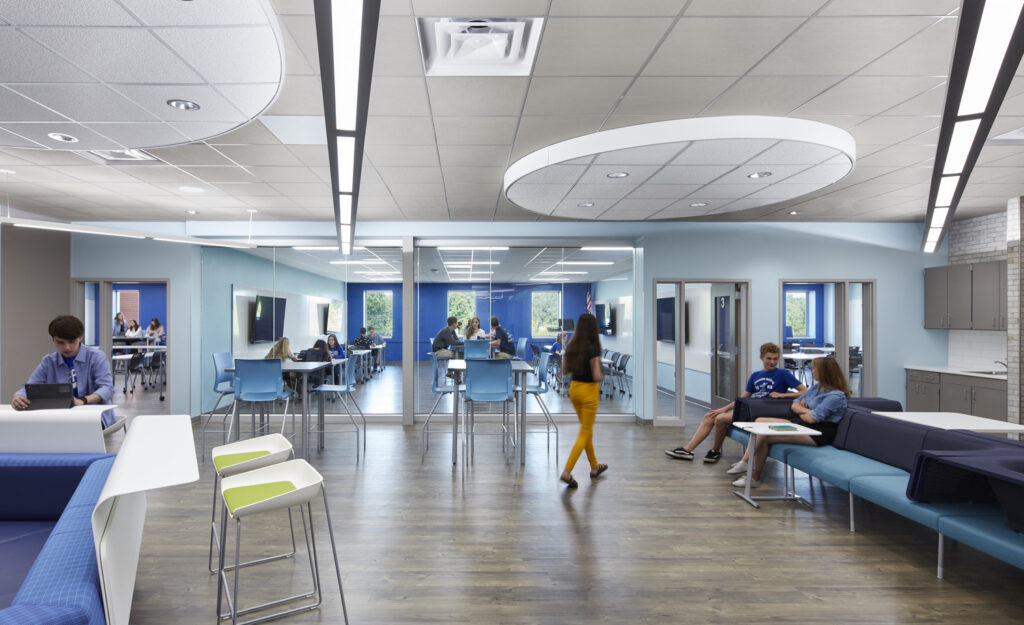
To support diverse learning modes, the physical space must offer:
- Choice — a range of settings students can select based on their current task
- Variety — a “palette of places” from quiet study to active collaboration and large presentations
- Flexibility — agile, reconfigurable rooms and furniture
- Technology — tools that support research, creation, and immersive experiences
- Staff support — spaces for collaboration, co-teaching, and the tools and training that educators need
Spaces should be as dynamic as the learners themselves.
Implementation and Change Management
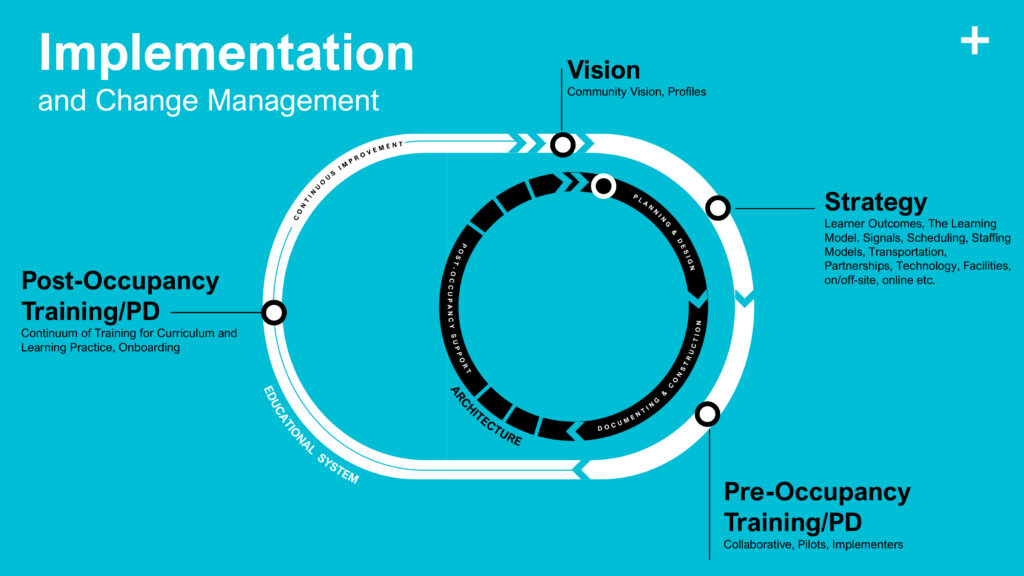
Taking the time to align vision, educational practice, and physical space before and during design can make the difference between a building that simply houses learning and one that actively elevates it. That alignment can be achieved through:
- Vision — develop learner/educator/leader profiles and set educational strategy before design begins
- Strategy — define the what, how, and where of learning; ensure pedagogy and space are complementary
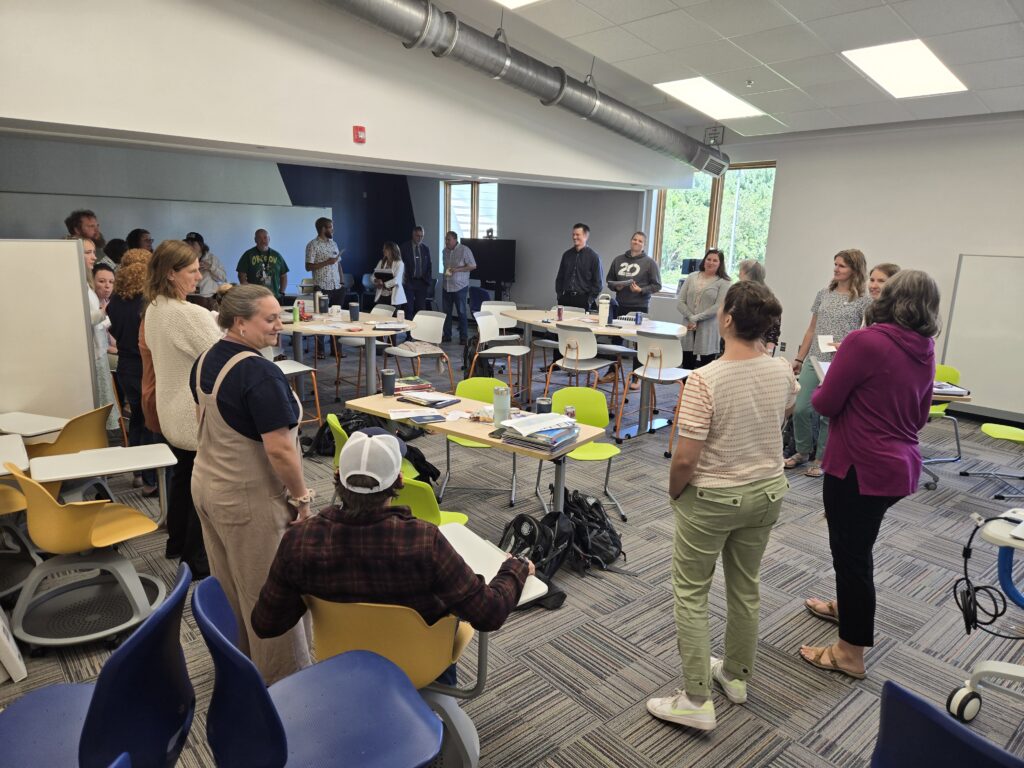
- Training/PD — begin well before occupancy, continue through it, and plan for onboarding new staff
- Continuous Improvement — use observation and real experience to refine both teaching practices and environments
Students are complex individuals, each bringing a unique set of experiences into their day. When we design through the lens of the learner — guided by these four pillars — we create environments that shape future generations for tomorrow’s challenges. Be bold to design for learners: the future does not just happen; we shape it.