


The first and second articles in this series laid the groundwork: the multi-user restroom model was never designed to meet the needs of students, and a privacy-first, single-user approach offers a more effective path forward. The question is no longer whether better solutions exist; it is whether we are willing to implement them.
In practice, that question is not theoretical. It plays out in real conversations, in real districts, and often in moments where evidence points toward a different path, but change remains difficult.
For generations, restroom design has been treated as a solved problem. The fixture counts were known. The layouts were familiar. The design was efficient. As schools began responding to heightened concerns about safety and security, attention naturally focused on the threats that dominate headlines. Yet some districts were willing to ask a subsequent question: What about the harm students experience in spaces that don’t grab headlines?
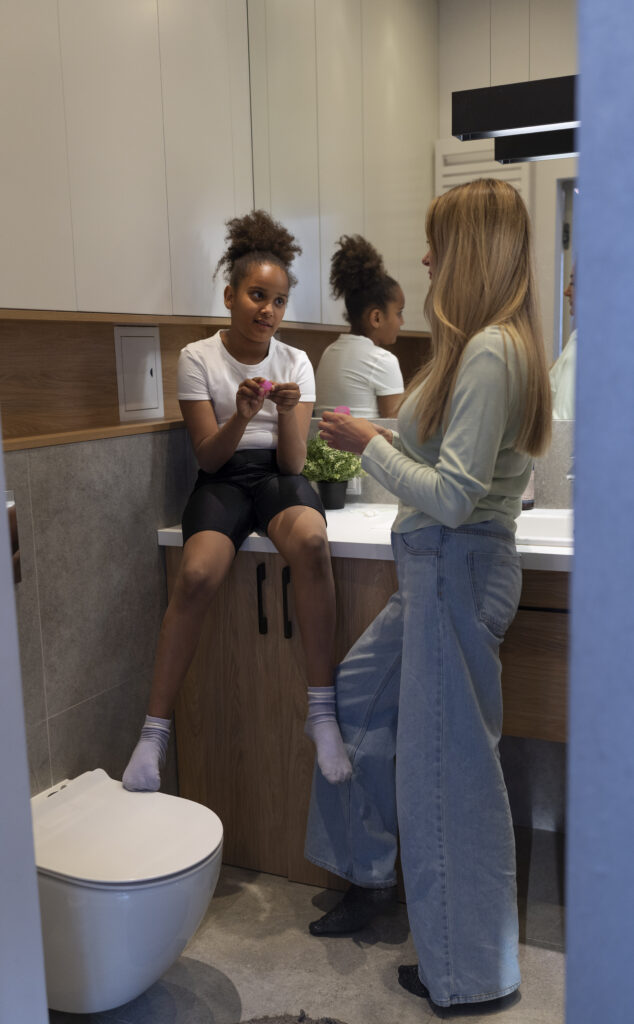
That question required reexamining spaces that many assumed were no longer up for debate. It required looking beyond compliance, beyond tradition, and beyond the assumption that multi-user restrooms were not only the most practical solution for cost and durability, but the best solution for students. Districts pursuing single-user restrooms did not set out to win a culture war. They set out to better address the challenges students experience every day.
One district I worked with set out to rethink its approach to a new elementary school. From classrooms to collaboration spaces to restrooms, the goal was not to replicate what had always been done, but to ask what would best serve students for the life of the building.
When the concept of a single-user restroom model was introduced, the response from teachers and administrators was immediate and enthusiastic. They saw how the design could reduce common issues – misuse of sinks and paper products, congestion, and time lost during transitions – while allowing entire classes to move through this part of their routine more efficiently. Without the constraints of gender-segregated fixtures, the number of students who could use the space at once became flexible rather than fixed.
But when the design reached the point of school board approval, the direction changed. The superintendent asked that the plans revert back to traditional multi-user restrooms. The concern was not whether the design would work; it was whether there was enough political capital to support the shift.
That moment is not unique. It reflects a broader reality: school leaders are often navigating competing pressures – student needs, staff insight, community perception, and political climate – all at once. Many are willing to pursue better solutions, but the risk of backlash can outweigh the perceived ability to act – especially when these conversations have become increasingly polarized.
Yet some districts have moved forward anyway.

Washoe County School District in Nevada offers one example of what leadership can look like when a district is willing to question long-held assumptions about restroom design. Through its Educational Specifications adopted in 2015-2016 and subsequent facility modernization efforts, the District identified General Use Restrooms as part of a broader strategy to improve safety and security across its campuses. Rather than simply replacing multi-user restrooms with single-user stalls, district leaders took the time to intentionally design how their new model could best support safety, privacy, supervision, and overall student experience.
The District’s approach reflects a broader philosophy that facilities are an important component of school safety. During a 2025 presentation to the Safe and Healthy Schools Commission, Chief Operating Officer Adam Searcy emphasized that the built environment itself plays a role in shaping student experiences and behavior. “How we design our buildings and how we maintain our buildings has a direct influence on how the humans experience them and how they act within those spaces,” he explained. The District’s work has continued through a process of ongoing refinement informed by student feedback, commission input, operational experience, and emerging challenges facing schools.
Leadership requires the willingness to act when evidence points toward a better path.
That commitment to listening is evident in the District’s approach to restroom safety. Student climate surveys revealed that students consistently reported feeling less safe in restrooms than they did in school environments overall. Yet discussions with students, parents, and community members suggested those concerns often extended beyond traditional definitions of safety to include vulnerability, embarrassment, privacy, and cleanliness. When District leaders asked schools how they could be better supported, every participating school that had not yet implemented General Use Restrooms identified restroom modernization as a priority. Collectively, the feedback reinforced a simple but important idea: improving student safety is not solely about policies, supervision, or discipline. It also requires examining the environments students experience every day and asking how those spaces can better support their wellbeing.
In 2014, the Province of Nova Scotia published guidelines supporting transgender and gender non-conforming students. For Darrell MacDonald, then Director of Facilities Management for the Department of Education and Early Childhood Development, the guidance prompted a broader question: were traditional restroom and changing room designs truly meeting the needs of all students?

Rather than beginning with a predetermined solution, MacDonald and his team began with a process of consultation. Students, educators, administrators, operations staff, and other stakeholders were invited into the conversation to better understand how privacy, safety, supervision, and dignity were being experienced within existing facilities. The feedback included support, questions, and concerns, but it also revealed something important: this was not a one-dimensional challenge affecting a single demographic. Students with body image concerns, self-esteem challenges, religious privacy needs, and many others were experiencing the same shortcomings in traditional restroom and changing room designs. The result was a province-wide design standard grounded in the foundational principles of privacy and safety.
MacDonald retired in 2024 as the Director of Education Facilities Project Services for the provincial Department of Public Works after nearly two decades leading educational facility standards and capital projects across Nova Scotia. Today, the approach remains embedded within the Province’s school design standards. Current operations staff report that the model continues to function effectively in supporting accessibility, privacy, and inclusive use.
For decades, decisionmakers have worked within a restroom model they inherited rather than one they intentionally designed.
As facilities Operations Manager Geoff Olssen explained, “From both an operational and administrative perspective, the model has functioned effectively in supporting accessibility, privacy, and inclusive use.” While schools still encounter challenges such as vaping, horseplay, and occasional misuse of facilities, he noted that these issues “are not unique to universal washrooms and are common supervisory considerations across a variety of school spaces.” More importantly, years of operational experience and user feedback have reinforced the value of the approach and supported its continued inclusion in school design standards.
Reflecting on his experience, MacDonald emphasized that the solution was never intended to serve one specific group. “The foundational principles of privacy and safety, leading to dignity being afforded, serve all of us.”
These examples represent just a couple of the numerous school districts and systems serving primary and secondary students. Each implementation of single-user restrooms matters because no district is working in isolation. Every example builds upon those that came before it, collectively moving the conversation farther from theory and closer to established practice. They demonstrate that privacy-first restroom design is not an untested concept, nor is it limited to a single region, age group, or school system.
More importantly, they demonstrate that the greatest barrier is often not design.
It is fear.
Fear of trying something new.
Fear of resistance.
Fear of imperfection.
Yet leadership has never been about waiting until every concern disappears. Leadership requires the willingness to act when evidence points toward a better path.
Maya Angelou famously said, “Do the best you can until you know better. Then when you know better, do better.”
For decades, decisionmakers have worked within a restroom model they inherited rather than one they intentionally designed. That is understandable. We cannot be expected to act on knowledge we do not yet possess.
Today, we know better.
We know that many of the harms students experience in restrooms are preventable. We know that privacy and supervision are not opposing goals. We know that districts have successfully implemented models that prioritize safety and privacy. We know that students adapt. We know that educators benefit. We know that more dignified environments are possible.
For architects, this moment requires a willingness to challenge assumptions. It means moving beyond a mindset where restroom design begins and ends with fixture counts, accessibility requirements, and code compliance. Those considerations remain essential, but they are the floor and not the ceiling.
Intentional design requires asking harder questions: Who will this building serve? How will the full range of human diversity show up within those people? And perhaps most importantly, what is the role of the built environment in addressing the needs of clients, stakeholders, and users?

That question has the power to transform how we think about accessibility, trauma-informed design, school safety, and student wellbeing. Restrooms should not be exempt from that lens. Student-centered design means looking beyond tradition and compliance to examine whether the designs we have inherited are truly serving the people who use them.
For school leaders, this moment requires courage. Not because you are venturing into completely uncharted territory, but because meaningful change rarely occurs without uncertainty, questions, and resistance. The examples in this article demonstrate that privacy-first restroom design is possible, but implementing it still requires a willingness to look beyond familiar solutions and consider whether they are helping or hindering the safety outcomes they were intended to achieve.
A single-user model does not eliminate every challenge, but it addresses the environment itself – not just the behavior of the people within it.
School leaders are entrusted with the care of every student they serve. That responsibility extends beyond academics. Schools shape daily experiences, relationships, wellbeing, and a sense of belonging. Students’ needs for safety, privacy, and dignity are not separate from their educational experience; they are part of it.
The challenge is not simply to provide access to learning, but to create environments where students can learn, grow, and develop safely. Achieving that goal requires aligning facilities, policies, and practices with the values schools already strive to uphold. When we know that harm exists and that better alternatives are possible, leadership requires the willingness to thoughtfully examine those alternatives in service of students.
For policymakers, this moment presents an opportunity to broaden the conversation. Questions of access have a place in discussions about restroom safety, but they are not the only questions worth asking. The design of the environment itself influences privacy, supervision, opportunities for harm, and the overall student experience.
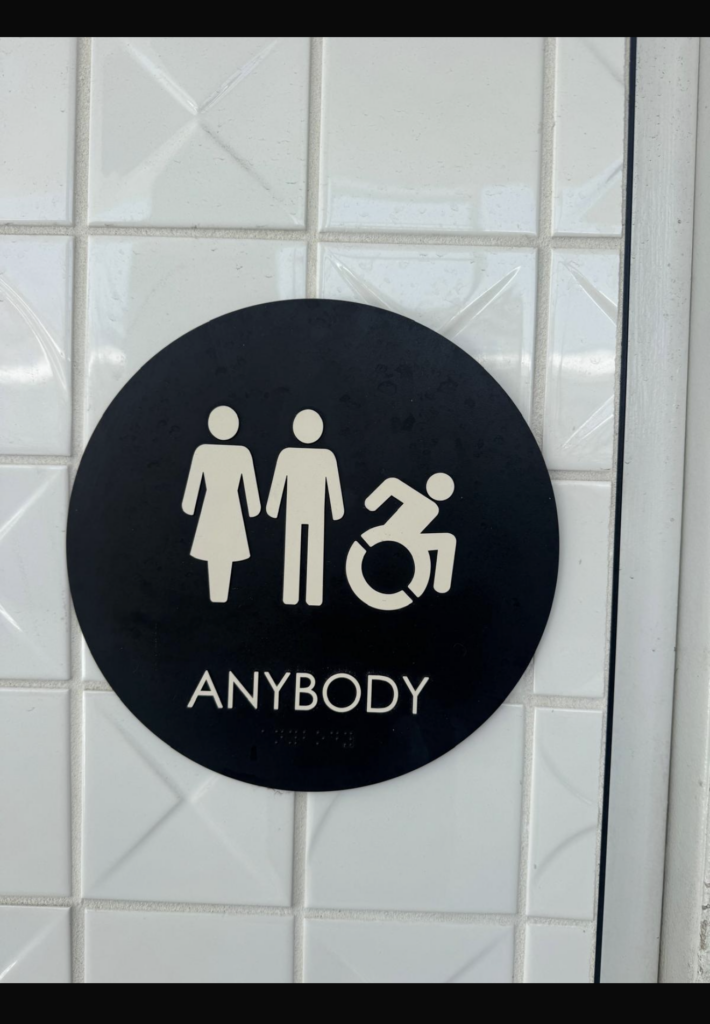
While recent debates have focused heavily on who may use which restroom, far less attention has been given to whether the restroom model itself deserves reexamination. Yet the growing number of districts successfully implementing single-user restrooms suggests that the built environment may be one of the most overlooked variables in the conversation. Policymakers need not become restroom designers. But if the goal is truly student safety, then the role of the built environment should not be ignored.
All decisionmakers connected to school safety and school restrooms are uniquely positioned to ask a different question: Are we still providing the right restroom?
A single-user model does not eliminate every challenge, but it addresses the environment itself – not just the behavior of the people within it. Rather than focusing exclusively on access and behavior, it recognizes the built environment as an active participant in achieving desired outcomes. And the desired outcome, I hope, is less harm for all students. After all, each and every student has been entrusted to our care.
This series has argued that the multi-user restroom model was fundamentally flawed when evaluated through a lens of privacy, safety, and dignity. Although it successfully addressed financial and operational constraints, it fell short of addressing the needs of the people most affected by its design: the students who use it every day. It has also argued that an intentionally designed single-user restroom model more effectively applies privacy, creating conditions that better support safety, dignity, and belonging. The change from one to the other requires thoughtful design, intentional implementation, and a shared commitment from the adults responsible for the environments students experience every day.
The districts highlighted in this article demonstrate that a better design for students is available. Moving from isolated examples to common practice requires the collective efforts of architects, school leaders, policymakers, and communities. The question is not whether it can be done, but what role each of us will play in making it a reality for students.