

As designers of learning environments, we are asking ourselves what impact the adoption of AI (Artificial Intelligence) in education will have on learning experiences and the environments where they happen. In the second of a 2-article series, we will provoke thoughts and offer ideas on how we may approach these opportunities.
In the first article (AI+Learning+Space: A New Species of Learning Experience (Part 1) – Essentials Magazine ) we discussed key ‘Signs of the Times’, or indicators, that leads us to think of AI as a foundational shift in education. We cannot just look at how to adapt pedagogy and space as an adjustment of our current models to meet this shift. This moment in history calls for a new species of learning experiences, not a Hybrid of current and past species which have, and have had, multiple failures and struggles. In this article, we will focus on what we call ‘the New Taxonomies for Learning Ecosystems’ in the fast-developing age of AI.
As an example of this tremendously accelerating pace of change, just off the press (Late Summer ’26) the new Report of MIT’s Ad Hoc Committee on AI use in Teaching, Learning, and Research Training (Report – AI and Education) clearly spells out the equally fascinating and frightening state of education, and the institutional change required to navigate these challenging times. Literally a time to question everything. Specifically interesting for us, designers of Learning Experiences, is a key paragraph on section 3.1.10 – Support responsible experimentation in the curriculum. It states: “Creating learning experiences that meet clear but perhaps evolving learning objectives, incorporating AI where applicable, and always acknowledging its presence -all while maintaining high standards – won’t be accomplished by superficial tinkering. Instead, it will require bold, imaginative systemwide experimentation and evaluation. Our work on this committee demonstrates the shared will….to creatively address this epochal challenge together”
This statement begs the question: when an institution with the caliber, capacity, innovation, intelligence, and creativity of MIT is seriously questioning everything, it makes you stop. Why should we not do the same?
The following ideas target exactly this sentiment. As we describe the following taxonomies, we encourage readers to think of these as Performance-based Ideas, not prescriptive Ideas. With that we mean to share a series of Taxonomies, or classified experiences, which suggest the nature of the desired experiences that students and teachers would have in learning spaces in conjunction with AI. At the root of these taxonomies lies a deep belief that the power of AI’s future within education rests in the tremendous opportunities to facilitate Intelligent-based collaborative teamwork in learning that blends human and technology skills. We all have experienced the power of the self with AI, but in K-12, the next frontier opportunity resides in harnessing the intelligence to expand what it means to augment collaboration, to co-creation, to co-development, and communication as superintelligent teams while developing next generation human skills such as imagination, problem-seeking, editing, deep communication, leadership, critical problem-solving, and dot-connecting mentality.
Here are ten ideas that explore taxonomies of learning experiences in the age of AI with this mindset:
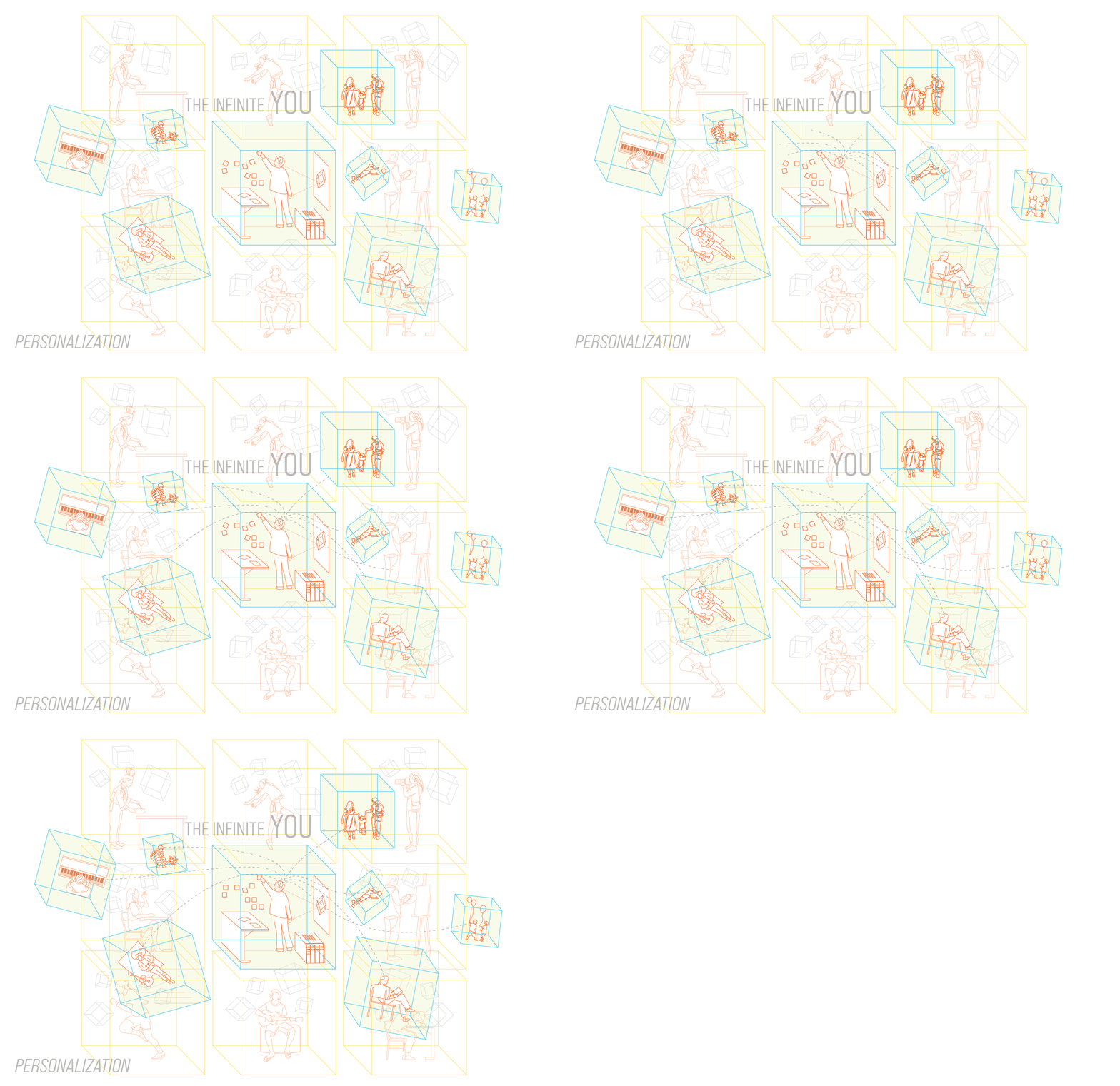
- The infinite You. A taxonomy of learning experiences aimed at expanding the self through a passion-driven and tailored learning path. Immersive and dynamic, experiences here are exponential extensions of student’s capacities where analytics, feedback and assessment support rapid growth, with the goal of achieving mastery, but also to receive exposure to new knowledge. As a performative experience, the tangents and exposure to new boundaries are explored and expanded with unlimited opportunities that engage the student. Customized tutorials, predictive analytics, and deep assessment occur in this boundless tesseract experience. Performance Opportunity: Elevate your sense of self towards a future world.
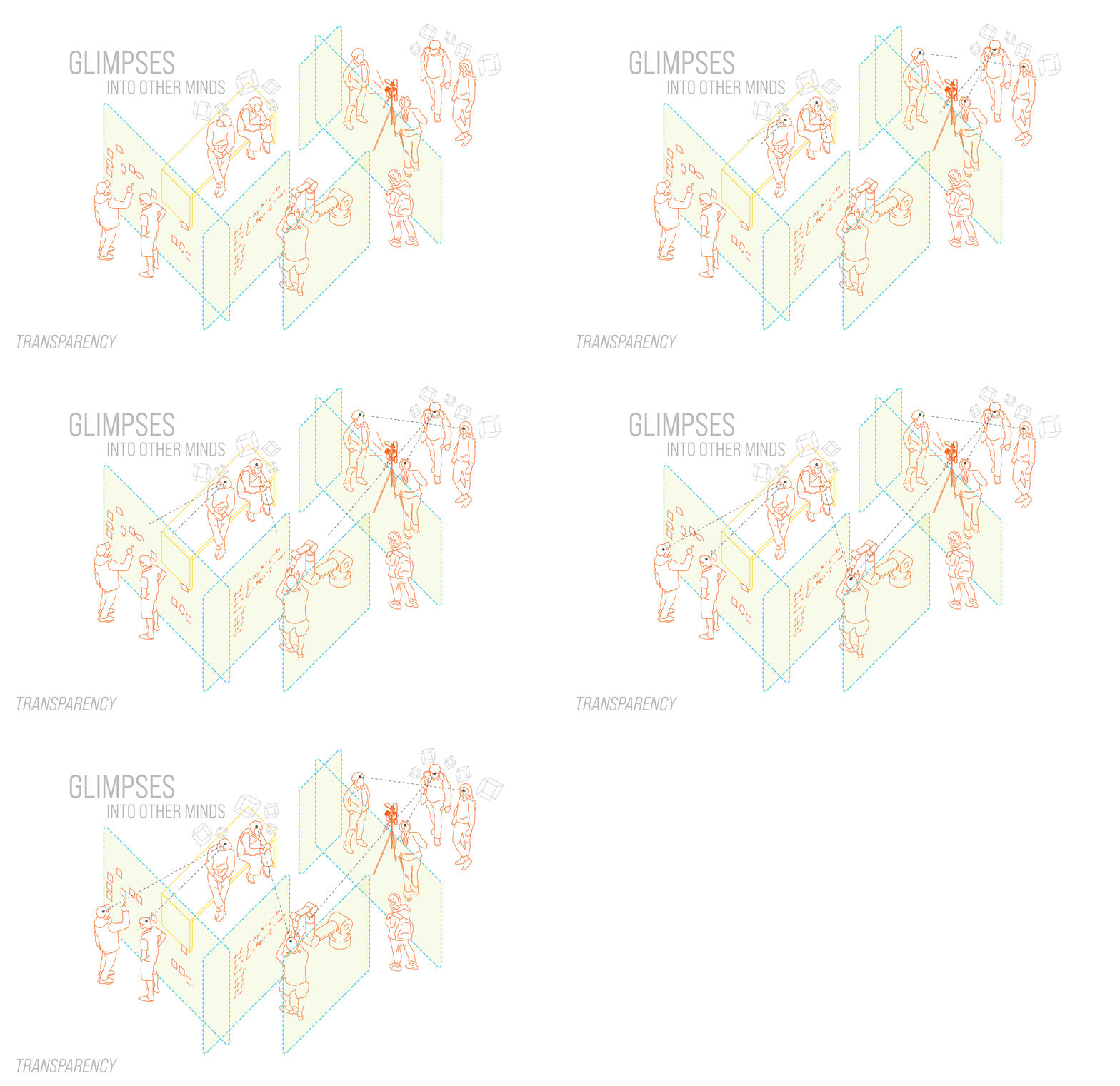
2. Mind-fusion Collab. This experience explores the ultimate power of work-sharing, co-creativity, crowd-thinking, crowdsourcing of ideas, and crowd-casting in immersive zones of flow. Displaying work here leads to constructive-feedback, synchronous and asynchronous dialogue, and serendipitous idea-sharing. Lightbulb moments occur in this experience for both the student sharing and the one observing. Peer intellectual matchmaking and connecting passions support an Atheneum-style mindset: creating relationships between like-minded students. Both digital and analog opportunities create a balanced enrichment of content and craft, expanded thinking, and applied knowledge intertwined. Performance Opportunity: Elevate Co-creativity through crowdsourcing.
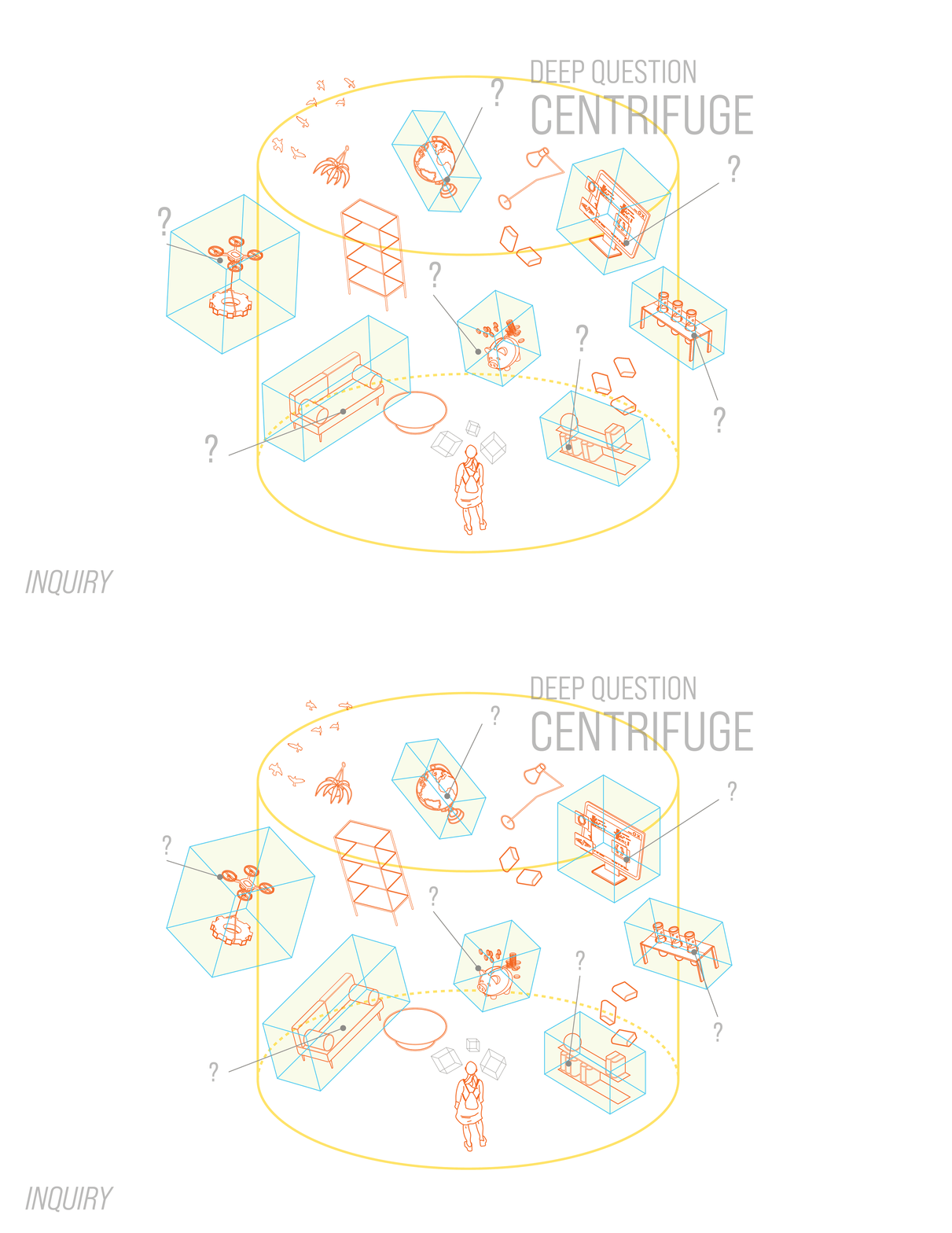
3. SparkScape. This experience explores collaborative Idea Ignition. Conceived as a deep-question centrifuge, these 360 encounters yield an energetic experience that inspires deep curiosity, simulates large scale experiences, explores video impact, and helps students expand and contract knowledge in high performance. On one hand, explore expansive ideas in depth and with acceleration, on the other, synthesize thoughts with profound impact for future creativity and innovation. These encounters to be experienced in a variety of team sizes and even independently. Performance Opportunity: Elevate Co-Ideation and Team Idea-sparks.
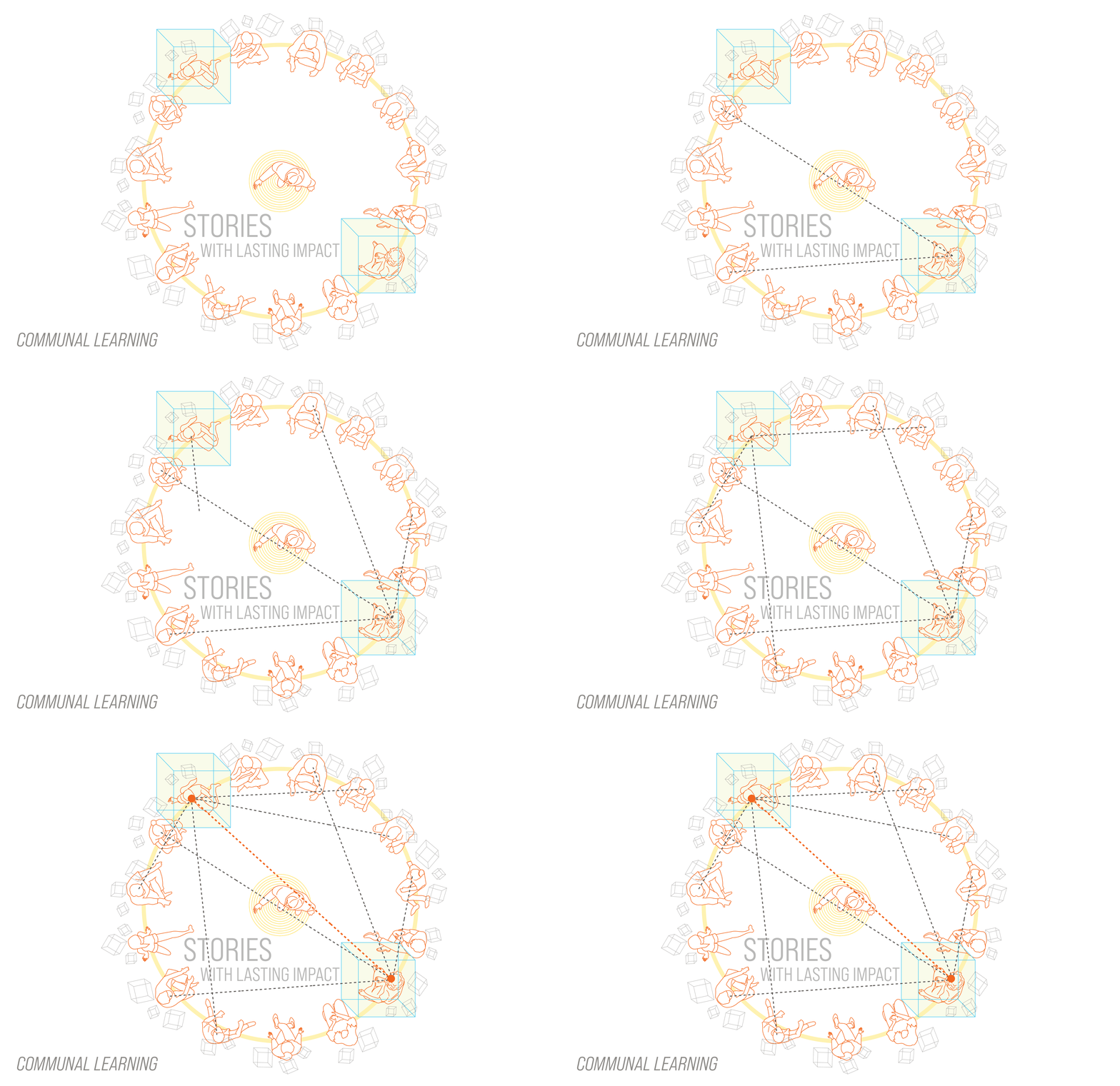
4. DreamTheater. Understood as communal learning, this taxonomy explores high performing storytelling experiences, the quintessential way of social learning for centuries. Equal parts awaken curiosity and inspiring wonder, key to this set up is engaging the audience, provoking debate, triggering collective discovery, and exploring humanistic connection. In the round for the presenter, the audience is set up so everyone sees everyone else clearly, face to face. Eyes connect with eyes. Inspired by lifelong storytelling in indigenous cultures from throughout the world, students see other students’ facial reactions to the stories. This synergistic learning from students’ expressions teaches others common nonverbal communication cues and body language that carry onto their social interactions and expand human-centered connections with others and the larger communities. Performance Opportunity: Elevate human communal experience.
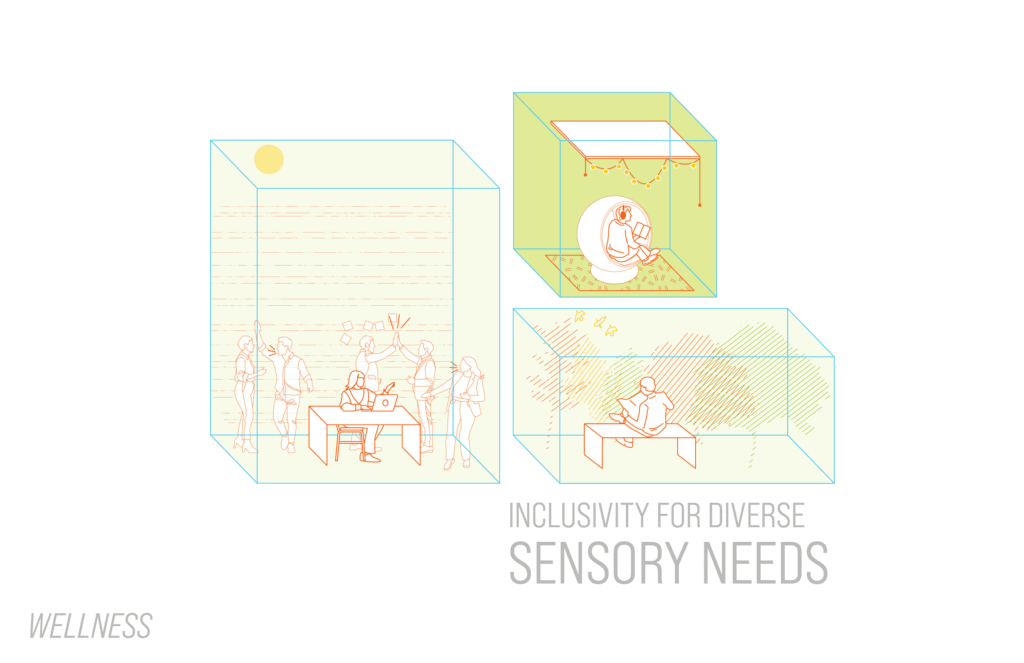
5. TaylorMaker. Qualitative characteristics of this experience support what Thomas Armstrong in his book The Power of Neurodiversity calls ‘Niche Construction’, the power in nature for species to excel when they modify their environment for their own benefit. Think of a beaver damming a river, or termites in the savannah creating cooling towers in the dirt to survive the heat. Similarly, in education, this concept brings immerse opportunities to elevate individual student performance by ‘fine tuning’ their personal chosen environment through multisensory customization: acoustics, lighting, visuals, textures, color, technology and furniture. Agency expanded to the next dimension. The interesting opportunity by engaging AI is for the ‘Niche’ to become 360* knowledge and performance feedback loops layering new skills and competencies through super-agency. Performance Opportunity: Elevate Customization of experience and feedback loop.
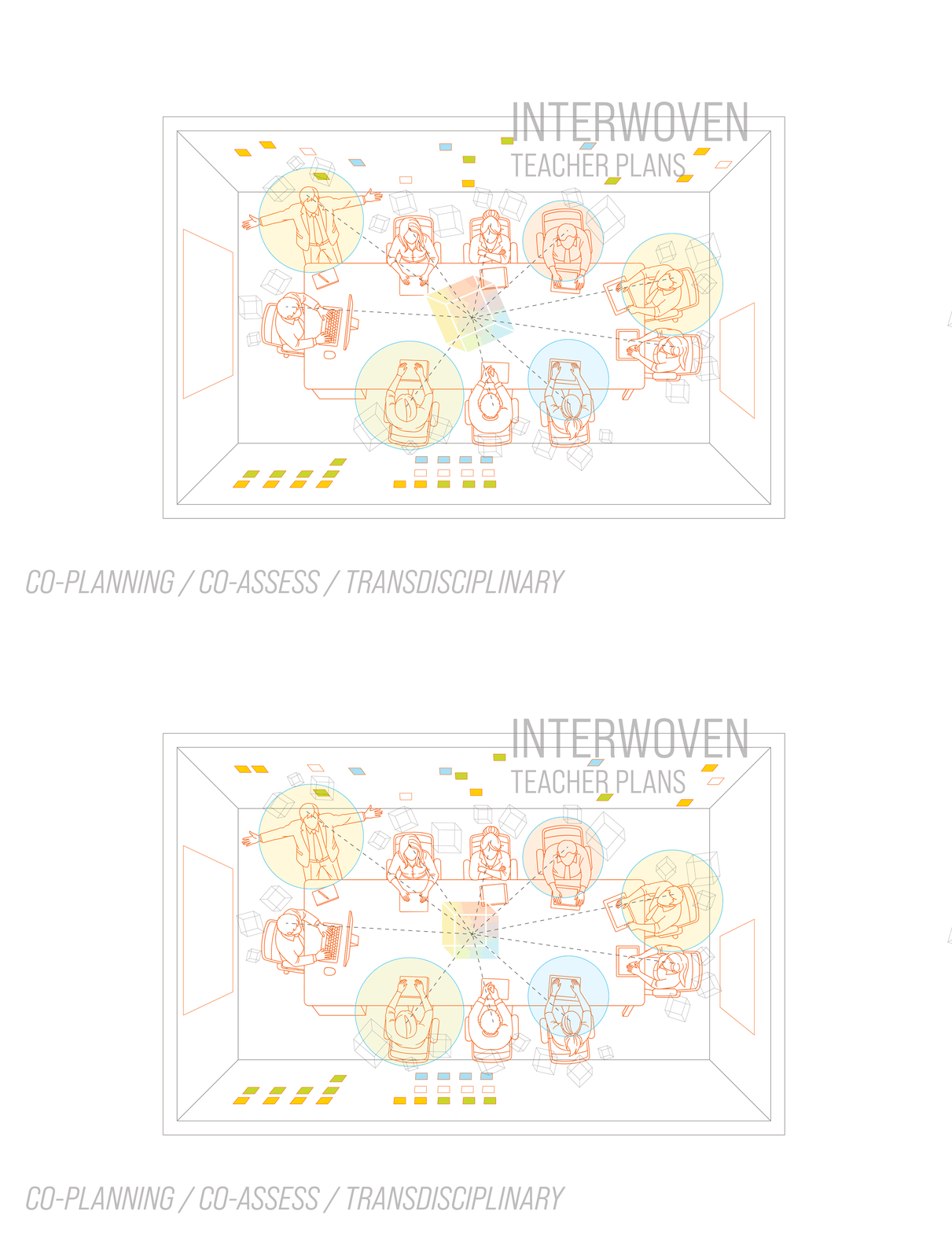
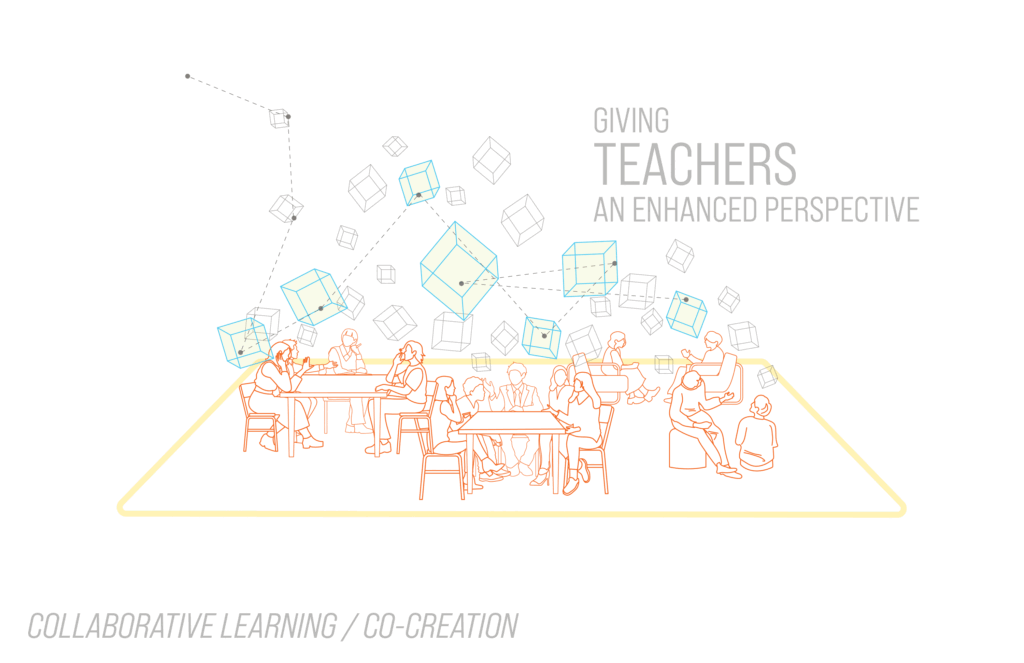
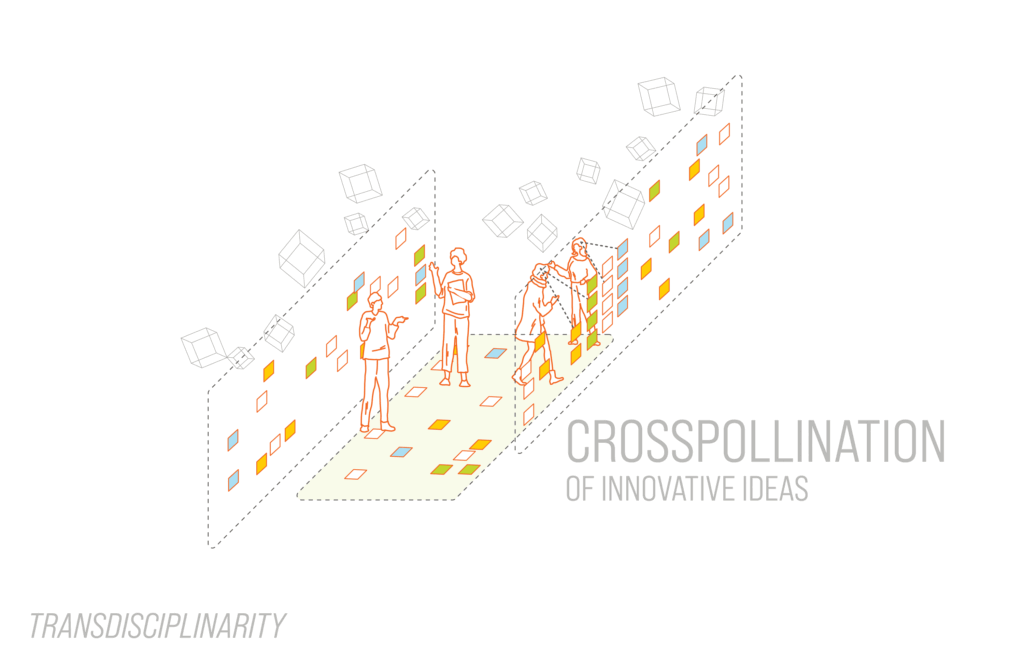
6. Catalytic Curator. A taxonomy specifically thought for teachers and facilitators of the learning process. A Transdisciplinary co-creation of content, processes, and planning focused on customized pathways to achieve student performance at individual and team levels. Equal parts a simulation environment, lab workshop, collab space, and educator professional developer, this lab is prepared to increase teacher and facilitator performance. Empowered with AI data and richness of content, these experiences will help curate intelligent planification of student learning experiences. Performance Opportunity: Elevate Transdisciplinary Connectivity and Relevance.
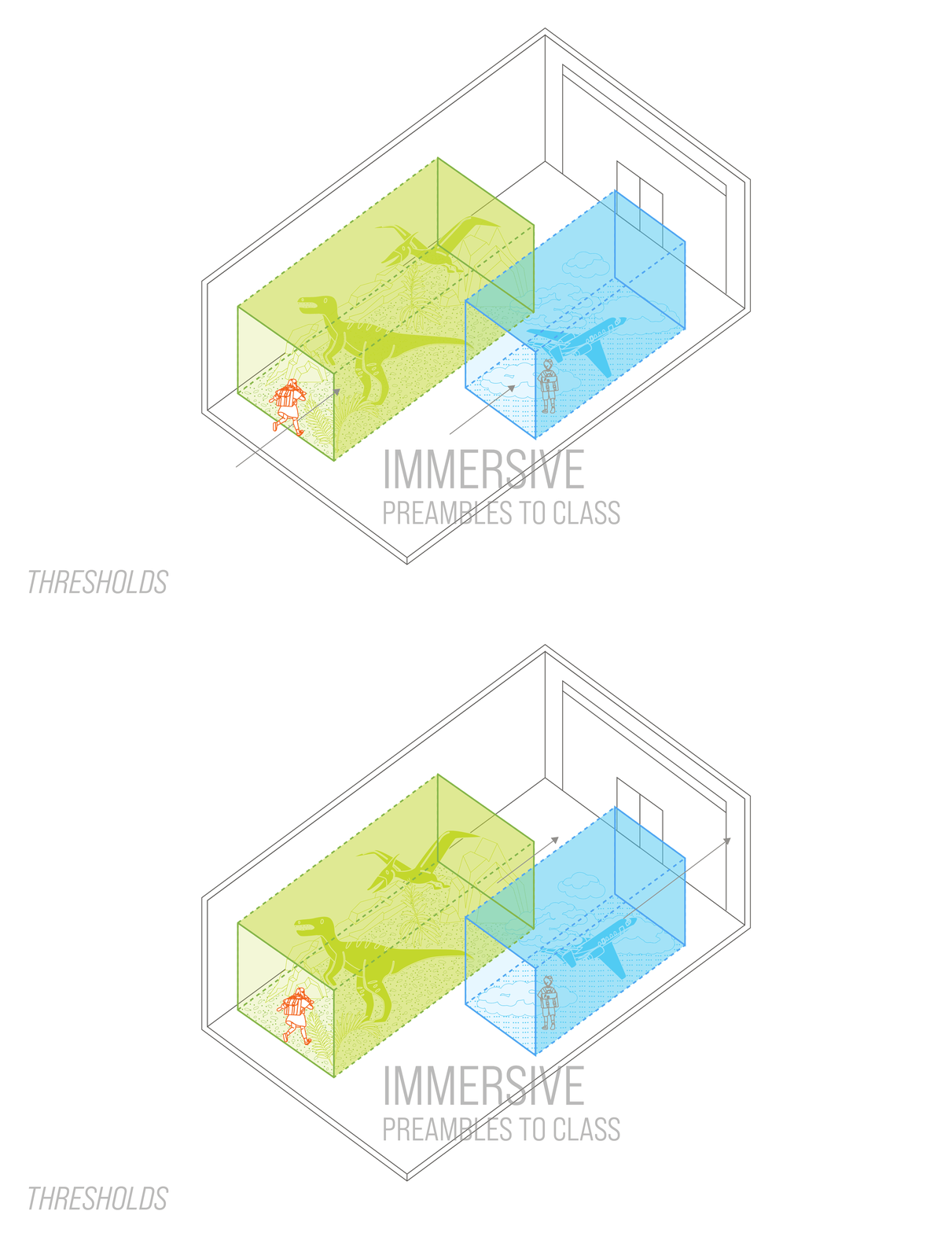
7. Mindset Builders. A taxonomy specifically created to provide anticipation and set the tone for the day’s discovery. As students enter the schools or move from zone to zone in school, these immersive experiences, analog and digital, will create unexpected communal and individual experiences for all students. Anticipation is one of the greatest tools that teachers have at their discretion to engage students. As exemplified with a few examples in her book Research-Based Strategies to Ignite Student Learning: Insights from a Neurologist and Classroom Teacher, Judy Willis, drawing from her expertise as both a teacher and neuroscientist, describes the factual understanding that student’s brains are seeking the novel, the newness in experiences. Releasing dopamine, the combination of novelty and anticipation together with customization provides the perfect opportunity for culture building and hyper-inquisitive mindset building. Performance Opportunity: Elevate Sense of Wonder, Discovery, and Belonging.
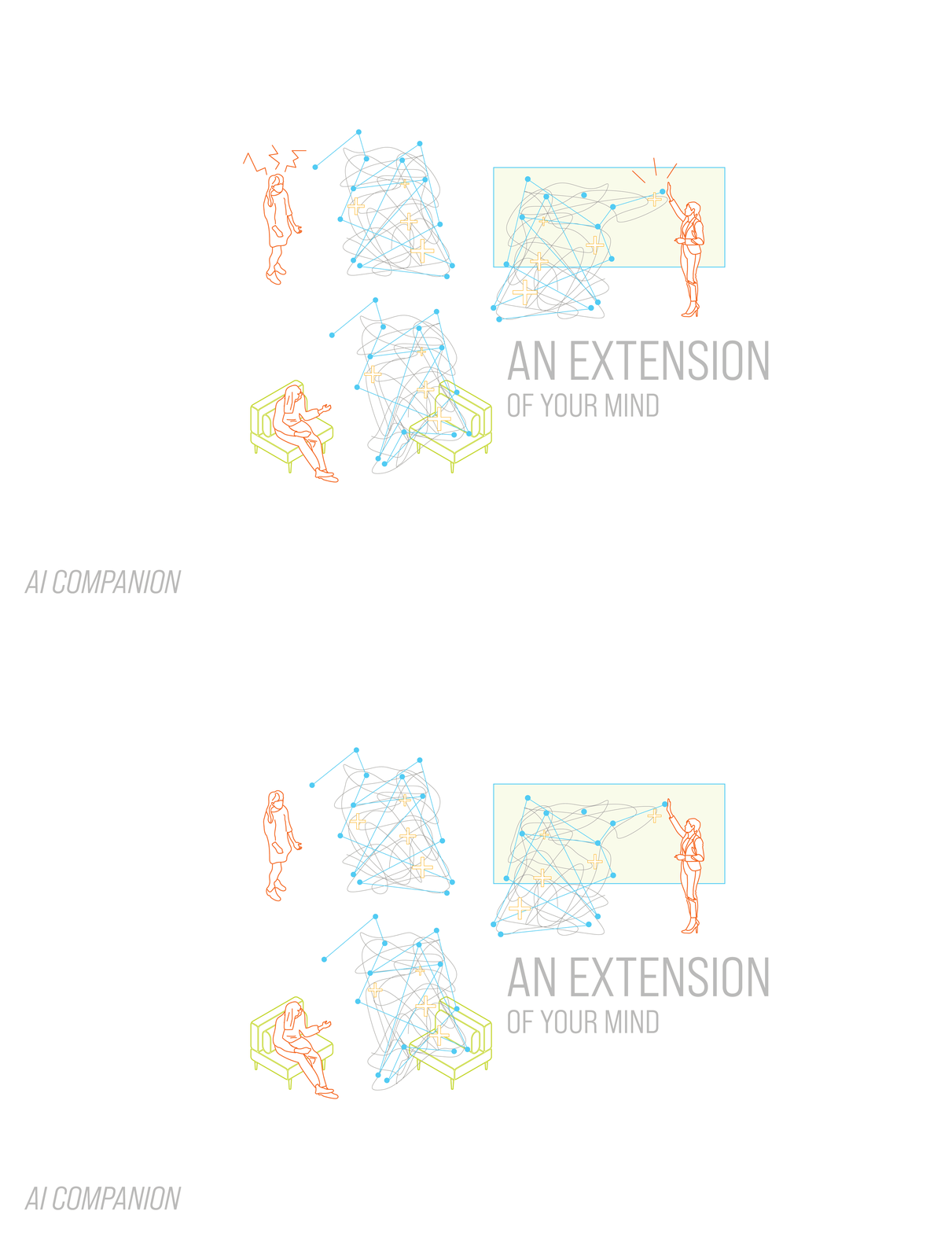
8. Tomorrow’s Pipeline Relevance to tomorrow’s needs is imperative for education. The stronger the bonds that are created between what contents and skills that are being learned and the applicability of those to future needs, the more engagement students will have with their learning. This taxonomy specifically explores the opportunity to create bridges between content and skills development with future careers and impact to the communities and the world in which they live in. It explores problem-seeking, purpose-driven, and path-finding visions with ripple effects for their lives. Performance Opportunity: Elevate Dot-connection and relevance between today and tomorrow.
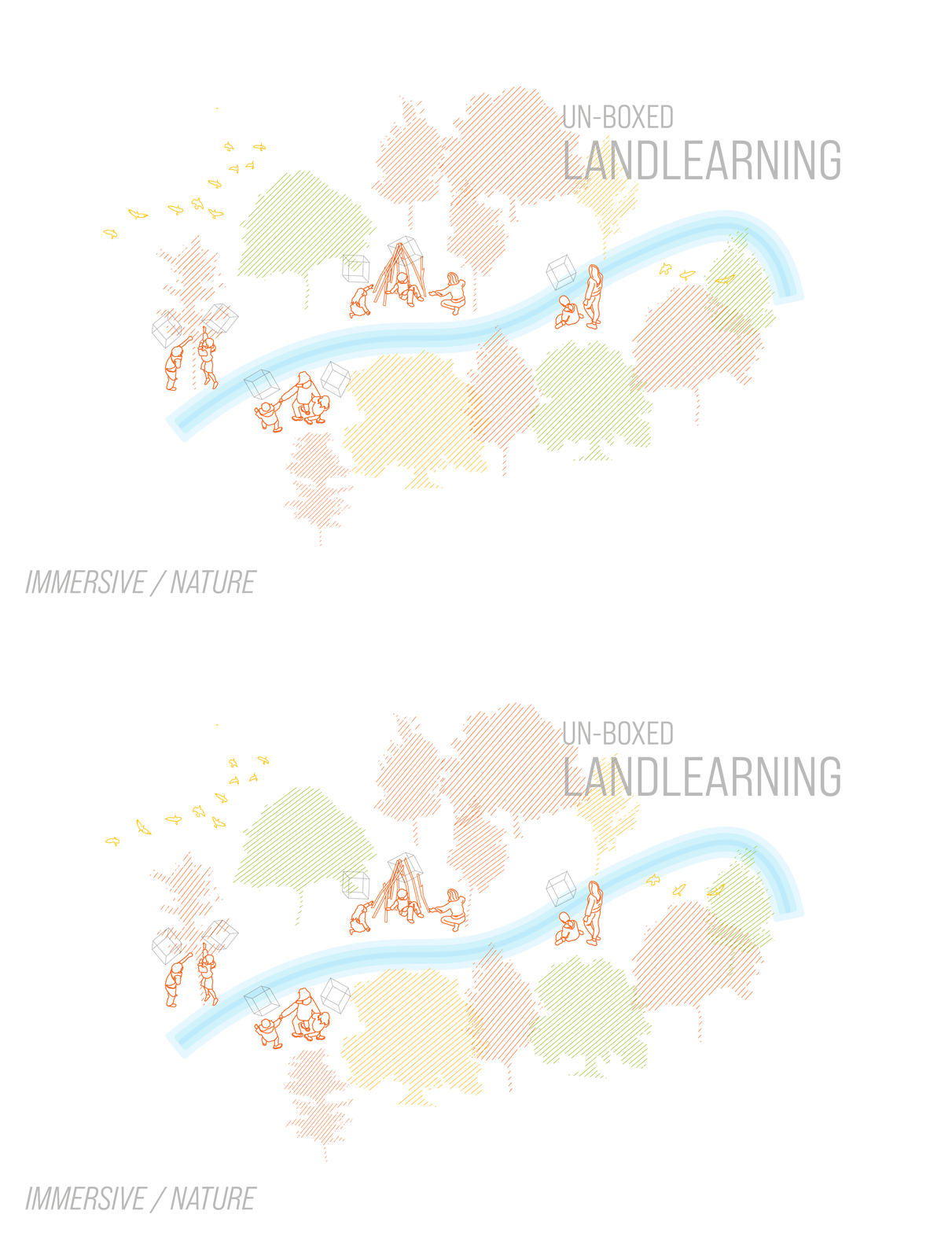
9. Unboxed Landlearning. Over digitalization is a tremendous fear for the learning brains and specifically for young learners.This performance-driven taxonomy uses Land in its myriads of configurations as a learningscape. Nature as master teacher where principles in disciplines as diverse as ecology, earth science, chemistry, physics, biology, meteorology, etc, can be learned flawlessly. Land is the ultimate ‘manipulative’ and students’ connections with the outdoors need to be maximized, regardless of age. Cause and effect relationships, impact of actions, risk-taking and observation unleash Inspiration and curiosity about our world. Performance Opportunity: Elevate Biophilic learning experiences,
10. The Great Impact. At the core of learning are 2 truths: one, we need to inspire students the love for learning to create a sustainable model of inquisitiveness, growth, and self-elevation; two, inspire in students ways to help their communities, their societies and the world, in what may be the great impact that each of them may fulfill. Inspired by the design thinking model, this taxonomy link students to community needs and through empathy and an iterative process, students find grounded ways to help their larger context be better. This connection to community is a two-way street and this specific taxonomy facilitates the connectivity between community and students to elevate their performance through engagement, empowerment, relevance, perspectivism, inspiration, and eventually Impact. Performance Opportunity: Elevate Community Connections and service through entrepreneurial mindsets.
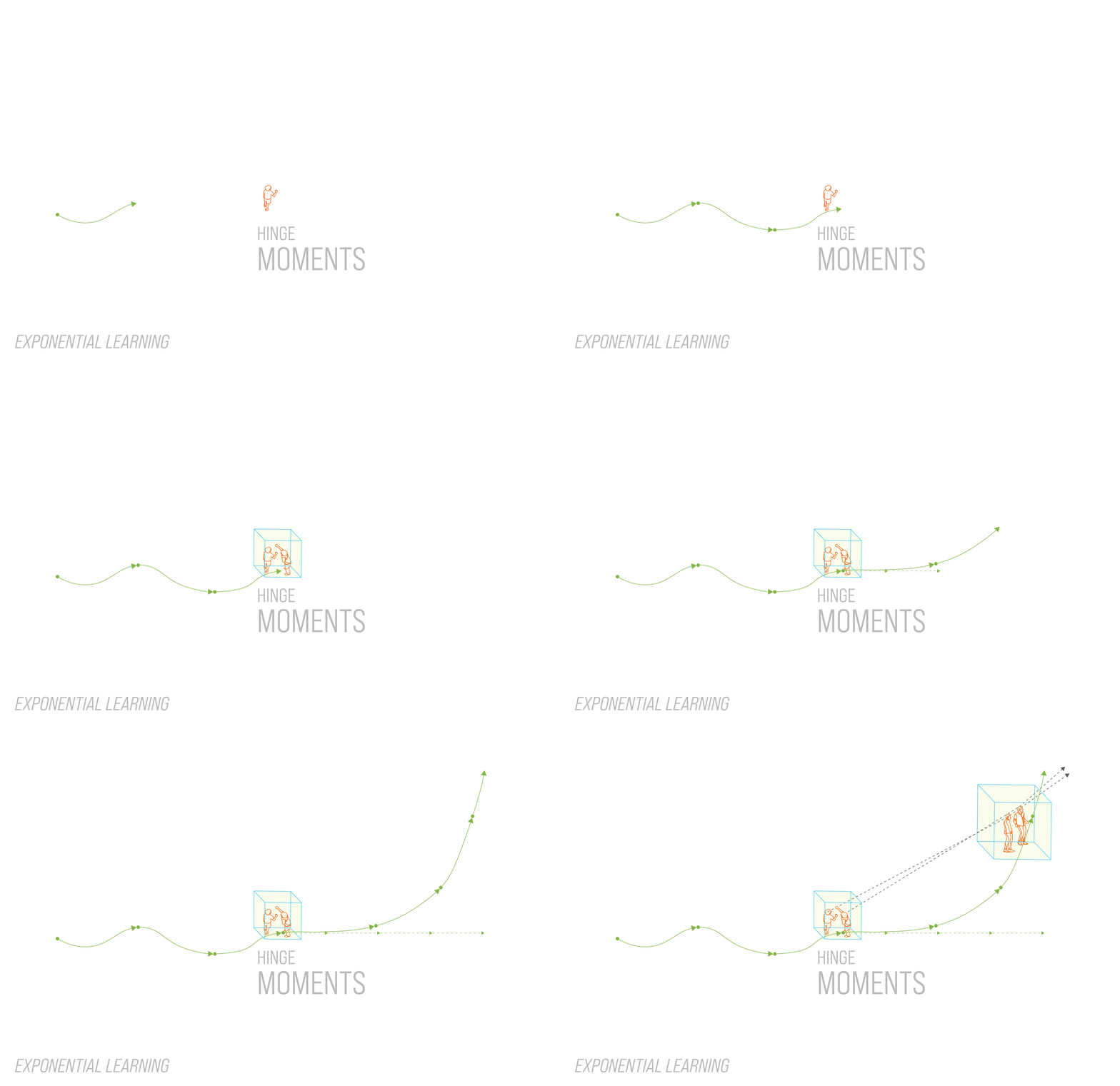
A new age demands that we think anew, that we evolve learning methods, processes, and ecosystems. Learning environments are intricately tied to those experiences for students. As AI becomes a larger force in these learning ecosystems, we should recognize the immense power that comes with new perspectives facilitated with this new foundational technology.
The power to amplify humans, to create superintelligence, to solve eternal problems, and to think smarter in exponential ways need to help us question what new species of learning experiences may arise, and the performance-based learning taxonomies where they happen. The exciting part of all this is the never-ending possibilities for future taxonomies to arise, opening huge doors for all of us lucky enough to be thinking about students, spaces, learning, and the future of humanity.
Illustrations by Cecilia Torres-Panzera, Emerging Interior Designer at Little